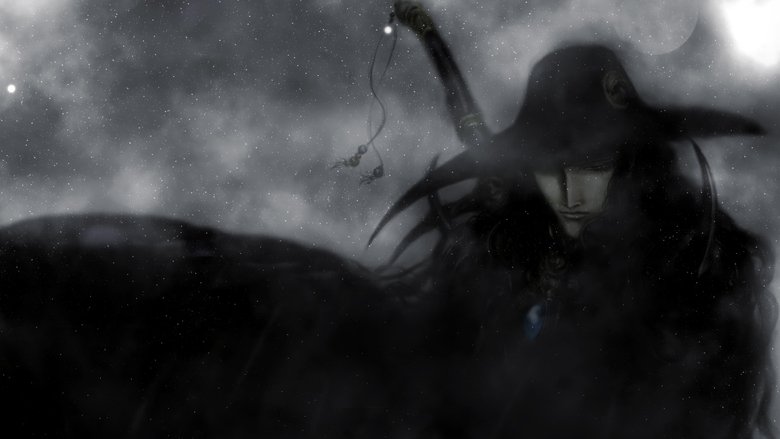
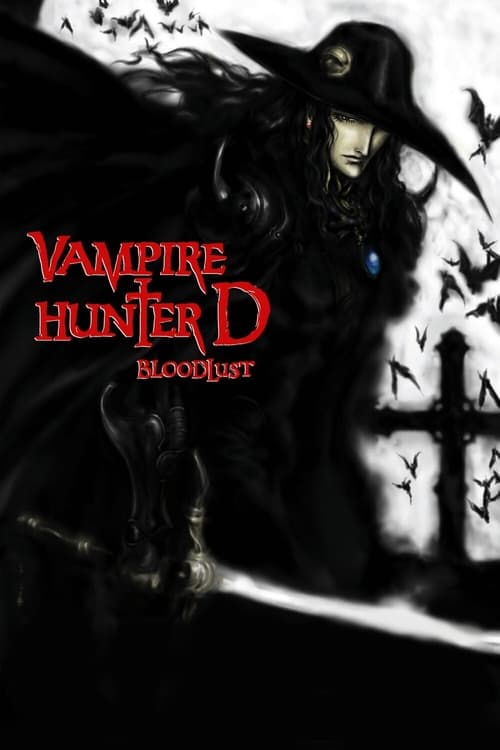
吸血鬼ハンターD ブラッドラスト
"When the sun sets, the hunt begins."
Vampire Hunter D: Bloodlust - Symbolism & Philosophy
Symbols & Motifs
The Sun and Daylight
The sun symbolizes the absolute barrier between the human world and the realm of the Nobility. It represents life, truth, and the natural order that vampires have forsaken.
Meier Link is physically burned by the sun, representing his inability to exist in Charlotte's world. D, as a dhampir, can endure the sun but suffers from "sunlight syndrome," beautifully illustrating his painful existence caught halfway between the human and vampire worlds.
Castle of Chaythe
The castle symbolizes the oppressive, stagnant weight of vampire history, false promises, and the inescapable gravity of the past.
Carmilla uses the castle as a trap, projecting beautiful illusions of sanctuary to lure Meier and Charlotte. It stands as a magnificent but decaying monument to a dying species that feeds on the living to sustain its own ghost.
Flowers on a Grave
Flowers symbolize human fragility, remembrance, and the profound need for mortal connection and legacy after death.
Leila and D make a pact that whoever dies first will have the other bring flowers to their grave. In the film's poignant finale, D leaves flowers at Leila's funeral, proving his underlying humanity and ensuring she is not forgotten.
Philosophical Questions
Does eternal life strip away one's humanity?
The film contrasts the brief, passionate lives of humans with the cold, stagnant eternity of vampires. Carmilla represents the horrific endpoint of immortality—a ghost feeding off the living just to exist. Meier Link's struggle against his own nature questions whether immortality is a blessing, or a curse of endless, lonely deprivation.
Can true connection overcome intrinsic nature and societal prejudice?
Charlotte and Meier belong to warring species defined by the dynamic of predator and prey. Their genuine romance challenges the deeply ingrained prejudices of the human bounty hunters and the arrogant vampire Nobility, asking if love can rewrite the fundamental 'rules of nature.'
Core Meaning
Director Yoshiaki Kawajiri uses Vampire Hunter D: Bloodlust to explore the heavy burden of eternity and the tragedy of the outcast. The film blurs the lines between good and evil, challenging the prejudice that all humans are inherently righteous and all monsters are inherently wicked. It suggests that true nobility is defined by resisting one's base instincts rather than by one's bloodline.
The central message is a meditation on the transcendent power of love and the pain of isolation. Whether it is D's eternal loneliness as a dhampir rejected by both worlds, Leila's fear of dying unremembered, or Meier Link's desperate desire to protect the human he loves from his own monstrous nature, the film ultimately argues that empathy and connection are the only true salvation in a decaying, ruthless world.