The core meaning of "Vertigo" is a profound exploration of obsession, illusion, and the destructive nature of idealizing a romantic partner. Director Alfred Hitchcock delves into the male psyche, examining how a fixation on a fantasy can lead to the manipulation and ultimate destruction of a real person. The film suggests that true connection is impossible when one person is in love not with a human being, but with an unattainable and non-existent ideal. It is a deeply personal and confessional film for Hitchcock, reflecting his own tendencies to meticulously craft and control the female personas in his movies. Ultimately, "Vertigo" is a cautionary tale about the vertigo of the mind—the dizziness and disorientation that come from losing grip on reality in the pursuit of a perfect, yet illusory, love.
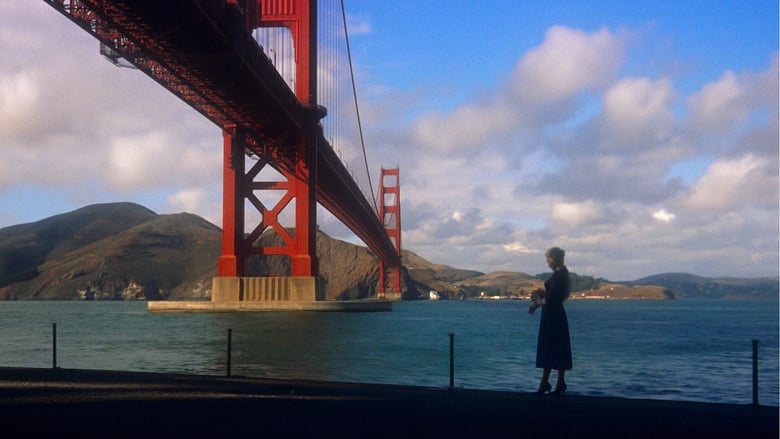
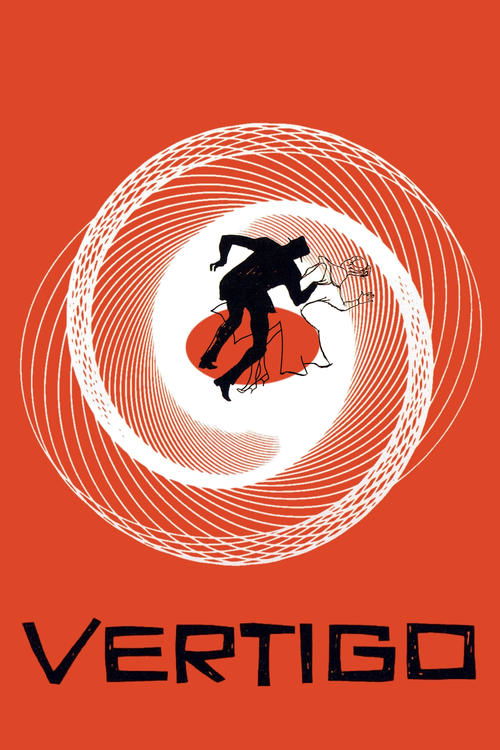
"Alfred Hitchcock engulfs you in a whirlpool of terror and tension!"
Director: Alfred Hitchcock
Cast: James Stewart, Kim Novak, Barbara Bel Geddes, Tom Helmore, Henry Jones
Vertigo — Symbolism & Philosophy
Symbols & Motifs
Spirals
Spirals are the film's most dominant visual motif, symbolizing obsession, vertigo, and the cyclical, inescapable nature of Scottie's trauma and delusion. The spiral represents a journey inward into the psyche, as well as a dizzying loss of control.
The spiral motif appears from the very beginning in Saul Bass's iconic opening title sequence. It is also seen in the tight bun of Madeleine's (and Carlotta's) hair, the winding staircase of the bell tower, and the rings of the ancient Sequoia tree that Madeleine points to, linking the past and present in a continuous, dizzying loop. Bernard Herrmann's score also incorporates musical patterns that spiral up and down, enhancing the sense of disorientation.
The Color Green
Green is consistently associated with Madeleine and the supernatural mystery surrounding her. It represents the otherworldly, the ghostly, and the spectral illusion that Scottie falls in love with. It can also be interpreted as a symbol of deception and jealousy.
Madeleine is first seen wearing a striking green shawl at Ernie's restaurant. She drives a green car. When Scottie meets Judy, her hotel room is bathed in an eerie green light from a neon sign, visually linking her to the 'ghost' of Madeleine and signaling that the illusion is still present.
The Bell Tower
The bell tower at the Mission San Juan Bautista represents Scottie's trauma and psychological weakness. It is the site of his repeated failures and the focal point of his vertigo. It symbolizes a confrontation with his deepest fears and the ultimate, tragic truth.
Scottie's vertigo prevents him from following Madeleine up the tower, leading to her supposed death and his subsequent breakdown. In the film's climax, he forces Judy back to the same tower, determined to conquer his fear and recreate the past to uncover the truth. It is here that the final tragedy unfolds, cementing the tower as a place of recurring trauma.
Mirrors and Reflections
Mirrors and reflections symbolize the themes of dual identity, illusion, and self-deception. They visually represent the fragmented and constructed nature of the characters' personas, particularly Madeleine/Judy.
Scottie often sees Madeleine's reflection before he sees her directly, such as in the mirror at the flower shop or reflected in a window. This emphasizes that he is falling for an image, not a person. Later, as Judy, she is often framed in mirrors, highlighting her dual identity and the 'performance' she must maintain.
Philosophical Questions
Can you truly love a person, or only the idea of them?
"Vertigo" explores this question through Scottie's obsession. He falls in love with Madeleine, who is not a real person but an elaborate performance. When confronted with the real woman, Judy, he rejects her reality and forces her to become the illusion he desires. The film suggests that this kind of idealized love is a form of necrophilia—a love for something that is dead or never existed. It questions the nature of romantic love, proposing that it can often be a projection of our own desires and fantasies, leading to a failure to see and accept the other person's true, flawed self.
To what extent does the past define the present?
The film is saturated with the past's influence. The entire 'Madeleine' persona is built around the history of Carlotta Valdes. Scottie becomes trapped by the memory of Madeleine, and his entire present reality is spent trying to resurrect a moment from his past. The recurring spiral motif and the visit to the ancient redwood trees, with their visible rings of history, both symbolize the inescapable weight of time. The film posits that an obsession with the past can be a destructive force, preventing growth and leading to a tragic, repetitive cycle.
What is the nature of identity?
"Vertigo" deeply probes the fragility of identity. Judy's identity is fractured; she is herself, but she has also been Madeleine, and under Scottie's pressure, she is forced to become Madeleine again, blurring the lines of who she truly is. By the end, she seems to have lost herself to the phantom she portrayed. Scottie's identity is also shattered by trauma and obsession. He transforms from a respected detective into a haunted man and finally into a cruel manipulator. The film suggests that identity is not fixed but can be constructed, manipulated, and ultimately destroyed by external pressures and internal obsessions.
Core Meaning
Explore More About This Movie
Dive deeper into specific aspects of the movie with our detailed analysis pages