Vertigo
A haunting psychological thriller where obsession spirals into a dizzying abyss of romantic illusion and fractured identity, painted against the mesmerizing backdrop of San Francisco.
Vertigo

Vertigo

"Alfred Hitchcock engulfs you in a whirlpool of terror and tension!"

28 May 1958 United States of America 128 min ⭐ 8.2 (6,040)
Director: Alfred Hitchcock
Cast: James Stewart, Kim Novak, Barbara Bel Geddes, Tom Helmore, Henry Jones
Thriller Mystery Romance
Obsession and Romantic Delusion Manipulation and Deception Appearance vs. Reality Guilt and Trauma
Budget: $2,479,000
Box Office: $7,808,900

Overview

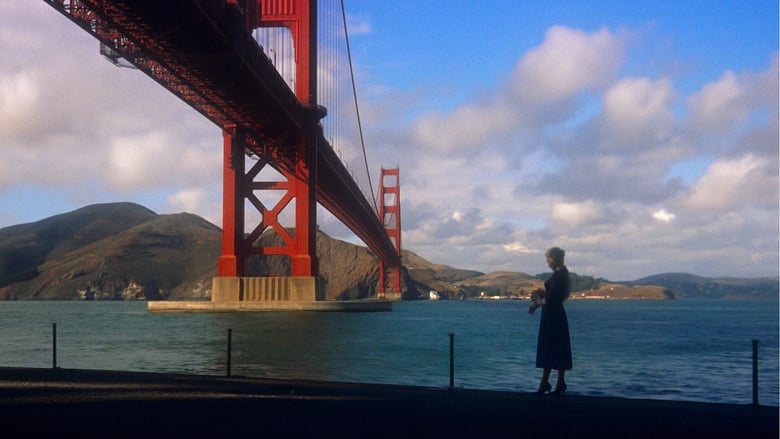
"Vertigo" tells the story of John "Scottie" Ferguson, a former San Francisco police detective who retires after a traumatic rooftop chase leaves him with acrophobia (a fear of heights) and vertigo. An old college acquaintance, Gavin Elster, hires Scottie to follow his wife, Madeleine, who has been behaving strangely and seems to be possessed by the spirit of a dead ancestor. Scottie becomes obsessed with the beautiful and mysterious Madeleine, following her through a dreamlike San Francisco as she visits historical sites linked to the tragic figure of Carlotta Valdes.

As Scottie's fascination deepens into love, he is drawn into a web of mystery and apparent supernatural occurrences. His attempts to understand and save Madeleine from her self-destructive path lead to a tragic incident at an old Spanish mission. Overcome with guilt and grief, Scottie suffers a mental breakdown. Sometime after his recovery, he meets Judy Barton, a woman who bears a striking resemblance to his lost love, and he obsessively tries to recreate Madeleine in her, piece by piece.
Core Meaning

The core meaning of "Vertigo" is a profound exploration of obsession, illusion, and the destructive nature of idealizing a romantic partner. Director Alfred Hitchcock delves into the male psyche, examining how a fixation on a fantasy can lead to the manipulation and ultimate destruction of a real person. The film suggests that true connection is impossible when one person is in love not with a human being, but with an unattainable and non-existent ideal. It is a deeply personal and confessional film for Hitchcock, reflecting his own tendencies to meticulously craft and control the female personas in his movies. Ultimately, "Vertigo" is a cautionary tale about the vertigo of the mind—the dizziness and disorientation that come from losing grip on reality in the pursuit of a perfect, yet illusory, love.

Thematic DNA

Obsession and Romantic Delusion 35%
Manipulation and Deception 30%
Appearance vs. Reality 25%
Guilt and Trauma 10%

Obsession and Romantic Delusion

Scottie's primary tragic flaw is his susceptibility to romantic delusion. His initial professional interest in Madeleine quickly spirals into a profound obsession. He falls in love with an idealized image of a woman, a fantasy he cannot let go of. After her supposed death, this obsession consumes him, leading to a catatonic state. When he meets Judy, he doesn't fall for her but for her resemblance to his lost love. His obsession then takes an aggressive turn as he forces Judy to change her appearance to perfectly match the woman of his dreams, demonstrating the destructive power of living in a romantic fantasy rather than reality.

Manipulation and Deception

Manipulation is a driving force of the narrative. Gavin Elster masterfully manipulates Scottie, exploiting his vertigo to stage his wife's murder as a suicide. Judy, in turn, manipulates Scottie by playing the part of Madeleine. Later, Scottie becomes the manipulator, coercing a reluctant Judy into becoming Madeleine once more. This theme suggests that the seeds of evil and control can reside in anyone, blurring the lines between victim and perpetrator. The entire film is built on layers of deception, where no character is entirely what they seem.

Appearance vs. Reality

"Vertigo" constantly plays with the tension between what appears to be true and the underlying reality. Madeleine's character is a complete fabrication, a role played by Judy. The supernatural possession by Carlotta Valdes is a carefully constructed illusion. Scottie falls in love with a facade, not a real person. Hitchcock reveals this central deception to the audience two-thirds of the way through the film, shifting the suspense from the mystery of Madeleine to the psychological drama of Judy's predicament and Scottie's obsessive blindness. The film challenges the viewer to question the reality of what they see, mirroring Scottie's own struggle.

Guilt and Trauma

Scottie is a man defined by guilt and trauma from the very beginning. The film opens with a scene where he witnesses a fellow officer fall to his death while trying to save him, an event that instills his debilitating acrophobia. This initial trauma makes him vulnerable to Elster's manipulation. Later, his inability to save Madeleine due to his vertigo plunges him into a deep, catatonic depression born of profound guilt. The entire narrative can be seen as Scottie's tragic and cyclical journey through trauma, where each attempt to find redemption only leads to further psychological distress.

Character Analysis

John 'Scottie' Ferguson

James Stewart

Archetype: The Tragic Hero / Antihero
Key Trait: Obsessive

Motivation

Initially motivated by a sense of duty and curiosity, Scottie's primary motivation becomes an all-consuming obsession with the idealized image of Madeleine. He is driven by a desperate need to recapture the romantic fantasy he lost, a desire so powerful it makes him blind to the real woman in front of him and compels him to manipulate and control her.

Character Arc

Scottie begins as a sympathetic, intelligent man crippled by a psychological wound. His arc is a downward spiral from a man of the law to a man consumed by an obsessive, necrophilic fantasy. After Madeleine's death, he descends into clinical depression. Upon meeting Judy, his desire to resurrect his lost love transforms him from a victim into a cruel manipulator, ultimately leading to a second, even more devastating tragedy that leaves him, in the end, cured of his vertigo but utterly broken.

Madeleine Elster / Judy Barton

Kim Novak

Archetype: The Femme Fatale / The Victim
Key Trait: Vulnerable

Motivation

Judy's motivation is complex and shifts throughout the film. Initially, it is likely financial, as she is hired by Elster. However, she genuinely falls in love with Scottie. After they reconnect, her motivation is driven by this love and the desperate, tragic hope that Scottie will eventually love her for who she is, not for the phantom she portrayed.

Character Arc

Judy begins as a pawn in Gavin Elster's murder plot, playing the role of the sophisticated, haunted 'Madeleine'. As Madeleine, she is an alluring, mysterious object of desire. As Judy, her true, more common and vulnerable self is revealed. Her arc is tragic; she falls in love with Scottie but is trapped by her deception. She allows Scottie to transform her back into Madeleine out of a desperate hope for his love, losing her own identity in the process. Her journey ends in her accidental death, a victim of both Elster's and Scottie's manipulations.

Marjorie 'Midge' Wood

Barbara Bel Geddes

Archetype: The Friend / The Voice of Reason
Key Trait: Pragmatic

Motivation

Midge is motivated by her deep, unrequited love for Scottie and a genuine concern for his well-being. She wants to help him overcome his trauma and see the folly of his obsession, hoping he will return her affections and come back to reality.

Character Arc

Midge represents reality and pragmatism in contrast to Scottie's romantic delusions. She is Scottie's steadfast friend and former fiancée, who clearly still harbors love for him. Her arc is one of quiet heartbreak. She attempts to ground Scottie and offers him a mature, stable love, but she cannot compete with the intoxicating fantasy of Madeleine. She ultimately recognizes the depth of his obsession and fades from the narrative, a symbol of the real world that Scottie has abandoned.

Gavin Elster

Tom Helmore

Archetype: The Villain
Key Trait: Manipulative

Motivation

Elster's motivation is greed. He wants to murder his wealthy wife and inherit her fortune. He creates the elaborate 'Madeleine' charade to provide a perfect, psychologically disturbed witness (Scottie) for what will appear to be a suicide, thereby securing his freedom and wealth.

Character Arc

Gavin Elster is the catalyst for the entire plot. He appears as a concerned old acquaintance who needs Scottie's help. His character does not have a significant arc within the film's runtime; he is revealed to be a cold, calculating murderer who devises an ingenious plot to kill his wife for her inheritance. He sets the tragedy in motion and then disappears from the narrative, his crime only fully understood in the latter half of the film.

Symbols & Motifs

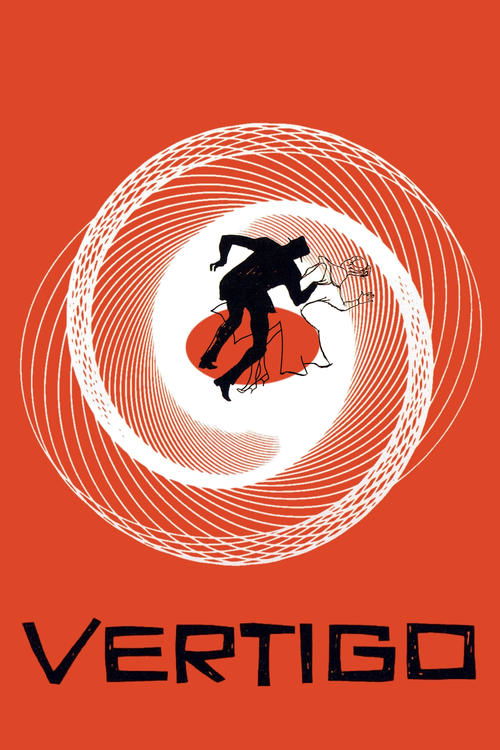
Spirals

Meaning:

Spirals are the film's most dominant visual motif, symbolizing obsession, vertigo, and the cyclical, inescapable nature of Scottie's trauma and delusion. The spiral represents a journey inward into the psyche, as well as a dizzying loss of control.

Context:

The spiral motif appears from the very beginning in Saul Bass's iconic opening title sequence. It is also seen in the tight bun of Madeleine's (and Carlotta's) hair, the winding staircase of the bell tower, and the rings of the ancient Sequoia tree that Madeleine points to, linking the past and present in a continuous, dizzying loop. Bernard Herrmann's score also incorporates musical patterns that spiral up and down, enhancing the sense of disorientation.

The Color Green

Meaning:

Green is consistently associated with Madeleine and the supernatural mystery surrounding her. It represents the otherworldly, the ghostly, and the spectral illusion that Scottie falls in love with. It can also be interpreted as a symbol of deception and jealousy.

Context:

Madeleine is first seen wearing a striking green shawl at Ernie's restaurant. She drives a green car. When Scottie meets Judy, her hotel room is bathed in an eerie green light from a neon sign, visually linking her to the 'ghost' of Madeleine and signaling that the illusion is still present.

The Bell Tower

Meaning:

The bell tower at the Mission San Juan Bautista represents Scottie's trauma and psychological weakness. It is the site of his repeated failures and the focal point of his vertigo. It symbolizes a confrontation with his deepest fears and the ultimate, tragic truth.

Context:

Scottie's vertigo prevents him from following Madeleine up the tower, leading to her supposed death and his subsequent breakdown. In the film's climax, he forces Judy back to the same tower, determined to conquer his fear and recreate the past to uncover the truth. It is here that the final tragedy unfolds, cementing the tower as a place of recurring trauma.

Mirrors and Reflections

Meaning:

Mirrors and reflections symbolize the themes of dual identity, illusion, and self-deception. They visually represent the fragmented and constructed nature of the characters' personas, particularly Madeleine/Judy.

Context:

Scottie often sees Madeleine's reflection before he sees her directly, such as in the mirror at the flower shop or reflected in a window. This emphasizes that he is falling for an image, not a person. Later, as Judy, she is often framed in mirrors, highlighting her dual identity and the 'performance' she must maintain.

Memorable Quotes

Only one is a wanderer; two together are always going somewhere.

— Madeleine Elster

Context:

Scottie and Madeleine are spending a day together, and their connection is deepening. Madeleine says this line as they discuss the timelessness of the giant Sequoia trees, adding to the dreamlike, romantic, and fateful atmosphere of their burgeoning relationship.

Meaning:

This line, spoken during a walk in the redwood forest, encapsulates the romantic ideal that Scottie projects onto Madeleine. It suggests a deep, fated connection and a shared journey, which is tragically ironic given that their entire relationship is a fabricated part of a murder plot.

Did he train you? Did he rehearse you? Did he tell you exactly what to do and what to say?

— John 'Scottie' Ferguson

Context:

In the film's climax, Scottie has dragged Judy to the top of the bell tower. Having realized the entire deception after seeing Judy wear Carlotta's necklace, he furiously interrogates her, forcing her to confess her role in Elster's plot.

Meaning:

This quote is the culmination of Scottie's rage and heartbreak as he finally confronts Judy with the truth. It's deeply ironic because Scottie is accusing Elster of the very thing he has just done: meticulously molding Judy into the image of Madeleine. It shows his dawning, horrifying self-awareness that his 'love' was just another form of manipulation.

Couldn't you like me, just me the way I am?

— Judy Barton

Context:

Scottie is in the process of transforming Judy into Madeleine. He has bought her the clothes and is insisting she change her hair. Judy, who genuinely loves him, begs him to stop and to accept her for who she is, but her plea is ultimately rejected in favor of his obsession.

Meaning:

This is Judy's most vulnerable and heartbreaking plea. It cuts to the core of the film's tragedy: Scottie's inability to love the real, flawed woman in front of him, and Judy's desperate wish to be loved for herself, not as a ghost. It highlights the central conflict between reality and illusion.

I'm not mad. I don't want to die. There's someone within me and she says I must die.

— Madeleine Elster

Context:

Spoken to Scottie during a moment of apparent terror and confusion, this is part of Judy's act as Madeleine. She is feigning a possession by the spirit of Carlotta Valdes, drawing Scottie deeper into the mystery and his role as her would-be savior.

Meaning:

This line perfectly captures the manufactured mystery of Madeleine's character. It is a key piece of her performance as a woman possessed, designed to convince Scottie of her fragile mental state and suicidal tendencies, thus making her eventual 'suicide' believable.

Philosophical Questions

Can you truly love a person, or only the idea of them?

"Vertigo" explores this question through Scottie's obsession. He falls in love with Madeleine, who is not a real person but an elaborate performance. When confronted with the real woman, Judy, he rejects her reality and forces her to become the illusion he desires. The film suggests that this kind of idealized love is a form of necrophilia—a love for something that is dead or never existed. It questions the nature of romantic love, proposing that it can often be a projection of our own desires and fantasies, leading to a failure to see and accept the other person's true, flawed self.

To what extent does the past define the present?

The film is saturated with the past's influence. The entire 'Madeleine' persona is built around the history of Carlotta Valdes. Scottie becomes trapped by the memory of Madeleine, and his entire present reality is spent trying to resurrect a moment from his past. The recurring spiral motif and the visit to the ancient redwood trees, with their visible rings of history, both symbolize the inescapable weight of time. The film posits that an obsession with the past can be a destructive force, preventing growth and leading to a tragic, repetitive cycle.

What is the nature of identity?

"Vertigo" deeply probes the fragility of identity. Judy's identity is fractured; she is herself, but she has also been Madeleine, and under Scottie's pressure, she is forced to become Madeleine again, blurring the lines of who she truly is. By the end, she seems to have lost herself to the phantom she portrayed. Scottie's identity is also shattered by trauma and obsession. He transforms from a respected detective into a haunted man and finally into a cruel manipulator. The film suggests that identity is not fixed but can be constructed, manipulated, and ultimately destroyed by external pressures and internal obsessions.

Alternative Interpretations

"Vertigo" is a film rich with ambiguity, leading to numerous interpretations. One of the most prominent alternative readings suggests that the entire film, after the opening sequence, is a dream or hallucination occurring in Scottie's mind while he is in a catatonic state in the sanatorium. This theory posits that the implausible plot points, the dreamlike quality of the cinematography, and the surreal geography of San Francisco are all products of his traumatized psyche. Midge's line, "mother's here," is interpreted as his actual mother visiting him in the hospital, and the younger Midge is a fantasy.

Another interpretation focuses on the ending's ambiguity. It is unclear whether Judy's final fall is an accident, a suicide driven by guilt and fear, or even a form of cosmic justice for her role in the murder. The appearance of the nun is so sudden and spectral that it could be interpreted as a supernatural intervention or a manifestation of Judy's guilt. The film's alternate ending, which shows Gavin Elster being pursued by authorities, offers a more conventional sense of closure but is widely seen as undermining the film's tragic, personal focus on Scottie's psychological ruin. Feminist critiques have also offered powerful interpretations, viewing the film as a stark deconstruction of male obsession and the violent ways in which men project their fantasies onto women, ultimately destroying their identity.

Cultural Impact

Upon its initial release in 1958, "Vertigo" received mixed reviews and was a box office disappointment. Critics found the plot far-fetched, and audiences were reportedly uncomfortable seeing James Stewart in such a dark, morally ambiguous role. However, after Hitchcock reclaimed the rights and the film was out of circulation for many years, it was re-released in the 1980s to widespread critical acclaim. Its reputation grew exponentially over time, and in 2012, it famously displaced "Citizen Kane" as the greatest film of all time in the British Film Institute's prestigious Sight & Sound critics' poll.

"Vertigo"'s influence on cinema is immense. Its pioneering use of the dolly zoom, now known as the "Vertigo effect," has been replicated by countless filmmakers to create psychological distress and disorientation. The film's complex psychological narrative and themes of obsession, voyeurism, and fractured identity have inspired directors like Martin Scorsese and David Lynch. Scorsese has spoken about how Bernard Herrmann's spiraling, romantic score perfectly captures the heart of obsession. The film is a staple of film studies courses, analyzed for its rich symbolism, its deconstruction of the male gaze, and its meta-commentary on the nature of cinema itself, with Scottie acting as a stand-in for the director, molding his actress into a perfect illusion.

Audience Reception

Upon its 1958 release, general audiences had a mixed to negative reaction to "Vertigo." Many found the plot confusing and implausible, and were particularly taken aback by the dark and obsessive turn of James Stewart's character, who was beloved for his "everyman" roles. However, over the decades, audience perception has shifted dramatically. Following its re-release, viewers began to appreciate its complexity, psychological depth, and visual artistry. Today, on forums like Reddit and IMDb, audiences frequently praise it as a masterpiece. Common points of praise include its mesmerizing, dream-like atmosphere, Bernard Herrmann's haunting score, the revolutionary cinematography, and the film's rich thematic layers that reward multiple viewings. Points of criticism, even among fans, sometimes include the slow pacing of the first half and the perceived implausibility of Elster's murder plot. A recurring debate among viewers is whether Hitchcock's decision to reveal the central twist two-thirds of the way through helps or hinders the film, with most concluding that it masterfully shifts the suspense from the plot to the characters' psychology. Overall, the modern audience verdict is overwhelmingly positive, with many viewers citing it as a profound and unforgettable cinematic experience.

Interesting Facts

  • Alfred Hitchcock blamed the film's initial box office failure on James Stewart, believing that at 50, he was too old to be a convincing romantic lead for 25-year-old Kim Novak.
  • The famous 'Vertigo effect' (a simultaneous dolly-out and zoom-in) was invented for this film to visually represent Scottie's acrophobia. The shot of the mission tower cost a reported $19,000 for a few seconds of screen time.
  • The bell tower at the Mission San Juan Bautista, a key location, had been demolished due to a fire before filming. Hitchcock had to recreate it using a combination of matte paintings, scale models, and studio trick photography.
  • Vera Miles was Hitchcock's first choice for Madeleine, but she became pregnant just before filming began. Kim Novak was then cast in the role.
  • The screenplay is credited to Alec Coppel and Samuel A. Taylor, but Taylor claimed he never read Coppel's script or the original novel, working only from Hitchcock's plot outline.
  • For the scenes set at the real-life Ernie's restaurant, Hitchcock chose not to film on location but had the entire interior meticulously recreated on a Paramount studio lot.
  • An alternate, more expository ending was shot for overseas markets to appease censors who were unhappy that the villain, Gavin Elster, was not explicitly shown to be brought to justice. This ending is available on some home video releases.
  • The film was one of the first to feature computer graphics, used in the groundbreaking opening title sequence designed by Saul Bass.

Easter Eggs

Alfred Hitchcock makes his signature cameo about 11 minutes into the film.

As is customary in his films, the director makes a brief appearance. In "Vertigo", he can be seen walking past the camera from left to right on the sidewalk, wearing a gray suit, just as Scottie arrives at Gavin Elster's shipbuilding office. Some viewers have noted he appears to be carrying a musical instrument case.

The Chinese character for "double happiness" can be seen in the metalwork on the balustrade of Scottie's apartment.

This subtle detail adds a layer of irony to the film. The symbol, associated with marriage and bliss, is present in the home of a man whose romantic life is a tragic and obsessive spiral, far from any state of happiness. It's a classic example of Hitchcock's meticulous, and often darkly humorous, production design.

⚠️ Spoiler Analysis

Click to reveal detailed analysis with spoilers

Frequently Asked Questions

Explore More About This Movie

Dive deeper into specific aspects of the movie with our detailed analysis pages

Comments (0)

Leave a comment

No comments yet. Be the first to share your thoughts!