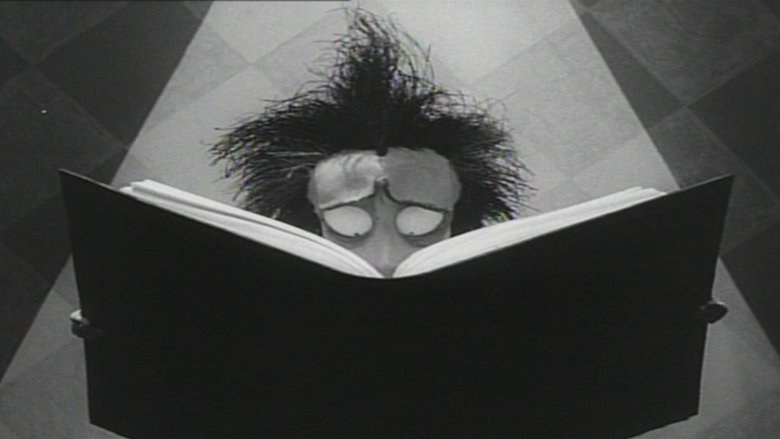

The narrative of "Vincent" is a progressive descent into a self-created psychological drama. Initially, Vincent's fantasies are presented as clear juxtapositions to his reality; he greets his aunt while imagining her as a wax figure, he plays with his dog while envisioning him as a zombie. The turning point occurs when he reads an Edgar Allan Poe tale and becomes convinced his "beautiful wife had been buried alive." This delusion breaks the barrier between playtime and perceived reality. When he digs in his mother's flowerbed, believing it to be a grave, reality intrudes forcefully, and he is sent to his room.
This punishment, however, is reinterpreted by Vincent as being "banished to the Tower of Doom." In his isolated state, his imagination turns against him. The spooky elements that were once under his control become menacing. He sees his zombie dog, skeleton hands reach through the walls, and he hears his dead wife calling to him. The fantasy becomes a nightmare from which he cannot escape. His mother's final attempt to bring him back to reality by telling him it's "all in your head" fails. Overwhelmed by the horrors, Vincent collapses, believing he is dying. The film ends on this note of tragic ambiguity, with him quoting the final, despairing word from Poe's "The Raven": "Nevermore." The ending implies that Vincent has become so lost in his role as a tormented hero that he has willed his own tragic end into existence, making his imaginative death real, at least to him.