ヴィンランド・サガ
"I have no enemies."
Vinland Saga - Symbolism & Philosophy
Symbols & Motifs
Thorfinn's Dagger
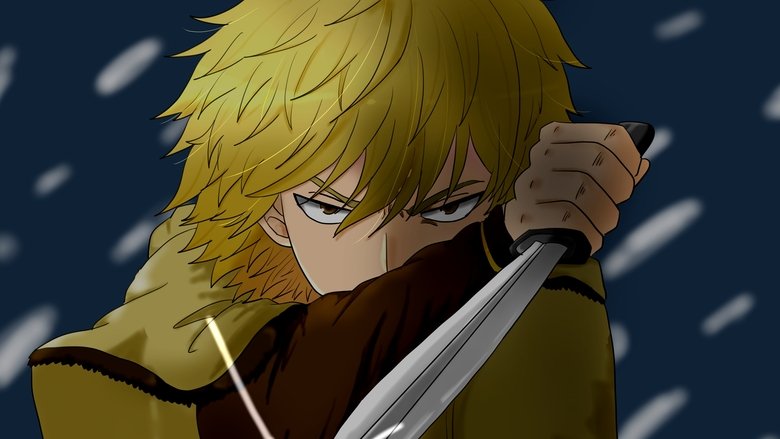
Initially, the dagger represents Thorfinn's connection to his father, Thors, and his heritage. However, it quickly becomes a symbol of his singular, all-consuming quest for revenge against Askeladd. It is the tool he believes will bring him justice.
Thorfinn carries and uses this dagger throughout Season 1 as his primary weapon. After Askeladd's death and being sold into slavery, he loses the dagger. Its absence in Season 2 is symbolic of him being stripped of his purpose and his identity as a warrior seeking vengeance. His journey becomes about learning to live without it, both literally and metaphorically.
Vinland
Vinland is a semi-mythical land of peace, warmth, and abundance, free from war and slavery. It represents an ideal, a paradise on Earth that stands in stark contrast to the brutal reality of 11th-century Europe. It symbolizes hope and the possibility of a new beginning for humanity.
Leif Erikson's tales of Vinland inspire a young Thorfinn with a sense of adventure before his life is consumed by revenge. After hitting rock bottom in Season 2, the dream of reaching Vinland is reignited in Thorfinn, but this time it's not a quest for adventure, but a mission to create a peaceful society as a way to atone for his violent past.
Farming and Wheat
Farming symbolizes creation, patience, and the nurturing of life, a direct antithesis to the destructive, instantaneous nature of Viking warfare. Cultivating the land represents a constructive way of life and the possibility of building a future.
In Season 2, Thorfinn and Einar work as slaves on Ketil's farm, their primary task being to clear a forest to plant wheat. This laborious process mirrors Thorfinn's slow and arduous internal journey of clearing the hatred from his heart to plant the seeds of a new, peaceful purpose. Their dream of buying their freedom with the wheat they grow symbolizes their hope for a self-made future.
Philosophical Questions
What is the nature of true strength?
The series constantly contrasts two definitions of strength. The Viking world defines it as martial prowess: the ability to defeat enemies and take what one wants through force, exemplified by characters like Thorkell. The series' central philosophy, however, championed by Thors and later adopted by Thorfinn, argues that true strength is internal. It's the courage to endure suffering, the restraint to not use violence, the compassion to forgive, and the fortitude to build a better world. Thorfinn's entire life is an exploration of this question, moving from the former definition to the latter.
Can a person truly atone for a violent past?
Season 2 is a deep dive into this question. Thorfinn is haunted by the hundreds of people he killed, seeing their faces in his nightmares. His journey is not about forgetting or being forgiven by a higher power, but about finding a way to live with his guilt. He concludes that atonement is not a matter of prayer or self-pity, but of action. He decides to dedicate the rest of his life to creating a world where the violence he perpetrated will no longer happen. The series suggests that atonement is a lifelong process of creating a positive impact that outweighs one's past destruction.
Is it possible to create a world without violence and slavery?
This is the ultimate question the series poses through the dream of Vinland. The characters constantly debate whether human nature is inherently violent and greedy. Canute believes it is, and thus a strong, authoritarian hand is needed to force peace. Thorfinn, on the other hand, puts his faith in the idea that people can choose a better way. The quest for Vinland is a grand experiment to answer this question: can a society be founded on principles of peace and cooperation, or will the cycles of violence and oppression inevitably repeat themselves?
Core Meaning
The core meaning of "Vinland Saga" is a profound exploration of the futility of revenge and the arduous journey toward true strength, which is found not in violence but in peace and forgiveness. The creator, Makoto Yukimura, uses the brutal backdrop of the Viking Age to deconstruct the romanticism of war and violence. The series posits that a "true warrior doesn't need a sword," a central tenet from Thorfinn's father, Thors. Across its two distinct seasons, the narrative transforms from a revenge tragedy into a philosophical quest for redemption. It argues that escaping the cycle of hatred requires immense inner strength, the will to atone for one's sins, and the courage to build a new world based on peace rather than conquest. The ultimate message is one of profound pacifism and hope: that even in a world defined by brutality, humanity can strive to create a "paradise on Earth" free from violence and slavery.