Vinland Saga
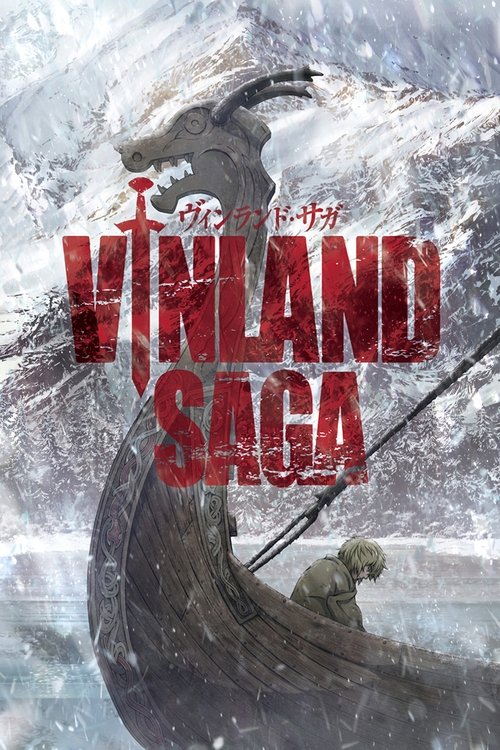
A brutal Viking epic where the fires of revenge forge a young warrior, only for him to discover that the coldest battles are fought within the landscape of the soul.
Vinland Saga

Vinland Saga

ヴィンランド・サガ

"I have no enemies."

08 July 2019 — 20 June 2023 Japan 2 season 48 episode Returning Series ⭐ 8.5 (838)
Cast: Yuto Uemura, Shinya Takahashi, Masato Niwa, Kensho Ono, Hiroki Goto
Drama Animation Action & Adventure War & Politics
Revenge and Its Emptiness The Meaning of a "True Warrior" War, Violence, and Humanity Slavery and Freedom

Overview

"Vinland Saga" is a historical epic that chronicles the life of Thorfinn, the son of a legendary Viking warrior named Thors. The story begins with Thorfinn as a young boy in Iceland, whose idyllic life is shattered when his father is killed by a cunning mercenary leader, Askeladd. Consumed by a singular desire for revenge, Thorfinn joins Askeladd's band, honing his skills as a killer for over a decade, all for the chance to defeat his father's murderer in an honorable duel. The first season, often called the "War Arc," is a brutal prologue detailing Thorfinn's violent upbringing amidst the Danish invasion of England, the political machinations of the Viking lords, and the rise of Prince Canute.

The second season marks a dramatic tonal and thematic shift. Following the climactic events of the first season, Thorfinn is left empty and without purpose, sold into slavery on a Danish farm. This "Slave Arc" becomes an introspective journey of atonement and self-discovery. Stripped of his weapons and his rage, Thorfinn must confront the horrors of his past and grapple with his father's pacifist teachings. He forms a bond with a fellow slave, Einar, and begins to understand the true cost of violence, searching for a new reason to live and dreaming of a peaceful land called Vinland, a place free from war and slavery.
Core Meaning

The core meaning of "Vinland Saga" is a profound exploration of the futility of revenge and the arduous journey toward true strength, which is found not in violence but in peace and forgiveness. The creator, Makoto Yukimura, uses the brutal backdrop of the Viking Age to deconstruct the romanticism of war and violence. The series posits that a "true warrior doesn't need a sword," a central tenet from Thorfinn's father, Thors. Across its two distinct seasons, the narrative transforms from a revenge tragedy into a philosophical quest for redemption. It argues that escaping the cycle of hatred requires immense inner strength, the will to atone for one's sins, and the courage to build a new world based on peace rather than conquest. The ultimate message is one of profound pacifism and hope: that even in a world defined by brutality, humanity can strive to create a "paradise on Earth" free from violence and slavery.

Thematic DNA

Revenge and Its Emptiness 35%
The Meaning of a "True Warrior" 30%
War, Violence, and Humanity 20%
Slavery and Freedom 15%

Revenge and Its Emptiness

The entire first season is driven by Thorfinn's all-consuming desire for revenge against Askeladd. He endures a decade of hardship and bloodshed, believing that killing his father's murderer will bring him peace. However, when he is finally robbed of his revenge at the end of the prologue, he is left completely hollow and without a purpose. Season 2 is a deep exploration of this emptiness, demonstrating that revenge is a self-destructive path that ultimately provides no closure or meaning, only more suffering.

The Meaning of a "True Warrior"

This theme is introduced by Thorfinn's father, Thors, who states, "A true warrior doesn't need a sword." Thors, the most powerful fighter in the series, abandons violence for a life of peace. Thorfinn's journey is a long, painful process of understanding these words. In Season 1, he believes strength is the ability to kill. In Season 2, after becoming a slave, he learns that true strength lies in enduring hardship without resorting to violence, protecting others, and having the courage to build rather than destroy. He vows to create a peaceful land, becoming a warrior of peace, not war.

War, Violence, and Humanity

The series offers a brutally honest depiction of war, stripping it of any glory or honor. Creator Makoto Yukimura, a self-professed pacifist, wanted to explore how people can come to terms with violence. Season 1 shows the chaos and suffering caused by the Viking invasions from the perspective of the aggressors. Season 2 shifts to show the consequences, focusing on the lives of slaves and farmers whose lives are destroyed by war. The show consistently questions the cycles of hatred that perpetuate conflict and explores whether humanity can ever escape them.

Slavery and Freedom

While present in the background of Season 1, the theme of slavery becomes central in Season 2. Thorfinn's experience as a slave is a crucible that forces his transformation. The farm arc examines the institution of slavery from multiple perspectives—the slaves, the owners, and the society that enables it. It also explores a more philosophical form of slavery, as articulated by Askeladd, who believes everyone is a "slave to something"—be it money, power, revenge, or even love. Thorfinn's journey is about achieving true freedom, not just from physical bondage, but from the hatred that once defined him.

Character Analysis

Thorfinn

Yuto Uemura

Archetype: Anti-hero turned Hero
Key Trait: Resilient

Motivation

Initially, his sole motivation is to avenge his father's death by killing Askeladd in a fair duel. After this is taken from him, he loses all motivation and becomes passively suicidal. His motivation evolves in Season 2 into a desire to atone for the countless lives he took. This new purpose crystallizes into a positive goal: to travel to Vinland and establish a peaceful society, a land free from the violence that defined his youth.

Character Arc

Thorfinn's arc is one of the most dramatic transformations in modern anime. In Season 1, he is an archetypal revenge-seeker, a boy consumed by rage who becomes a hollowed-out, lethal warrior. His entire identity is tied to killing Askeladd. The climax of Season 1 shatters this identity, leaving him an empty shell. Season 2 depicts his rebirth. As a slave, he is forced into a state of total passivity, allowing him to slowly and painfully confront his past sins. Through his relationship with Einar and others, he rediscovers his humanity, renounces violence, and embraces his father's philosophy. He transforms from a person defined by his enemies to a man who declares "I have no enemies," aiming to build a world of peace.

Askeladd

Naoya Uchida

Archetype: The Complex Antagonist / Mentor
Key Trait: Cunning

Motivation

Askeladd's motivations are layered. On the surface, he seeks wealth and power. His deeper motivation, inherited from his mother, is to protect Wales and find his true king, the legendary Artorius (King Arthur), whom he eventually sees in Canute. He manipulates Thorfinn by weaponizing the boy's revenge, using him as a valuable asset while also, in his own way, teaching him harsh lessons about the world.

Character Arc

Askeladd serves as the primary antagonist and a twisted father figure to Thorfinn for the first season. While ruthless, cunning, and responsible for countless deaths, his character is revealed to be incredibly complex. As a half-Welsh, half-Danish man, he secretly despises the Vikings he leads and harbors a deep-seated desire to protect his homeland of Wales from them. His entire life is a strategic game to find a worthy king to protect Britain. His arc culminates in a selfless act of sacrifice, where he orchestrates his own death to save Wales and propel Canute to the throne, cementing his legacy as a tragic, brilliant tactician rather than a simple villain.

Canute

Kensho Ono

Archetype: The Reluctant Ruler
Key Trait: Ambitious

Motivation

Initially, Canute's motivation is simply to survive and rely on others. After his transformation, his motivation becomes the creation of a strong, unified kingdom that can protect its people, a utopia on Earth. He interprets God's love as a passive force and decides that he must become an earthly power to enact real change, even if it means dirtying his own hands and becoming a tyrant to end the cycle of Viking raids.

Character Arc

Canute is introduced as a timid, effeminate, and deeply religious prince who is terrified of the world. His character arc is a dramatic transformation spurred by the death of his guardian, Ragnar. Forced to confront the harsh realities of power and the silence of God, he discards his meekness and Christian faith in a cruel world, resolving to create his own "paradise on Earth" through force and political maneuvering. He becomes a ruthless, pragmatic, and capable king, a stark contrast to his initial persona. His journey is a dark mirror to Thorfinn's: while Thorfinn forsakes violence for peace, Canute embraces it to achieve his vision of order.

Symbols & Motifs

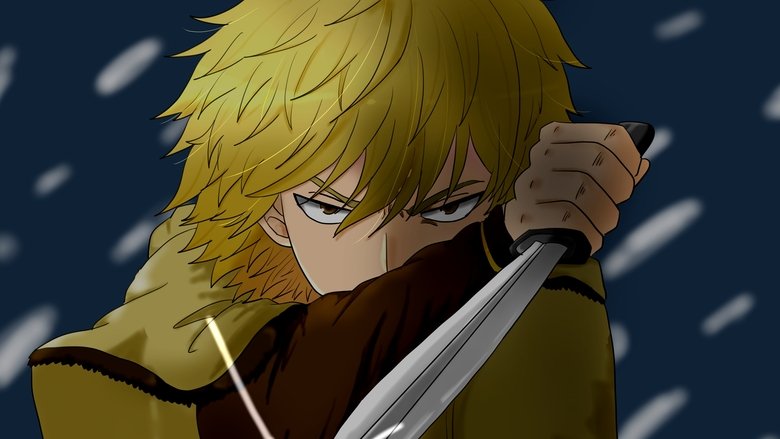
Thorfinn's Dagger

Meaning:

Initially, the dagger represents Thorfinn's connection to his father, Thors, and his heritage. However, it quickly becomes a symbol of his singular, all-consuming quest for revenge against Askeladd. It is the tool he believes will bring him justice.

Context:

Thorfinn carries and uses this dagger throughout Season 1 as his primary weapon. After Askeladd's death and being sold into slavery, he loses the dagger. Its absence in Season 2 is symbolic of him being stripped of his purpose and his identity as a warrior seeking vengeance. His journey becomes about learning to live without it, both literally and metaphorically.

Vinland

Meaning:

Vinland is a semi-mythical land of peace, warmth, and abundance, free from war and slavery. It represents an ideal, a paradise on Earth that stands in stark contrast to the brutal reality of 11th-century Europe. It symbolizes hope and the possibility of a new beginning for humanity.

Context:

Leif Erikson's tales of Vinland inspire a young Thorfinn with a sense of adventure before his life is consumed by revenge. After hitting rock bottom in Season 2, the dream of reaching Vinland is reignited in Thorfinn, but this time it's not a quest for adventure, but a mission to create a peaceful society as a way to atone for his violent past.

Farming and Wheat

Meaning:

Farming symbolizes creation, patience, and the nurturing of life, a direct antithesis to the destructive, instantaneous nature of Viking warfare. Cultivating the land represents a constructive way of life and the possibility of building a future.

Context:

In Season 2, Thorfinn and Einar work as slaves on Ketil's farm, their primary task being to clear a forest to plant wheat. This laborious process mirrors Thorfinn's slow and arduous internal journey of clearing the hatred from his heart to plant the seeds of a new, peaceful purpose. Their dream of buying their freedom with the wheat they grow symbolizes their hope for a self-made future.

Memorable Quotes

You have no enemies. No one has any enemies. There is no one who it's okay to hurt.

— Thors

Context:

Spoken to a young Thorfinn in Season 1, Episode 2, after Thorfinn asks who his enemies are and what his sword is for. Thors tries to instill in his son a morality that is completely alien to their time and culture.

Meaning:

This quote is the philosophical core of the entire series. It establishes the pacifist ideal that Thorfinn spends the entire story trying to understand and eventually embody. It directly challenges the Viking worldview, which is predicated on the concepts of enemies, battle, and honor through violence.

A true warrior... doesn't need a sword.

— Thors

Context:

Thors says this to Askeladd during their duel in Season 1, Episode 4, lamenting that he still has to rely on a blade because he has not yet reached the level of a true master.

Meaning:

This line defines the central thesis of the series regarding strength. It suggests that true mastery and power lie not in the ability to inflict violence, but in the strength of character, resolve, and spirit required to live peacefully and protect others without killing. Thorfinn's entire journey is a struggle to comprehend and finally accept this truth.

I'm going to create a paradise on this earth. A place of peace and prosperity... here on this land.

— Canute

Context:

Canute declares this in Season 1, Episode 19, after the death of his guardian Ragnar forces him to abandon his passive nature and embrace a more ruthless philosophy to survive and change the world.

Meaning:

This quote marks the completion of Canute's transformation from a timid prince to an ambitious future king. It signifies his rejection of a divine paradise in the afterlife in favor of building a worldly one through his own power and will, even if it requires bloodshed and tyranny. It sets him on a path parallel but opposite to Thorfinn's.

If you're empty, then you can fit anything inside you. In fact, it's better to be empty if you want to be reborn.

— Sverkel

Context:

In Season 2, an elderly man on the farm named Sverkel says this to Thorfinn after overhearing him tell Einar that without his revenge, he feels empty. This conversation is a turning point in Thorfinn's recovery.

Meaning:

This piece of wisdom offers Thorfinn a glimmer of hope at his lowest point. It reframes his emptiness not as a void of despair, but as an opportunity for a fresh start. It suggests that only by letting go of his past identity, built entirely on revenge, can he build a new, better one.

Episode Highlights

A True Warrior

S1E4

This episode is the inciting incident for the entire series. It features the fateful duel between Thors and Askeladd. Thors demonstrates his overwhelming strength and his profound pacifist philosophy, choosing to sacrifice his life to save his son and countrymen. His death sets Thorfinn on his decade-long path of revenge.

Significance:

It establishes the central themes of the show: the meaning of true strength versus the brutality of the Viking way of life. Thors' words and actions become the moral compass that Thorfinn spends the rest of the series trying to navigate back to.

The Journey Begins

S1E6

A critical episode in Thorfinn's descent. Having joined Askeladd's band, Thorfinn is taken in by a kind English woman who shows him compassion. He repays her by signaling Askeladd's crew to raid her village. It's one of the first truly evil acts Thorfinn commits, showing how his quest for revenge has started to corrupt his soul.

Significance:

This episode marks the point of no return for young Thorfinn, solidifying his transformation from an innocent boy into a hardened part of the Viking war machine. It lays the groundwork for the immense guilt he will face in the second season.

United Front

S1E19

A pivotal moment for Prince Canute. After his guardian Ragnar is killed, Canute undergoes a profound psychological and philosophical transformation. He confronts the silence of God and decides to forge his own path to create a paradise on Earth, embracing a ruthless pragmatism he previously lacked.

Significance:

This episode marks the birth of King Canute, a major political player whose ambition will shape the world of the series. His development provides a crucial foil to Thorfinn's own journey.

End of the Prologue

S1E24

The stunning conclusion to the first season. To save both his homeland of Wales and Canute, Askeladd masterfully plays the role of a madman, feigning an attempt on the king's life and forcing Canute to kill him. This act secures Canute's position but robs Thorfinn of his life's purpose in an instant. Thorfinn is left screaming in despair, his world shattered.

Significance:

This episode masterfully concludes the series' first major arc, subverting expectations of a final revenge duel. It completely redefines the show's direction, setting the stage for the introspective and philosophical journey of Season 2.

Oath

S2E9

This is the emotional and philosophical climax of the first half of Season 2. After years of being an empty shell, Thorfinn has a powerful nightmare where he confronts the ghosts of all the people he's killed. He breaks down completely, overwhelmed by guilt. He then meets Einar in a field of wheat and makes a solemn vow to use his strength to build a peaceful world and never hurt anyone again, finally embracing his father's ideals.

Significance:

This is the moment of Thorfinn's rebirth. He finally finds a new purpose beyond revenge: atonement through creation. It is the turning point of his entire character arc and sets the goal for the remainder of the series.

Philosophical Questions

What is the nature of true strength?

The series constantly contrasts two definitions of strength. The Viking world defines it as martial prowess: the ability to defeat enemies and take what one wants through force, exemplified by characters like Thorkell. The series' central philosophy, however, championed by Thors and later adopted by Thorfinn, argues that true strength is internal. It's the courage to endure suffering, the restraint to not use violence, the compassion to forgive, and the fortitude to build a better world. Thorfinn's entire life is an exploration of this question, moving from the former definition to the latter.

Can a person truly atone for a violent past?

Season 2 is a deep dive into this question. Thorfinn is haunted by the hundreds of people he killed, seeing their faces in his nightmares. His journey is not about forgetting or being forgiven by a higher power, but about finding a way to live with his guilt. He concludes that atonement is not a matter of prayer or self-pity, but of action. He decides to dedicate the rest of his life to creating a world where the violence he perpetrated will no longer happen. The series suggests that atonement is a lifelong process of creating a positive impact that outweighs one's past destruction.

Is it possible to create a world without violence and slavery?

This is the ultimate question the series poses through the dream of Vinland. The characters constantly debate whether human nature is inherently violent and greedy. Canute believes it is, and thus a strong, authoritarian hand is needed to force peace. Thorfinn, on the other hand, puts his faith in the idea that people can choose a better way. The quest for Vinland is a grand experiment to answer this question: can a society be founded on principles of peace and cooperation, or will the cycles of violence and oppression inevitably repeat themselves?

Alternative Interpretations

One area of alternative interpretation revolves around the character of Askeladd and his relationship with Thorfinn. While on the surface he is a cruel manipulator who uses Thorfinn's rage for his own ends, some viewers interpret his actions as a form of harsh, unconventional mentorship. He never kills Thorfinn and consistently pushes him to grow stronger and smarter, albeit through brutal means. This reading suggests Askeladd may have felt a twisted sense of responsibility or even affection for the boy, seeing a reflection of his own vengeful past in him and preparing him for a world that requires more than just brute strength.

Another interpretation concerns Canute's philosophy of love and salvation. His decision to create a "paradise on Earth" through force is presented as a tragic fall from grace. However, an alternative reading could see it as a pragmatic and even necessary choice within the brutal context of his world. From this perspective, Canute's actions are not a rejection of love but a different expression of it: a ruler's love that is willing to sacrifice morality and individuals for the greater good and long-term security of the masses, creating a world where ordinary people might one day live in peace.

Cultural Impact

"Vinland Saga" has had a significant cultural impact as a standout title in the historical and seinen (targeted at adult men) anime genres. It is often lauded for its historical research and relatively accurate depiction of the Viking Age, from the political conflict between the Danes and England to the nuances of Viking culture beyond simple brutality. The series arrived at a time of high interest in Viking media, often being compared favorably to live-action shows like "Vikings" for its narrative depth and complex characters.

The critical reception has been overwhelmingly positive, with both seasons praised for their storytelling, character development, and animation. However, the series is notable for the dramatic shift in tone and pace between Season 1 and Season 2. Season 1 was an action-packed war epic that drew in a wide audience. Season 2's deliberate, slow-paced, and introspective "Slave Arc" was lauded by critics and manga readers for its thematic depth and profound character work but proved divisive for some anime-only viewers who were expecting more action. This sparked widespread discussion online about storytelling, audience expectations, and the series' core anti-violence message. The series has contributed to a greater appreciation for seinen manga adaptations that prioritize philosophical themes and character psychology over constant action.

Audience Reception

Audience reception for "Vinland Saga" has been largely positive, though marked by a distinct divide between the two seasons. Season 1 was met with widespread acclaim for its intense action, compelling characters (especially Askeladd), and epic scope, establishing it as a modern classic. It was praised for being a mature and gritty historical drama.

The reception for Season 2 was more complex. While critics and manga fans celebrated it as the true heart of the story and a masterpiece of character development, a vocal segment of the audience was disappointed by the drastic change of pace. The shift from a fast-paced war story to a slow, introspective drama about farming and philosophy was jarring for those expecting more of Season 1's action. This led to criticism of it being "boring" or too slow. However, a majority of dedicated viewers have praised Season 2 for its emotional depth, mature themes, and its faithful adaptation of the manga's most beloved arc, considering Thorfinn's journey of healing to be the series' greatest strength. Overall, the series is held in very high regard, but often with the caveat that viewers should be prepared for the significant thematic and tonal shift after the first season.

Interesting Facts

  • The creator of the manga, Makoto Yukimura, has stated that he personally dislikes violence. He chose the Viking Age as a setting because it was a society that accepted violence as common sense, allowing him to explore the theme of overcoming it.
  • Many of the main characters, including Thorfinn Karlsefni, Leif Erikson, and Canute the Great, are based on real historical figures from Norse sagas. However, their personalities and specific plotlines are heavily dramatized for the story.
  • Thorfinn's father, Thors, is a fictional character created for the series to embody the ideals of a "true warrior" and to serve as the catalyst for Thorfinn's journey.
  • The first season of the anime was produced by Wit Studio (known for "Attack on Titan"), while the second season was produced by MAPPA. Despite the studio change, key staff like director Shūhei Yabuta remained, ensuring a consistent vision.
  • Makoto Yukimura was initially inspired to write a story about slavery after reading about the Norwegian king Olaf Tryggvason, who was once a slave. His editor was against the idea, so the character was changed to a Viking, with the plan to explore slavery later in the story, which came to fruition in the second season's arc.

⚠️ Spoiler Analysis

Click to reveal detailed analysis with spoilers

Frequently Asked Questions

Explore More About This Movie

Dive deeper into specific aspects of the movie with our detailed analysis pages

Comments (0)

Leave a comment

No comments yet. Be the first to share your thoughts!