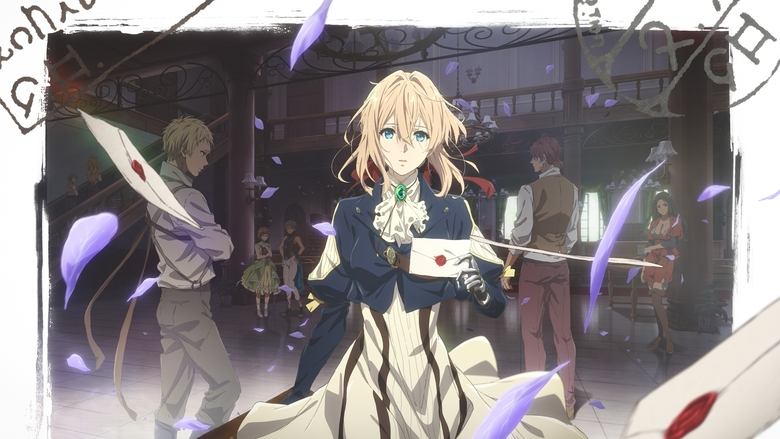

The central plot of "Violet Evergarden" revolves around Violet's belief that Major Gilbert Bougainvillea is still alive, a hope she clings to despite all evidence. A major turning point occurs in Episode 7 and 8, when she finally learns from Claudia Hodgins and others that Gilbert was critically wounded in their final battle and is presumed dead, with only his dog tags found. This revelation shatters Violet's world, leading to a profound depression in Episode 9, where she is consumed by guilt over her past as a soldier, realizing she deprived others of their loved ones just as she has now lost hers.
Violet's journey of healing involves coming to terms with Gilbert's death. She visits his family home, speaks with his mother, and finally learns to accept her grief. This acceptance frees her from being solely defined by his orders, allowing her to live for herself. The TV series ends on an ambiguous note: Violet goes to a client's home by the sea, and her surprised, gentle smile upon seeing the person who opens the door led many fans to theorize it was a returned Gilbert.
This theory is confirmed in the sequel, Violet Evergarden: The Movie. It is revealed that Gilbert did survive the war but, maimed and overwhelmed with guilt for using Violet as a weapon, chose to live in seclusion on a remote island, believing she would be better off without him. When Violet learns he is alive, she travels to the island. After an emotionally charged confrontation where Gilbert initially refuses to see her, he is moved by a final letter from Violet. He ultimately accepts his feelings and his past, and the two reunite, with Violet choosing to stay and live with him on the island, bringing her long search for love and its meaning to a definitive, happy conclusion.