Violet Evergarden
ヴァイオレット・エヴァーガーデン
"An inspiring tale of love and letters"
Overview
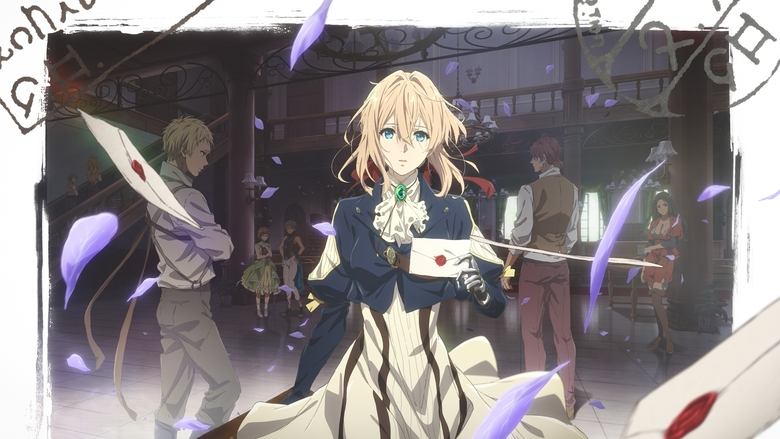
"Violet Evergarden" follows the journey of its titular character, a young girl raised as a soldier with formidable combat skills, knowing only how to follow orders. After a brutal final battle in a great war leaves her with prosthetic arms and the loss of her beloved commander, Major Gilbert Bougainvillea, she is left with his final words: "I love you." Not understanding their meaning, Violet begins a new life in the post-war era working at the CH Postal Company.
There, she becomes an "Auto Memory Doll," a ghostwriter who transcribes people's thoughts and feelings into letters. Traveling to meet various clients, Violet encounters stories of love, loss, joy, and sorrow. Each letter she writes and every person she helps brings her closer to understanding human emotions, processing her own traumatic past, and finally deciphering the true meaning of Gilbert's last words.
Core Meaning
The core meaning of "Violet Evergarden" is a profound exploration of empathy and the healing power of communication. The series posits that words, when chosen with true understanding and sincerity, can bridge distances, mend emotional wounds, and define our very humanity. It is a story about a character's journey from being a mere "tool" of war to a fully realized person who understands love in its many forms—familial, romantic, and platonic. Ultimately, the series conveys a message of hope, suggesting that even after experiencing immense trauma and loss, one can find purpose and heal by connecting with others and helping them express their own hearts.
Thematic DNA
The Journey to Understand Love and Emotions
This is the central theme of the series. Violet's entire motivation is to comprehend the words "I love you." Each episode serves as a lesson, presenting her with a different facet of love: a playwright's grief for his daughter, a mother's undying love for her child, a soldier's final words to his family. Her initial approach is mechanical and logical, taking words literally. Through her work, she witnesses raw emotion and slowly transitions from a passive observer to an empathetic participant, eventually learning to identify and articulate her own feelings.
Healing from Trauma and the Scars of War
The series is set in a post-war world where nearly every character is affected by the conflict. Violet herself is the primary example, haunted by her past as a ruthless child soldier. Her journey is not just about understanding love, but also about confronting her past actions and finding a way to live with the guilt. The show explores survivor's guilt, PTSD, and the difficulty of reintegrating into a peaceful society. Through her work, Violet helps others heal from their war-related losses, and in doing so, finds a path to her own redemption and self-forgiveness.
The Power of Words and Letters
In a world where many are illiterate, the written word holds immense power. Letters are not just messages; they are vessels of profound emotion, capable of conveying love, gratitude, and regret across time and distance. The series emphasizes that articulating feelings is a courageous and essential act. Violet's job as an Auto Memory Doll highlights the idea that sometimes an intermediary is needed to find the right words to express the heart's deepest sentiments. Episodes frequently show how a single, well-crafted letter can change a person's life.
Finding Purpose and Identity
Stripped of her role as a soldier, Violet initially lacks purpose and identity, viewing herself only as Major Gilbert's "tool." Her quest to become an Auto Memory Doll is a search for a new reason to live. As she masters her craft, she forges a new identity—not as a weapon, but as someone who connects people and brings them solace. This theme explores the transition from an existence defined by orders to a life of free will and self-discovery.
Character Analysis
Violet Evergarden
Yui Ishikawa
Motivation
Her primary motivation is to understand the meaning of the words "I love you," which were spoken to her by Major Gilbert Bougainvillea before his disappearance. This singular goal drives her to become an Auto Memory Doll, believing that by understanding others' feelings, she can decipher her own and comprehend what Gilbert meant.
Character Arc
Violet begins the series as an emotionally stunted child soldier, raised to be a weapon and capable only of following orders. Her journey is one of profound humanization. By working as an Auto Memory Doll, she is exposed to the full spectrum of human feeling. Initially, her attempts to write letters are rigid and literal. Through her experiences, she slowly develops empathy, learns to cry, laugh, and grieve. By the end of the series, she has transformed from a passive "tool" into an autonomous individual who not only understands love but can express it herself, having found her own purpose and a way to live with her past.
Gilbert Bougainvillea
Daisuke Namikawa
Motivation
Gilbert's core motivation is to protect Violet and ensure she has a future free from violence and killing. He wants her to live and be free, not as a soldier or a tool, but as a person. His love for her is protective and paternal, though it deepens into romantic affection which he struggles to express given their circumstances as soldiers.
Character Arc
Gilbert's arc is primarily told through flashbacks and the memories of others. He is the first person to see Violet as a human being rather than a weapon, giving her a name and trying to provide her with a life beyond the battlefield. He is tormented by the guilt of using her in the war, which contradicts his desire for her to live a normal life. His final act is to push her towards freedom and confess his love, setting the stage for her entire post-war journey. In the sequel film, he is revealed to be alive, and his arc concludes with him confronting his guilt and finally accepting a future with Violet.
Claudia Hodgins
Takehito Koyasu
Motivation
Hodgins is motivated by his promise to his friend Gilbert to take care of Violet. He feels a deep sense of responsibility for her well-being and is committed to helping her find a new purpose in life after the war. He genuinely cares for her, viewing her like a daughter.
Character Arc
A former army commander and a good friend of Gilbert's, Hodgins becomes Violet's guardian after the war. He establishes the CH Postal Company and gives Violet a home and a job. Initially, he struggles with how to handle the emotionally detached Violet and carries the burden of knowing the truth about Gilbert's supposed death. Throughout the series, he acts as a supportive, fatherly figure, gently guiding Violet's integration into civilian life and watching over her emotional growth. He fulfills his promise to Gilbert by ensuring Violet finds her own way.
Symbols & Motifs
Prosthetic Arms
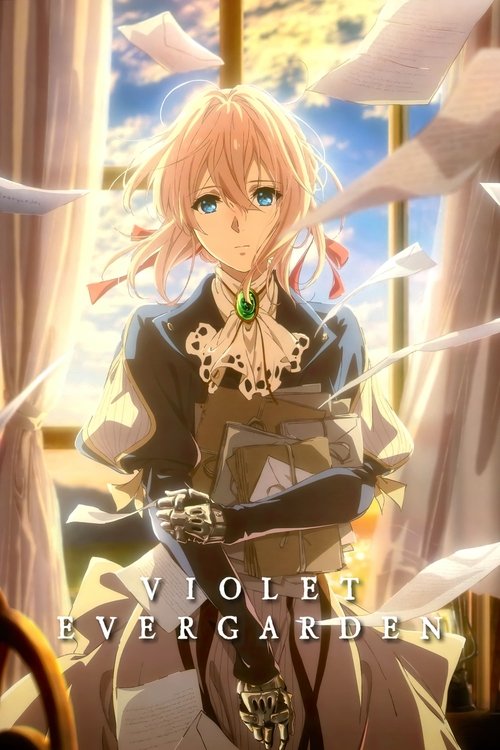
Violet's mechanical arms symbolize her past as a weapon and her journey of transformation. Initially, they are a stark reminder of the violence she perpetrated and the losses she endured. However, as she becomes an Auto Memory Doll, she uses these same hands to type letters that heal and connect people, transforming a symbol of destruction into an instrument of creation and empathy.
Violet loses her original arms in the final battle of the war while trying to protect Major Gilbert. Throughout the series, her metallic fingers are often shown in close-up as she types on her typewriter, visually linking her violent past with her new, peaceful purpose.
The Emerald Brooch
The brooch, which Violet treasures, symbolizes her connection to Major Gilbert and his final words. Its color reminds her of his eyes. It represents the love she doesn't yet understand and serves as her primary motivation to learn about human emotion. It is a tangible piece of her past that fuels her hope for the future and her desire to understand the heart.
Gilbert gifts the brooch to Violet, telling her its color is like his eyes. She wears it prominently throughout the series as her most cherished possession, a constant and beautiful reminder of the man who gave her a name and a sense of worth.
Letters
Letters are the central motif of the series, symbolizing communication, empathy, and the preservation of emotion. They represent the idea that feelings can transcend physical presence and even death. Each letter Violet writes is a testament to the human need to connect and be understood.
Nearly every episode revolves around the creation of a letter for a client. The most poignant example is in Episode 10, where a dying mother commissions fifty years' worth of birthday letters for her young daughter, ensuring her love will be felt long after she is gone.
Memorable Quotes
「ヴァイオレット、生きなさい。自由になりなさい。心から、愛してる」 (Violet, live... and be free. From the bottom of my heart, I love you.)
— Gilbert Bougainvillea
Context:
Spoken during the final, bloody battle of the war as Gilbert lies critically injured. These words are an order, a plea, and a confession that Violet spends the entire series trying to comprehend.
Meaning:
These are Gilbert's last words to Violet and the central mystery that propels the entire series. They represent his ultimate wish for her: to transcend her past as a weapon and find her own identity and happiness. The phrase "I love you" is the catalyst for her journey of emotional discovery.
「『あいしてる』を、知りたいのです」 (I want to know what 'I love you' means...)
— Violet Evergarden
Context:
Violet repeats this sentiment multiple times, especially early in the series, as she explains her reason for wanting to become an Auto Memory Doll at the CH Postal Company.
Meaning:
This quote encapsulates Violet's core motivation and the central theme of the story. It highlights her initial emotional vacancy and her earnest desire to understand the fundamental human connection that has been alien to her.
「届けたいと願う手紙が、どこかに存在しないなんてことは、ないんだから」 (No letter that could be sent deserves to go undelivered.)
— Violet Evergarden
Context:
This becomes a recurring sentiment for Violet as she takes on increasingly difficult or dangerous assignments, believing in the inherent value of every person's desire to communicate their feelings.
Meaning:
This statement reflects Violet's growth and the development of her own philosophy and dedication to her work. It shows she has moved beyond simply following orders and now understands the profound importance of the messages she carries. It is her personal creed as an Auto Memory Doll.
Episode Highlights
Episode 7
Violet travels to assist a famous playwright, Oscar Webster, who is struggling to finish a play after the death of his young daughter. As she helps him write, the story of the play mirrors his grief and forces Violet to confront her own feelings of loss and the weight of her past actions in the war. The episode culminates in a beautiful, cathartic scene where Violet uses an umbrella to leap across a lake, fulfilling a wish from Oscar's daughter's story. It ends with Violet learning Gilbert is considered 'missing in action' and presumed dead, shattering her denial.
This is a major turning point for Violet's character. For the first time, she truly grasps the concept of grief and begins to understand the finality of death. Her encounter with Oscar's personal tragedy awakens her own suppressed trauma and guilt, setting the stage for a deeper emotional breakdown and eventual healing in the subsequent episodes.
Episode 10
Violet is hired by a terminally ill mother, Clara Magnolia, to write letters. Violet spends a week with her and her young daughter, Anne. It's revealed that the letters are for Anne, to be delivered on her birthday every year for the next fifty years. Violet witnesses the profound, selfless love of a mother ensuring her daughter will never feel alone, even after her death.
Widely considered the most emotionally powerful episode of the series, Episode 10 masterfully showcases the theme of love transcending death. It is a pivotal moment in Violet's education on emotion, as she is deeply moved and for the first time, cries out of pure empathy for someone else's situation. This episode solidifies her understanding of familial love and the enduring impact of words.
Episode 11
Violet takes on a dangerous assignment to assist a soldier named Aidan on the front lines of a conflict. As he lies dying, Violet transcribes his final letters to his parents and his childhood love. The episode unflinchingly portrays the brutality of war and the desperation to communicate love one last time.
This episode forces Violet to return to a battlefield, not as a killer, but as a preserver of memories and emotions. It directly contrasts her past and present roles, highlighting her transformation. It powerfully reinforces the tragedy of war and the immense value of the service she now provides.
Episode 9
After finally processing the news of Gilbert's death, Violet is consumed by guilt and trauma from her past. She realizes the lives she took in the war were people who were loved by others, just as she loved Gilbert. This realization sends her into a deep depression, where she questions her right to live. Encouragement from her coworkers and a letter from the brother of a soldier she helped reminds her of the good she has done as a Doll, pulling her back from the brink.
This episode is the emotional climax of Violet's internal struggle. It is where she fully confronts the horror of her past and hits rock bottom. Her subsequent decision to continue living and working as a Doll is not one of ignorance, but of acceptance and a newfound resolve to use her life to create good, marking a critical step in her healing process.
Episode 13
With the war officially over and a peace treaty signed, Violet participates in an air show where letters of peace are dropped from the sky. In this final episode of the TV series, Violet writes her own, simple letter to Gilbert, expressing for the first time her own feelings and her nascent understanding of love. The series ends with Violet taking on a new client and, upon seeing their face, giving a gentle, knowing smile.
The finale signifies Violet's full acceptance of her past and her optimistic look toward the future. Her letter to Gilbert is a culmination of everything she has learned, moving from a question ("What is 'I love you'?") to a statement. The ambiguous final scene provided a sense of hopeful closure for the series while leaving the door open for future stories.
Philosophical Questions
What does it mean to be human?
The series explores this by contrasting Violet's initial state as a "tool" or "weapon" with her development into a person. She begins with no autonomy or emotional understanding, existing only to follow orders. Her journey suggests that humanity is not an inherent state but is defined by the capacity for empathy, the ability to form emotional connections, the struggle with grief and guilt, and the search for one's own purpose. By learning to feel for others, Violet discovers her own humanity.
Can a person truly heal from profound trauma?
"Violet Evergarden" addresses this question with a nuanced and hopeful perspective. It doesn't suggest that the scars of war and loss can be erased. Violet is perpetually haunted by the people she killed. However, the series argues that healing is possible through connection, purpose, and self-forgiveness. By dedicating her life to helping others express love and find closure, Violet finds a way to atone for her past and give her life new meaning, suggesting that while trauma becomes a part of you, it does not have to define your entire existence.
What is the true nature of love?
Violet's quest to understand the words "I love you" serves as a vehicle to explore love in its myriad forms. The series deconstructs the concept beyond simple romance. It shows love as the desperate, protective feeling of a parent (Episode 10), the quiet grief of a sibling (Episode 3), the unrequited affection of a friend, and the profound, life-altering bond she shared with Gilbert. The series concludes that love isn't a single feeling but a complex spectrum of emotions and actions defined by empathy, sacrifice, and a deep desire for another's well-being.
Alternative Interpretations
While the central narrative is quite direct, some interpretations focus on Violet's psychological state. One perspective is that her journey can be read as a metaphor for recovering from severe alexithymia (the inability to identify and describe emotions) and PTSD. Her mechanical, literal interpretation of the world at the start is a classic symptom, and her work as a Doll is a form of therapy, forcing her to engage with and process emotions vicariously until she can access her own.
Another interpretation views the series through a neurodivergent lens, with some viewers seeing Violet's traits—such as her literal interpretation of speech, difficulty with social cues, and intense focus on her special interest (becoming a Doll)—as reflective of someone on the autism spectrum. In this reading, her character arc is not just about healing from trauma, but also about an autistic person learning to navigate a neurotypical world and finding a unique way to connect with others that leverages her strengths.
Cultural Impact
"Violet Evergarden" was released to widespread critical acclaim, particularly for its breathtaking visual animation by Kyoto Animation, which many critics described as being of cinematic quality. It became a flagship title for Netflix's expansion into exclusive anime content, introducing a global audience to a poignant, character-driven drama. The series resonated deeply with viewers for its heartfelt exploration of grief, love, and healing in the aftermath of war, often being cited as an anime that is exceptionally skilled at evoking powerful emotional responses.
Its episodic structure, where Violet helps a new client in each installment, allowed for a series of powerful, self-contained short stories that collectively built her character arc. Episodes 7 and especially 10 are frequently singled out by fans and critics as masterpieces of emotional storytelling. The series has had a lasting impact, fostering a dedicated fanbase and leading to two successful theatrical films that continued and concluded Violet's story. It stands as a testament to Kyoto Animation's artistry and a benchmark for emotional narrative in anime, exploring themes of empathy and the power of the written word with rare grace and sensitivity.
Audience Reception
"Violet Evergarden" received overwhelmingly positive reactions from audiences worldwide. It is consistently praised for its stunning, movie-quality animation by Kyoto Animation, with many viewers considering it one of the most beautiful anime series ever made. The emotional depth of its storytelling is another key point of acclaim; audiences frequently mention how the series, particularly episodes like 7 and 10, moved them to tears.
The main criticisms, though minor, are sometimes directed at the early episodes, where Violet's robotic personality can feel slow or repetitive to some viewers before her character development accelerates. However, the vast majority of viewers see this as a necessary foundation for her incredible emotional arc. Overall, the series is held in high regard for its mature handling of complex themes like grief, trauma, and the power of empathy, cementing its status as a modern classic in the drama genre.
Interesting Facts
- The source material for the anime is a Japanese light novel series written by Kana Akatsuki and illustrated by Akiko Takase. In 2014, it became the first and only work to win the Grand Prize in the novel category of the Kyoto Animation Award.
- The creator of the light novel series is Kana Akatsuki.
- The stunning visual quality of the series is a hallmark of its production studio, Kyoto Animation, which is renowned for its detailed character animation and beautiful background art.
- Character designer Akiko Takase, who also illustrated the light novels, aimed to incorporate the image of a working woman with both the 'softness' and 'hardness' of a bisque doll into Violet's design.
- While adept at her job, Violet's typing speed is exceptional; she can type 200 characters per minute.
- The series takes place on the fictional continent of Telesis, in a setting reminiscent of post-World War I Europe.
⚠️ Spoiler Analysis
Click to reveal detailed analysis with spoilers
Frequently Asked Questions
Explore More About This Movie
Dive deeper into specific aspects of the movie with our detailed analysis pages
Comments (0)
No comments yet. Be the first to share your thoughts!