ヴァイオレット・エヴァーガーデン
"An inspiring tale of love and letters"
Violet Evergarden - Symbolism & Philosophy
Symbols & Motifs
Prosthetic Arms
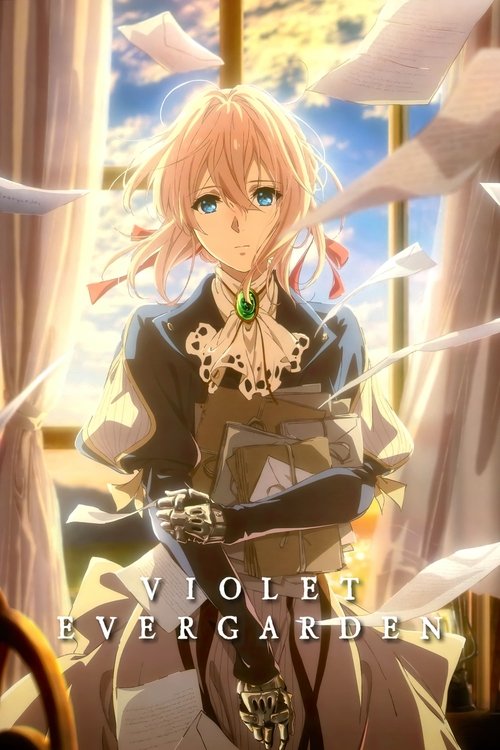
Violet's mechanical arms symbolize her past as a weapon and her journey of transformation. Initially, they are a stark reminder of the violence she perpetrated and the losses she endured. However, as she becomes an Auto Memory Doll, she uses these same hands to type letters that heal and connect people, transforming a symbol of destruction into an instrument of creation and empathy.
Violet loses her original arms in the final battle of the war while trying to protect Major Gilbert. Throughout the series, her metallic fingers are often shown in close-up as she types on her typewriter, visually linking her violent past with her new, peaceful purpose.
The Emerald Brooch
The brooch, which Violet treasures, symbolizes her connection to Major Gilbert and his final words. Its color reminds her of his eyes. It represents the love she doesn't yet understand and serves as her primary motivation to learn about human emotion. It is a tangible piece of her past that fuels her hope for the future and her desire to understand the heart.
Gilbert gifts the brooch to Violet, telling her its color is like his eyes. She wears it prominently throughout the series as her most cherished possession, a constant and beautiful reminder of the man who gave her a name and a sense of worth.
Letters
Letters are the central motif of the series, symbolizing communication, empathy, and the preservation of emotion. They represent the idea that feelings can transcend physical presence and even death. Each letter Violet writes is a testament to the human need to connect and be understood.
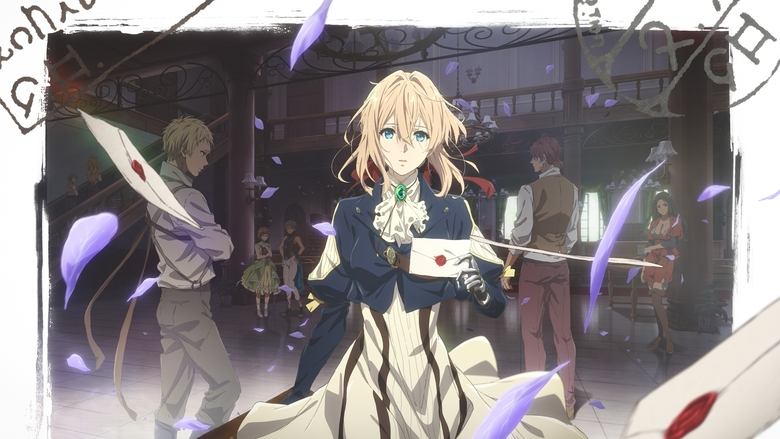
Nearly every episode revolves around the creation of a letter for a client. The most poignant example is in Episode 10, where a dying mother commissions fifty years' worth of birthday letters for her young daughter, ensuring her love will be felt long after she is gone.
Philosophical Questions
What does it mean to be human?
The series explores this by contrasting Violet's initial state as a "tool" or "weapon" with her development into a person. She begins with no autonomy or emotional understanding, existing only to follow orders. Her journey suggests that humanity is not an inherent state but is defined by the capacity for empathy, the ability to form emotional connections, the struggle with grief and guilt, and the search for one's own purpose. By learning to feel for others, Violet discovers her own humanity.
Can a person truly heal from profound trauma?
"Violet Evergarden" addresses this question with a nuanced and hopeful perspective. It doesn't suggest that the scars of war and loss can be erased. Violet is perpetually haunted by the people she killed. However, the series argues that healing is possible through connection, purpose, and self-forgiveness. By dedicating her life to helping others express love and find closure, Violet finds a way to atone for her past and give her life new meaning, suggesting that while trauma becomes a part of you, it does not have to define your entire existence.
What is the true nature of love?
Violet's quest to understand the words "I love you" serves as a vehicle to explore love in its myriad forms. The series deconstructs the concept beyond simple romance. It shows love as the desperate, protective feeling of a parent (Episode 10), the quiet grief of a sibling (Episode 3), the unrequited affection of a friend, and the profound, life-altering bond she shared with Gilbert. The series concludes that love isn't a single feeling but a complex spectrum of emotions and actions defined by empathy, sacrifice, and a deep desire for another's well-being.
Core Meaning
The core meaning of "Violet Evergarden" is a profound exploration of empathy and the healing power of communication. The series posits that words, when chosen with true understanding and sincerity, can bridge distances, mend emotional wounds, and define our very humanity. It is a story about a character's journey from being a mere "tool" of war to a fully realized person who understands love in its many forms—familial, romantic, and platonic. Ultimately, the series conveys a message of hope, suggesting that even after experiencing immense trauma and loss, one can find purpose and heal by connecting with others and helping them express their own hearts.