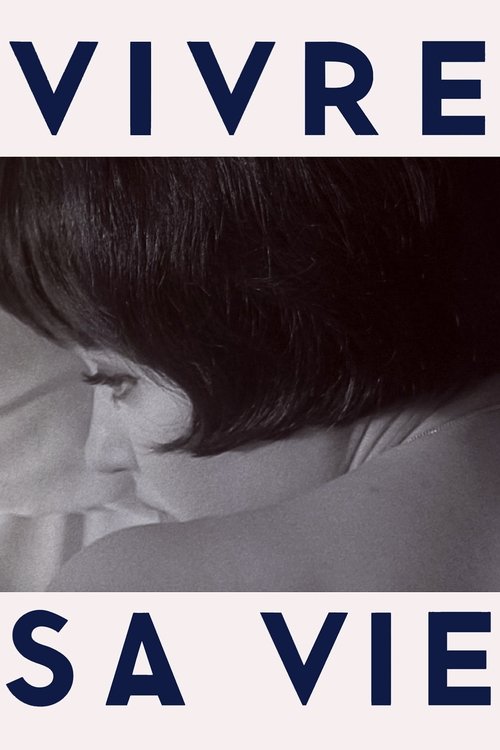
Vivre sa vie: film en douze tableaux
"The many faces of a woman trying to find herself."
Vivre Sa Vie - Symbolism & Philosophy
Symbols & Motifs
The Oval Portrait
Symbolizes the way art (and cinema) steals life from its subjects to create eternal beauty.
In the final tableau, the young man reads Edgar Allan Poe's story The Oval Portrait. The voice we hear is actually Godard's, acknowledging that his camera is "capturing" (and perhaps consuming) his wife, Anna Karina.
Joan of Arc
Represents martyrdom, silent suffering, and the power of the human face.
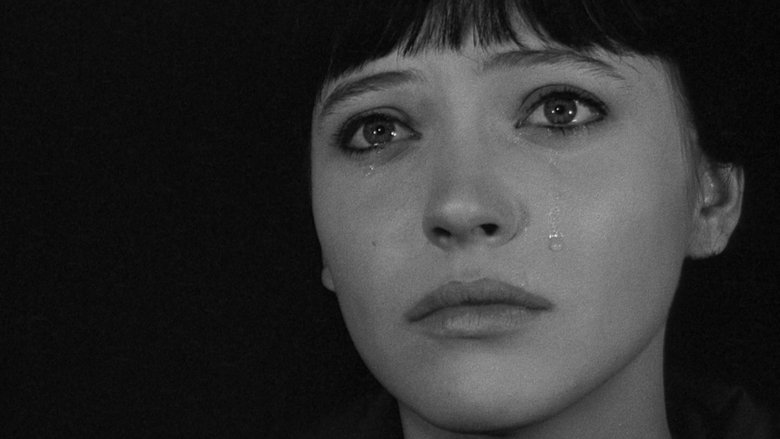
Nana watches Dreyer's The Passion of Joan of Arc in a theater. The cuts between Falconetti's tearful face and Nana's face link Nana's secular suffering to Joan's spiritual martyrdom.
Pinball and Jukeboxes
Symbols of pop culture, chance, and the fleeting, mechanical distractions of modern life.
Used throughout the cafe scenes. Nana plays pinball (a game of chance/skill) and dances to the jukebox, moments where she is most "alive" and physically free.
The Camera / The Gaze
Represents the objectifying male gaze that dissects Nana.
Godard often shoots Nana from behind or in clinical close-ups, emphasizing her status as an object of study rather than just a character in a story.
Philosophical Questions
Can language ever truly express reality?
The film suggests a gap between "thinking" and "speaking." Nana feels that words betray her true thoughts, raising the Wittgensteinian idea that language has limits and that the most profound truths lie in silence or pure being.
What is the nature of freedom?
Is freedom an internal state of mind (Sartrean existentialism) that exists regardless of external chains, or is true freedom impossible when one is economically enslaved? Nana claims she is free because she is responsible, yet her material conditions trap her.
Does the camera capture the soul or steal it?
Through the Poe reference, the film questions the ethics of art. Does the artist (Godard) kill the subject (Nana/Karina) by turning her into an object for art? It explores the predatory nature of the artistic gaze.
Core Meaning
The Commodification of the Soul and the Failure of Language.
At its heart, Vivre Sa Vie is an existential inquiry into human freedom and responsibility within a capitalist society. Godard uses prostitution not just as a plot point, but as a central metaphor for modern life: the selling of one's body (and by extension, one's time and self) to survive.
The film essentially asks: Can we remain "responsible" for our actions when our choices are constrained by economic necessity? Additionally, it explores the inadequacy of language to convey truth. Nana struggles to articulate her inner self, finding that words often betray meaning, while cinema (the visual image) captures the "truth" of the soul that words cannot reach.