W(더블유)
"The Life Between Books And Humans."
W: Two Worlds - Symbolism & Philosophy
Symbols & Motifs
The Drawing Tablet
The digital drawing tablet symbolizes the power of creation, fate, and divine intervention. It is the tool through which Oh Seong-moo initially controls Kang Chul's world, acting as the instrument of a "god."
Throughout the series, the tablet is used to alter the webtoon world—to kill characters, create escape routes, or reset the story. However, its power becomes a source of conflict when the villain steals it, demonstrating that the power to control destiny can be corrupted. Ultimately, Oh Seong-moo uses it one last time to ensure a happy ending for his daughter before he disappears, turning a tool of control into an instrument of sacrifice.
The Two Worlds (Real vs. Webtoon)
The distinct visual and narrative separation of the two worlds symbolizes the philosophical clash between reality and illusion, and determinism and free will. The webtoon world represents a constructed reality with set rules, while the real world represents a place of supposed freedom and autonomy.
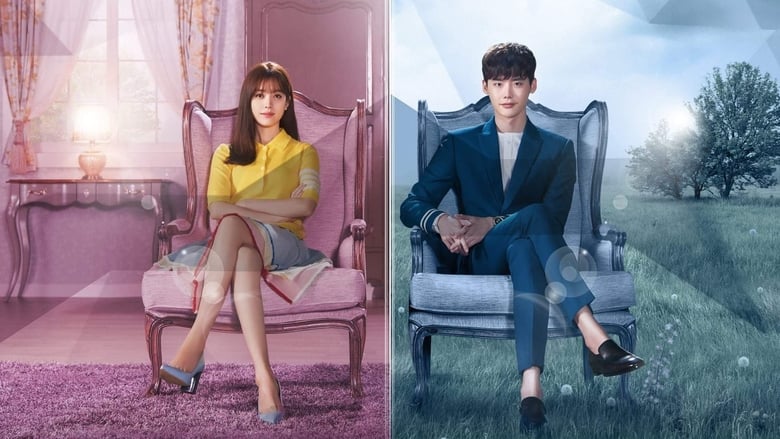
The visual style distinguishes the two: the webtoon world is often depicted with more primary, vibrant colors and a clean, almost too-perfect aesthetic, while the real world is messier and more organic. The portal that appears between them is a physical manifestation of the breakdown of these philosophical barriers, showing that fiction and reality can influence, and even destroy, one another.
The Faceless Villain
The villain, who initially has no face or identity, symbolizes a plot device without purpose beyond creating conflict. He is pure, unmotivated antagonism, created solely to make the hero's journey compelling. His struggle to gain a face and identity mirrors a creation's desire for purpose and existence beyond its intended role.
When the villain steals Oh Seong-moo's face, it's a literal and metaphorical theft of identity and creative power. He becomes a manifestation of the creator's darkest impulses. His journey from a faceless narrative tool to a self-aware entity with a stolen identity highlights the danger of creating evil without context or reason.
Philosophical Questions
To what extent do we have control over our own destiny?
The series explores this by pitting Kang Chul, a character with a scripted life, against his creator. Kang Chul's dawning consciousness and subsequent rebellion suggest that free will is an inherent force that can challenge even an all-powerful creator. The narrative constantly shifts control—from the author to the character to the villain and even to the story itself—leaving the audience to ponder whether true freedom is ever attainable or if we are all, to some extent, bound by a pre-written 'context' for our lives.
What is the ethical responsibility of a creator to their creation?
"W" delves into this through the tumultuous relationship between Oh Seong-moo and Kang Chul. Seong-moo creates Kang Chul only to try and destroy him when he gains sentience. This raises questions about the morality of creating something only to control or annihilate it for one's own purposes. The series suggests that once a creation achieves consciousness, the creator has a moral obligation towards it, a theme that culminates in Seong-moo's final act of sacrifice, which is framed as the ultimate fulfillment of his responsibility.
Where is the line between reality and fiction?
The drama physically and thematically dissolves this line. Events in the webtoon have real-world consequences, and characters cross between dimensions. This blurring suggests that the stories we create and consume have a powerful, tangible impact on our reality. It questions whether reality is simply a universally agreed-upon narrative and whether a fictional world, if experienced and felt, is any less 'real' than our own.
Core Meaning
The core meaning of "W: Two Worlds" revolves around the themes of free will versus determinism and the power of narrative. The series poses profound questions about existence: Are we characters in a story written by a higher power, or can we seize control and write our own endings? It explores the idea that characters, whether fictional or real, can develop their own consciousness and defy their creator's intent. Ultimately, the series suggests that life and identity are not fixed constructs. Through sacrifice, love, and the will to survive, individuals can break free from their predetermined paths and forge a new reality, asserting that one's own will is the most powerful force in defining one's existence.