W: Two Worlds
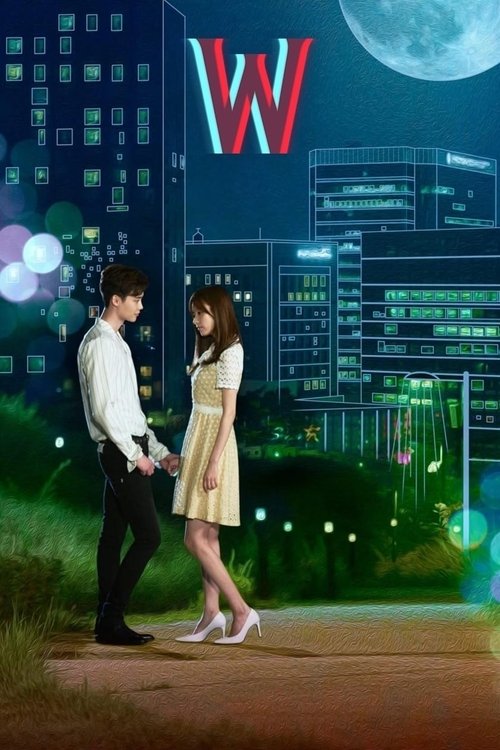
A high-concept fantasy romance where the rigid ink lines of a webtoon bleed into reality, sparking a love that defies fate and questions the very nature of existence.
W: Two Worlds

W: Two Worlds

W(더블유)

"The Life Between Books And Humans."

20 July 2016 — 14 September 2016 South Korea 1 season 16 episode Ended ⭐ 8.5 (943)
Cast: Lee Jong-suk, Han Hyo-joo, Jung Yoo-jin, Lee Tae-hwan, Lee Si-eon
Drama Comedy
Free Will vs. Determinism The Nature of Reality The Relationship Between Creator and Creation Sacrifice and Love

Overview

"W: Two Worlds" tells the extraordinary story of Oh Yeon-joo, a cardiothoracic surgeon in her thirties, whose father is the famous creator of the webtoon "W". When her father mysteriously disappears, Yeon-joo is pulled into the fictional world of the webtoon itself. There, she meets Kang Chul, the webtoon's protagonist—a super-rich, intelligent former Olympic shooting gold medalist haunted by the unsolved murder of his family.

As Yeon-joo is repeatedly drawn into Kang Chul's world, often at moments of crisis, she becomes an integral part of his story, saving his life and altering the narrative her father intended. Their lives become irrevocably intertwined, leading to a high-stakes romance that transcends dimensions. The series explores the collision of these two realities, as the rules that govern them begin to blur and break. Kang Chul eventually becomes self-aware, realizing he is a fictional character, which leads him to cross over into the real world to find his creator and understand the meaning of his existence.

The story evolves into a tense thriller as the boundaries between the two worlds crumble. The webtoon's faceless villain gains his own consciousness and power, posing a threat to both realities. Kang Chul and Yeon-joo must navigate a chaotic, unpredictable narrative, fighting for their love and their lives against a creator who has lost control and a villain who can manipulate both worlds, all while questioning who truly holds the pen to their destiny.
Core Meaning

The core meaning of "W: Two Worlds" revolves around the themes of free will versus determinism and the power of narrative. The series poses profound questions about existence: Are we characters in a story written by a higher power, or can we seize control and write our own endings? It explores the idea that characters, whether fictional or real, can develop their own consciousness and defy their creator's intent. Ultimately, the series suggests that life and identity are not fixed constructs. Through sacrifice, love, and the will to survive, individuals can break free from their predetermined paths and forge a new reality, asserting that one's own will is the most powerful force in defining one's existence.

Thematic DNA

Free Will vs. Determinism 35%
The Nature of Reality 30%
The Relationship Between Creator and Creation 25%
Sacrifice and Love 10%

Free Will vs. Determinism

This is the central theme of the series. Initially, Kang Chul's life is entirely determined by his creator, Oh Seong-moo. However, Kang Chul develops self-awareness and begins to resist his predetermined fate, an act that literally stops his world and allows him to cross dimensions. The series constantly questions who is in control: the author (God), the character (humanity), or the narrative (fate) itself. As characters from both worlds start making their own choices, the plot becomes chaotic, demonstrating the unpredictable nature of free will when it clashes with a set destiny. The ending, where Oh Seong-moo sacrifices himself to give Kang Chul a life of freedom, solidifies the idea that true existence is achieved by breaking free from a predetermined script.

The Nature of Reality

"W" constantly blurs the lines between what is real and what is fiction. The series presents the webtoon world not as a mere story but as a parallel universe that coexists with the real world. This metaphysical concept forces both characters and the audience to question their own perceptions of reality. When Kang Chul enters the real world and reads the story of his own life in a bookstore, it's a powerful moment of existential crisis. The theme is further explored through the villain, who gains a physical form in the real world, proving that creations can have tangible, dangerous consequences. The show suggests that reality is subjective and can be shaped by belief, will, and narrative.

The Relationship Between Creator and Creation

The dynamic between Oh Seong-moo and Kang Chul is a complex exploration of a creator's responsibility and a creation's struggle for autonomy, reminiscent of Frankenstein or the Goya painting "Saturn Devouring His Son" shown in the series. Seong-moo, an alcoholic and failed man, creates Kang Chul as his idealized antithesis—strong, rich, and virtuous. However, as Kang Chul gains consciousness, Seong-moo feels threatened and tries to destroy him, viewing him as a monster he can no longer control. This evolves from a god-complex to a tragic relationship where the creator ultimately sacrifices himself for the happiness of his creation, acknowledging Kang Chul's right to exist on his own terms.

Sacrifice and Love

Love is the primary catalyst for many of the story's critical decisions. Oh Yeon-joo consistently risks her life by entering the dangerous webtoon world to save Kang Chul. Their love transcends dimensions and becomes the anchor in a chaotic reality. The theme of sacrifice is paramount in the finale. Oh Seong-moo makes the ultimate sacrifice, choosing to disappear so that Kang Chul can live happily with his daughter in the real world. This act redeems him and underscores the idea that true love involves selfless sacrifice for the happiness of others.

Character Analysis

Kang Chul

Lee Jong-suk

Archetype: The Self-Aware Hero
Key Trait: Unwavering Determination

Motivation

Initially, his motivation is to find the faceless killer who murdered his family. This is the 'context' of his existence as set by his creator. After becoming self-aware, his motivation shifts to survival and understanding his identity. Ultimately, his primary motivation becomes protecting Oh Yeon-joo and achieving a 'normal' life with her, free from the endless cycle of cliffhangers and conflict that defines his world.

Character Arc

Kang Chul begins as a quintessential tragic hero within a webtoon: a brilliant and wealthy man driven by revenge for his family's murder. His arc is one of existential awakening. When he realizes his world is fake and his suffering is for others' entertainment, he falls into despair and attempts suicide. However, his connection with Yeon-joo gives him a new purpose. He transforms from a character bound by his narrative to an active agent fighting for his own free will. He crosses into the real world, confronts his creator, and ultimately chooses to create his own happy ending, even if it means enduring more pain. His final transformation is from a fictional character into a human being, free from the confines of his story.

Oh Yeon-joo

Han Hyo-joo

Archetype: The Catalyst/The Bridge
Key Trait: Resilient Compassion

Motivation

Her motivation is driven almost entirely by her love for Kang Chul. From the moment she saves him on the rooftop, her primary goal is to keep him alive. This motivation deepens as she becomes a character in his world, and her fight for his life becomes a fight for their shared future. She is also motivated by a desire to save her father from the darkness that consumes him as he loses control of his creation.

Character Arc

Oh Yeon-joo starts as a somewhat insecure surgical resident living in her famous father's shadow. Being pulled into the webtoon forces her into a more active, heroic role. Initially a passive observer and fan of Kang Chul, she becomes the 'key' to his life and the variable that breaks the narrative. Her arc is about finding her own agency and strength. She evolves from simply reacting to the chaotic events to actively intervening, drawing on the tablet to save Kang Chul and defy the story's tragic direction. While some critics found her character overly dependent on the male lead, her emotional resilience and willingness to sacrifice herself for love are central to the story's resolution. She is the bridge between the two worlds, and her love is what ultimately makes a new reality possible.

Oh Seong-moo

Kim Eui-sung

Archetype: The Flawed Creator
Key Trait: Tormented

Motivation

Initially, his motivation is to end the webtoon by killing Kang Chul, whom he resents for being everything he is not. He feels trapped by his creation's popularity and seeks to reclaim control. After the villain takes his face and threatens Yeon-joo, his motivation shifts completely. His final actions are driven by paternal love and a desire to atone for the monster he unleashed, ensuring his daughter's happiness above all else.

Character Arc

Oh Seong-moo begins as a frustrated, alcoholic webtoon artist who has grown to hate his own successful creation, Kang Chul. He represents a creator who has lost control, a god figure who becomes consumed by his own narrative. His arc is a descent into madness and a subsequent journey toward redemption. As the story progresses, he loses his own identity to the faceless villain he created, becoming a puppet for the story's antagonism. In the end, horrified by what he has become and driven by his love for his daughter, he chooses to sacrifice himself. His final act is one of creation, not destruction: he writes a happy ending for Kang Chul and Yeon-joo at the cost of his own existence, transforming from a destructive god to a loving father.

Symbols & Motifs

The Drawing Tablet

Meaning:

The digital drawing tablet symbolizes the power of creation, fate, and divine intervention. It is the tool through which Oh Seong-moo initially controls Kang Chul's world, acting as the instrument of a "god."

Context:

Throughout the series, the tablet is used to alter the webtoon world—to kill characters, create escape routes, or reset the story. However, its power becomes a source of conflict when the villain steals it, demonstrating that the power to control destiny can be corrupted. Ultimately, Oh Seong-moo uses it one last time to ensure a happy ending for his daughter before he disappears, turning a tool of control into an instrument of sacrifice.

The Two Worlds (Real vs. Webtoon)

Meaning:

The distinct visual and narrative separation of the two worlds symbolizes the philosophical clash between reality and illusion, and determinism and free will. The webtoon world represents a constructed reality with set rules, while the real world represents a place of supposed freedom and autonomy.

Context:

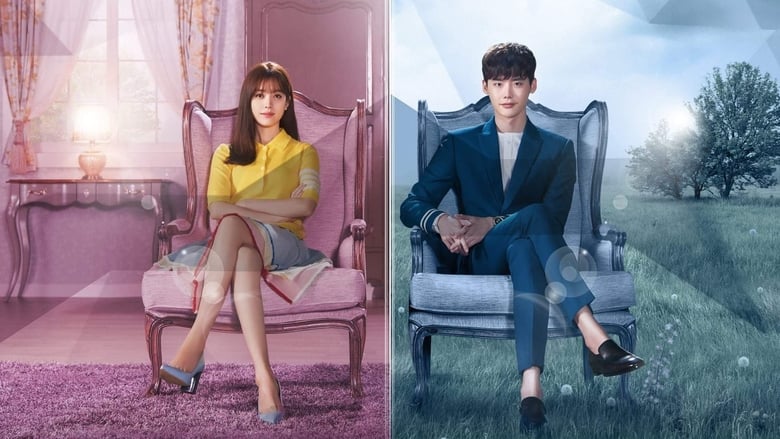
The visual style distinguishes the two: the webtoon world is often depicted with more primary, vibrant colors and a clean, almost too-perfect aesthetic, while the real world is messier and more organic. The portal that appears between them is a physical manifestation of the breakdown of these philosophical barriers, showing that fiction and reality can influence, and even destroy, one another.

The Faceless Villain

Meaning:

The villain, who initially has no face or identity, symbolizes a plot device without purpose beyond creating conflict. He is pure, unmotivated antagonism, created solely to make the hero's journey compelling. His struggle to gain a face and identity mirrors a creation's desire for purpose and existence beyond its intended role.

Context:

When the villain steals Oh Seong-moo's face, it's a literal and metaphorical theft of identity and creative power. He becomes a manifestation of the creator's darkest impulses. His journey from a faceless narrative tool to a self-aware entity with a stolen identity highlights the danger of creating evil without context or reason.

Episode Highlights

Episode 1: The Hand from the Screen

S1E1

This episode masterfully sets up the entire premise. Oh Yeon-joo is pulled through her father's computer tablet into the world of his webtoon for the first time, finding herself on a rooftop next to a bleeding Kang Chul. Her desperate act of saving him with a ballpoint pen establishes her as the story's key variable.

Significance:

It's the inciting incident that merges the two worlds. The moment Kang Chul's hand reaches out from the screen is iconic and marks the beginning of the narrative breaking its own rules, establishing the central mystery of the series.

Episode 5: The Creator Confronted

S1E5

After time freezes in his world, Kang Chul discovers a portal and steps into the real world. He finds a bookstore filled with volumes of "W," forcing him to confront the truth of his existence. This culminates in a tense, philosophical confrontation with his creator, Oh Seong-moo, where he shoots him.

Significance:

This episode elevates the series from a fantasy romance to a meta-narrative thriller. Kang Chul's discovery and his confrontation with his "god" directly address the themes of free will and determinism, echoing Nietzsche's "God is dead." It establishes that Kang Chul is no longer just a character but a conscious being fighting for his reality.

Episode 7: A Sweet and Simple Date

S1E7

Regarded by many fans as a high point of the romance, this episode features Kang Chul and Yeon-joo going on a series of simple, sweet dates in the webtoon world. Kang Chul tries to create mundane, happy moments to make up for their chaotic reality. The episode is known for its romantic and lighthearted tone before the plot takes a much darker turn.

Significance:

This episode provides a crucial emotional anchor for the couple's relationship. It solidifies their love and gives them—and the audience—a glimpse of the normal life they are fighting for. This happiness makes the subsequent tragedies and memory loss even more impactful.

Episode 9: The Reset

S1E9

To save his world and protect Yeon-joo from the now self-aware killer, Kang Chul decides to reset the entire story. He asks Yeon-joo to draw everything that happened between them as a dream. He then jumps from a rooftop, effectively erasing himself from her life and resetting his own memory of her.

Significance:

This is a major turning point that splits the series into two halves. It's a heartbreaking sacrifice that demonstrates the depth of Kang Chul's love. The memory loss trope is used here not just for romantic angst but as a fundamental reset of the narrative rules, setting the stage for the even more complex second half of the series.

Episode 16: A Sad and Happy Ending

S1E16

In the finale, the webtoon must have an ending. Facing the villain Han Cheol-ho, Kang Chul is shot and appears to die, which transports Yeon-joo back to her world. However, Oh Seong-moo, trapped in the webtoon, makes a final choice. He uses the tablet to kill the villain and save Kang Chul, but in doing so, he accepts his own demise as a character whose role is over.

Significance:

The ending provides a bittersweet resolution. The webtoon ends with a "sad ending" for its readers (Kang Chul's supposed death), but the reality is a "happy ending" for the main couple, achieved through the ultimate sacrifice of Yeon-joo's father. Kang Chul is freed from his fictional constraints and can live as a real person with Yeon-joo, concluding the series' exploration of free will and sacrifice.

Philosophical Questions

To what extent do we have control over our own destiny?

The series explores this by pitting Kang Chul, a character with a scripted life, against his creator. Kang Chul's dawning consciousness and subsequent rebellion suggest that free will is an inherent force that can challenge even an all-powerful creator. The narrative constantly shifts control—from the author to the character to the villain and even to the story itself—leaving the audience to ponder whether true freedom is ever attainable or if we are all, to some extent, bound by a pre-written 'context' for our lives.

What is the ethical responsibility of a creator to their creation?

"W" delves into this through the tumultuous relationship between Oh Seong-moo and Kang Chul. Seong-moo creates Kang Chul only to try and destroy him when he gains sentience. This raises questions about the morality of creating something only to control or annihilate it for one's own purposes. The series suggests that once a creation achieves consciousness, the creator has a moral obligation towards it, a theme that culminates in Seong-moo's final act of sacrifice, which is framed as the ultimate fulfillment of his responsibility.

Where is the line between reality and fiction?

The drama physically and thematically dissolves this line. Events in the webtoon have real-world consequences, and characters cross between dimensions. This blurring suggests that the stories we create and consume have a powerful, tangible impact on our reality. It questions whether reality is simply a universally agreed-upon narrative and whether a fictional world, if experienced and felt, is any less 'real' than our own.

Alternative Interpretations

One popular alternative interpretation views the entire series as a metaphor for the creative process and mental health. Oh Seong-moo, the creator, is an alcoholic suffering from depression and a creative block. In this reading, Kang Chul represents his idealized self, while the faceless villain embodies his self-destructive tendencies and inner demons. The struggle between Kang Chul and the villain is a manifestation of Seong-moo's internal battle. His eventual decision to sacrifice himself can be seen as him finally conquering his demons to allow the best part of himself (symbolized by Kang Chul's happiness with his daughter) to live on.

Another interpretation, rooted in Zen Buddhist philosophy, sees the story as an allegory for achieving enlightenment. The webtoon world is an illusion (maya), and Kang Chul's journey of self-awareness is a path to understanding the illusory nature of his reality. The constant resets and repetitions of his life mirror the cycle of reincarnation (samsara). By breaking free from his predetermined fate and entering the 'real world,' Kang Chul escapes the cycle of suffering created for him, achieving a form of liberation.

Cultural Impact

"W: Two Worlds" made a significant cultural impact upon its release in 2016, primarily for its groundbreaking and highly original premise in the landscape of Korean dramas. At a time when the industry was dominated by more conventional romance and historical dramas, "W" introduced a high-concept, meta-narrative that blended fantasy, thriller, and romance in a way few had seen before. It challenged viewers' expectations and was lauded by critics for its creativity and ambition.

The series' exploration of philosophical themes like existentialism, free will, and the nature of reality resonated deeply with both domestic and international audiences, sparking countless discussions, fan theories, and analyses. Its success helped pave the way for more experimental and genre-bending K-dramas, demonstrating a commercial appetite for complex, intellectually stimulating stories. The drama's visual distinction between the slick, perfect 'webtoon world' and the more mundane 'real world' also set a new standard for production design and cinematography in Korean television. While some viewers found the plot overly complex in its latter half, its boldness left a lasting legacy, cementing its place as one of the most innovative and talked-about K-dramas of the 2010s.

Audience Reception

"W: Two Worlds" was met with widespread acclaim from audiences upon its release, particularly for its innovative and unpredictable plot. Viewers praised the series for its originality, fast-paced storytelling, and the strong chemistry between leads Lee Jong-suk and Han Hyo-joo. The first half of the series was almost universally lauded as a masterpiece of suspense and creativity, keeping audiences on the edge of their seats with constant twists and reveals.

However, opinions became more divided during the second half. A significant portion of the audience felt that the plot became overly convoluted and that the rules of the universe were inconsistent, making the story difficult to follow. Criticisms were aimed at the relentless string of crises and resets, which some felt diminished the emotional weight of earlier events. Despite these criticisms, the overall verdict from audiences was highly positive. The series maintains a high rating on platforms like IMDb and Viki, and it is frequently recommended as a must-watch for its ambition and unique concept, even by those who acknowledge the flaws in its later episodes.

Interesting Facts

  • The creator of the series is writer Song Jae-jung, who is known for other high-concept dramas like "Nine: Nine Time Travels" and "Queen In-hyun's Man."
  • Lee Jong-suk and Han Hyo-joo won Top Excellence Awards at the MBC Drama Awards for their roles, and the show itself was named Drama of the Year.
  • The series was praised for its unique and original premise, ranking first in the Content Power Index in South Korea during its premiere week.
  • Due to the 2016 Rio Olympics, the broadcast of Episode 8 was postponed by a week, causing much anticipation and frustration among viewers.
  • Writer Song Jae-jung reportedly had several different endings in mind for the series, with the final version being chosen closer to the broadcast date.
  • The complex, ever-changing rules of the two worlds were a point of both praise for their creativity and criticism for becoming convoluted in the second half of the show.

⚠️ Spoiler Analysis

Click to reveal detailed analysis with spoilers

Frequently Asked Questions

Explore More About This Movie

Dive deeper into specific aspects of the movie with our detailed analysis pages

Comments (0)

Leave a comment

No comments yet. Be the first to share your thoughts!