
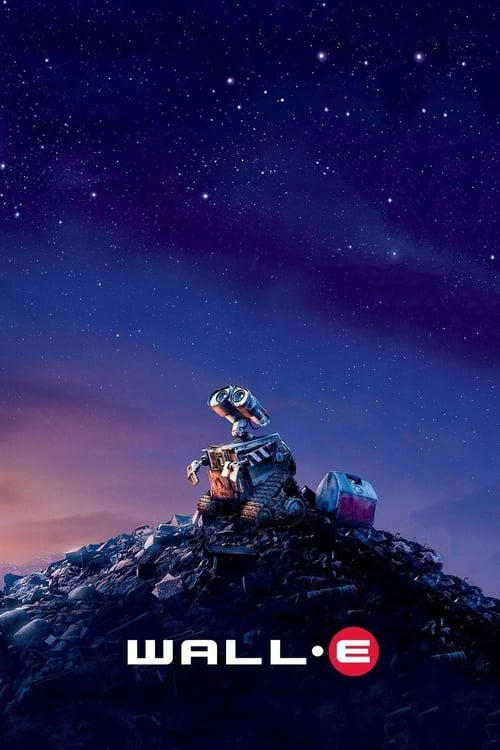
"After 700 years of doing what he was built for, he'll discover what he was meant for."
WALL·E - Symbolism & Philosophy
Symbols & Motifs
The Plant
The small, living seedling is a powerful symbol of hope, resilience, and the possibility of rebirth for a desolate Earth. It represents the enduring power of nature to survive against all odds.
WALL·E finds the plant amidst the garbage on Earth and gives it to EVE. Its discovery is EVE's primary directive and the catalyst for the entire plot, as it signals that Earth is once again capable of sustaining life, prompting the mission to return humanity home.
Hello, Dolly!
The videotape of the 1969 musical symbolizes WALL·E's longing for connection and his understanding of love. The song "It Only Takes a Moment" and the scene of two characters holding hands teach WALL·E about romance and become his ultimate goal with EVE. It represents a bygone era of human connection that WALL·E cherishes more than the contemporary humans do.
WALL·E watches the tape repeatedly in his shelter. He tries to emulate the hand-holding gesture with EVE, and the music from the film serves as a romantic score for their developing relationship.
The Buy n Large (BnL) Corporation
BnL represents the extreme dangers of unchecked corporate power and consumerism. The corporation governed every aspect of human life, from government to daily consumption, leading directly to the planet's ruin and humanity's passive existence.
The BnL logo is ubiquitous on the garbage on Earth and throughout the Axiom. The CEO, Shelby Forthright (in live-action recordings), represents the corporate entity that abandoned Earth and issued the secret "no-return" directive, A113.
The Axiom
The starliner Axiom is a symbol of a gilded cage. It offers a seemingly utopian existence of comfort and leisure but at the cost of genuine human experience, health, and purpose. It represents humanity's detachment from nature and reality.
The majority of the film's second half takes place on the Axiom, where WALL·E's presence disrupts the stagnant, automated lives of the human inhabitants and forces them to confront their situation.
Philosophical Questions
What does it mean to be human?
The film explores this question by contrasting the apathetic, disengaged humans with the sentient, emotional robots. WALL·E, a machine, exhibits more classic human traits—curiosity, love, devotion—than the humans he encounters. This suggests that being human is not a biological default but something defined by our actions, connections, and the pursuit of a meaningful existence beyond mere survival or comfort.
Can technology save us from the problems it helped create?
"WALL·E" presents a complex relationship with technology. The over-reliance on automation and consumer tech led to Earth's destruction and humanity's decline. However, the heroes are also technological beings (WALL·E, EVE), and the film's optimistic ending shows humans and robots working together to restore the planet. The film suggests that technology is a tool, and its impact—destructive or redemptive—depends entirely on human wisdom, intention, and control.
Is love a programmed response or an irrational choice?
Director Andrew Stanton's central theme was "irrational love defeats life's programming." Both WALL·E and EVE defy their core directives because of their bond. WALL·E abandons his trash-compacting routine to follow EVE, and EVE prioritizes saving WALL·E over delivering the plant. Their love is portrayed not as a logical outcome of their programming, but as a transcendent, selfless force that allows them to evolve beyond their intended functions.
Core Meaning
The central message of "WALL·E" is a powerful exploration of what it means to be human, as seen through the eyes of a sentient robot. Director Andrew Stanton has stated the theme is "irrational love defeats life's programming." The film suggests that humanity, in its pursuit of convenience and consumerism, has lost its connection to nature, to each other, and to the very essence of living. It is the simple, loving, and curious robot, WALL·E, who re-ignites the spark of humanity in the complacent, technology-addicted humans. The film serves as a cautionary tale about the dangers of environmental neglect, corporate greed, and over-reliance on technology, while ultimately offering a hopeful message about humanity's capacity for redemption and the enduring power of connection and love to give life meaning.