
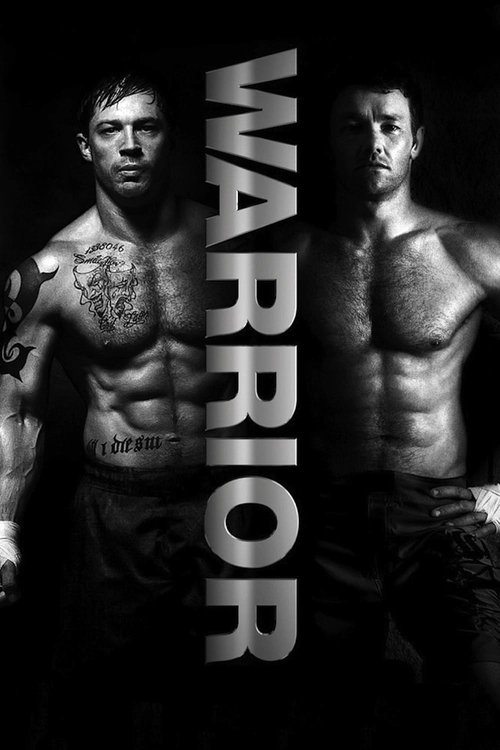
"Family is worth fighting for."
Warrior - Symbolism & Philosophy
Symbols & Motifs
The MMA Cage
The cage symbolizes both a prison and a confessional. It is the physical manifestation of the emotional barriers the characters have built around themselves. Inside the cage, they are trapped with their opponent and their past. However, it is also the only place where they can be completely honest, shedding societal roles and communicating on the most primal level. Director Gavin O'Connor has called it an "intervention in a cage," a space where healing can occur through violent catharsis.
The cage is the setting for the entire Sparta tournament. The film's visual style often emphasizes the enclosure, trapping the brothers within the frame. The final fight between Tommy and Brendan uses the cage not just as a sports venue, but as a crucible where their family's fate is forged.
Moby Dick
Paddy constantly listens to an audiobook of Herman Melville's "Moby Dick." The novel symbolizes obsession, revenge, and the destructive pursuit of an unattainable goal. Paddy is Captain Ahab, hunting the "white whale" of his family's forgiveness and his own sobriety. Tommy, in his relentless and self-destructive quest for victory, also embodies Ahab's obsessive nature. The symbol deepens the film's literary and tragic dimensions, hinting that such all-consuming quests can lead to ruin.
The audiobook is a recurring motif. We first see Paddy listening to it in his lonely apartment. The theme culminates in a drunken, harrowing scene where Paddy, having relapsed, confronts Tommy, screaming lines from the book and calling him "Ahab," explicitly linking Tommy's rage to the novel's central theme of destructive obsession.
Tapping Out
In MMA, tapping out is a signal of submission and defeat. In "Warrior," it becomes a profound act of surrender, forgiveness, and love. For a character as proud and rage-filled as Tommy, tapping out is something he would rather go unconscious than do. His final tap is not a sign of physical defeat but an emotional surrender. It signifies his acceptance of Brendan's apology and love, finally letting go of the anger that has consumed him.
The act of tapping out is central to Brendan's fighting style, as he wins by forcing submissions. The climax subverts this. In the final round, with Tommy's shoulder dislocated, Brendan locks him in a chokehold. He pleads with Tommy to give up, saying "I'm sorry!" and "I love you!" It is only after these words, not the pain, that Tommy finally taps his brother's back, ending the fight and beginning their reconciliation.
Philosophical Questions
Can true forgiveness be achieved without cathartic confrontation?
The film poses the question of whether deep-seated familial wounds can be healed through conversation and time, or if they require a more visceral release. The Conlon men are unable to heal through words alone; their resentments are too profound. "Warrior" suggests that for some, particularly those socialized in a world of masculine aggression, a physical 'intervention' is the only path to emotional breakthrough. The brutal fight becomes a necessary, albeit painful, form of therapy that allows for a raw honesty that dialogue could not achieve.
What is the nature of redemption and is it ever fully attainable?
Each character seeks a different form of redemption. Paddy wants to redeem his past as a father, Brendan as a provider, and Tommy for his perceived failures as a son and a soldier. The film explores whether redemption is an internal state of peace or something that must be granted by those you have wronged. Paddy's journey is the most poignant; despite his sobriety and sincere efforts, his sons largely deny him the redemption he craves. The film suggests that redemption might not be a grand, final destination, but a continuous, painful struggle with no guarantee of success.
When both sides have a righteous cause, how do we define a 'win'?
"Warrior" masterfully subverts the traditional sports narrative by giving both protagonists incredibly sympathetic and noble motivations. Brendan fights for his family's home; Tommy fights for the family of his fallen comrade. This forces the audience to question what a true victory looks like. The film's answer is that the win is not about the prize money or the title. The true victory is the act of reconciliation itself. Brendan wins the match, but the film's triumphant moment is when he puts his arm around his brother, indicating that the familial bond they reclaim is worth more than any championship.
Core Meaning
At its heart, "Warrior" is a film about forgiveness, redemption, and the arduous process of healing a broken family. Director Gavin O'Connor intended the film to be a drama first and a sports movie second, using the MMA cage as a metaphor for an intervention. The core idea is that sometimes the only way for people, particularly men socialized to communicate through aggression, to heal deep wounds is through a cathartic, physical confrontation. The film explores whether it's possible to forgive the unforgivable and rebuild bonds that have been utterly destroyed by past trauma and resentment. It posits that true redemption isn't just about winning a fight, but about surrendering one's pain and pride to reconnect with loved ones. The ultimate message is one of hope; even after immense suffering, the beginning of healing is possible.