Warrior
"Family is worth fighting for."
Overview
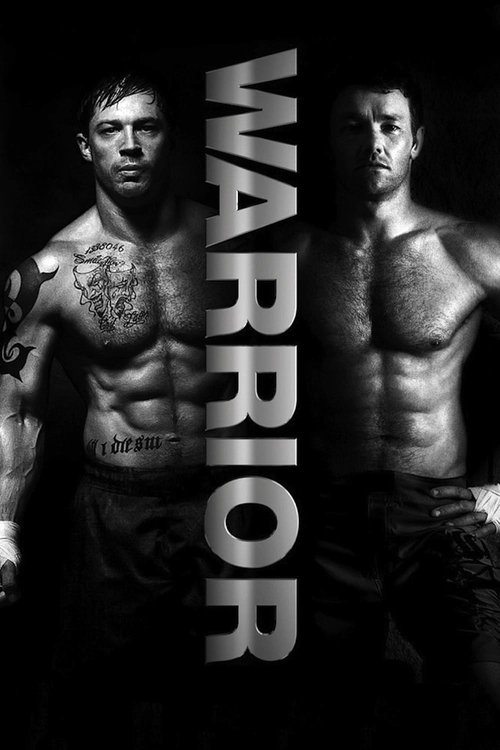
"Warrior" tells the powerful and emotionally charged story of the Conlon family, shattered by alcoholism and trauma. Two estranged brothers find themselves on a collision course in the world of mixed martial arts. Tommy Riordan (Tom Hardy), an ex-Marine haunted by a heroic but tragic past, returns to his hometown of Pittsburgh. He seeks out his recovering alcoholic father, Paddy (Nick Nolte), to train him for Sparta, a high-stakes, winner-take-all MMA tournament. Tommy's motivation is to win the prize money for the widow of a fallen comrade.
Meanwhile, Tommy's older brother, Brendan Conlon (Joel Edgerton), is a former UFC fighter turned high school physics teacher. Facing financial ruin and the potential foreclosure of his home, Brendan returns to the ring as a longshot underdog to provide for his wife and daughters. Unaware of each other's plans, both brothers enter the same tournament, forcing them to confront the painful history that tore their family apart, culminating in a final, unavoidable confrontation inside the cage.
Core Meaning
At its heart, "Warrior" is a film about forgiveness, redemption, and the arduous process of healing a broken family. Director Gavin O'Connor intended the film to be a drama first and a sports movie second, using the MMA cage as a metaphor for an intervention. The core idea is that sometimes the only way for people, particularly men socialized to communicate through aggression, to heal deep wounds is through a cathartic, physical confrontation. The film explores whether it's possible to forgive the unforgivable and rebuild bonds that have been utterly destroyed by past trauma and resentment. It posits that true redemption isn't just about winning a fight, but about surrendering one's pain and pride to reconnect with loved ones. The ultimate message is one of hope; even after immense suffering, the beginning of healing is possible.
Thematic DNA
Family Dysfunction and Reconciliation
The central theme is the fractured Conlon family. The patriarch, Paddy, is a recovering alcoholic whose past abuse drove his family apart. Tommy harbors deep resentment towards both his father and his brother, Brendan, whom he feels abandoned him and their dying mother. Brendan, in turn, feels abandoned by Tommy, who never contacted him when their mother was ill. The film meticulously explores these complex grievances, showing how each character's pain is valid. The Sparta tournament becomes the arena where these long-suppressed emotions finally erupt, forcing a violent but necessary path toward potential reconciliation.
Forgiveness and Redemption
Every major character is on a quest for redemption. Paddy seeks forgiveness from his sons for a lifetime of mistakes, desperately trying to prove he has changed through his sobriety. Brendan fights to redeem himself as a provider for his family, risking his body to save their home. Tommy fights for a form of redemptive honor, aiming to give his winnings to the family of his fallen friend, seeking to atone for survivor's guilt from his time in the Marines. The film questions the nature of forgiveness, showing it's not a simple act but a painful, ongoing process. The climax suggests that forgiveness must be earned, offered, and ultimately, accepted, even if it comes through unconventional means.
Masculinity and Emotional Repression
"Warrior" examines a form of masculinity where emotional expression is suppressed and replaced by physical aggression. The Conlon men are largely incapable of articulating their pain, love, or regret through words. Their primary language is violence, a trait passed down from Paddy. The MMA cage becomes the only space where they can truly communicate. Tommy's silent rage and Brendan's stoic endurance are contrasted throughout. The final fight is essentially a physical conversation, where every blow carries years of unspoken history, culminating in a moment where words finally break through the violence.
The Underdog's Struggle
Both brothers embody the underdog archetype, a classic sports movie trope that the film uses to create a unique conflict. Brendan is the literal underdog of the Sparta tournament, a teacher who is physically outmatched in every fight but wins through strategy and resilience. Tommy, while a physical powerhouse, is an emotional underdog, battling immense internal trauma and rage. The film brilliantly positions the audience in a difficult spot, making them root for two desperate men fighting for noble, yet conflicting, causes, ensuring the final confrontation is emotionally devastating regardless of the outcome.
Character Analysis
Tommy Riordan (Conlon)
Tom Hardy
Motivation
His primary stated motivation is to win the $5 million prize for the widow of his best friend and fellow Marine, who died in a friendly fire incident that Tommy survived. This is an act of penance and a way to channel his survivor's guilt. His deeper, unacknowledged motivation is to confront the family that he feels destroyed him.
Character Arc
Tommy begins as a man consumed by rage and trauma. He is a coiled spring of silent fury, deeply wounded by his father's abuse and his brother's perceived betrayal. He uses his father for training but refuses any emotional connection. His arc is about the slow, painful cracking of this hardened shell. Through his interactions with Paddy and the crucible of the tournament, he is forced to confront his pain. His defeat in the final fight is actually his moment of salvation, as he surrenders his anger and accepts his brother's love, allowing for the possibility of healing.
Brendan Conlon
Joel Edgerton
Motivation
Brendan's motivation is clear and immediate: he is fighting to save his family's home from foreclosure after his daughter's medical bills put them in crippling debt. He fights for survival and to protect the life he has built.
Character Arc
Brendan starts as a desperate family man on the brink of financial collapse. He represents stability and responsibility, having chosen family over fleeing his past. His return to fighting is a pragmatic, reluctant choice. His journey through the tournament is one of incredible resilience; he is consistently the underdog who wins through intelligence and sheer will. His arc is about proving his worth not just as a fighter, but as a father and husband, and ultimately as a brother. In the end, he chooses familial love over the glory of his victory, immediately tending to his defeated brother.
Paddy Conlon
Nick Nolte
Motivation
Paddy's sole motivation is to earn the forgiveness of his two sons and repair their broken family. He believes that by staying sober and helping Tommy train, he can atone for his past sins as an abusive alcoholic and father.
Character Arc
Paddy is a recovering alcoholic haunted by the wreckage of his past. When the film begins, he is nearly 1,000 days sober and desperately seeking forgiveness from his sons, who want nothing to do with him. His arc is a tragic one of atonement. He tries to reconnect with his sons through the only language they shared: fighting. Despite his best efforts, he is consistently rejected, leading to a devastating relapse. However, seeing his sons begin to reconcile in the ring offers him a sliver of redemption, realizing his role is to step back and let them heal each other.
Symbols & Motifs
The MMA Cage
The cage symbolizes both a prison and a confessional. It is the physical manifestation of the emotional barriers the characters have built around themselves. Inside the cage, they are trapped with their opponent and their past. However, it is also the only place where they can be completely honest, shedding societal roles and communicating on the most primal level. Director Gavin O'Connor has called it an "intervention in a cage," a space where healing can occur through violent catharsis.
The cage is the setting for the entire Sparta tournament. The film's visual style often emphasizes the enclosure, trapping the brothers within the frame. The final fight between Tommy and Brendan uses the cage not just as a sports venue, but as a crucible where their family's fate is forged.
Moby Dick
Paddy constantly listens to an audiobook of Herman Melville's "Moby Dick." The novel symbolizes obsession, revenge, and the destructive pursuit of an unattainable goal. Paddy is Captain Ahab, hunting the "white whale" of his family's forgiveness and his own sobriety. Tommy, in his relentless and self-destructive quest for victory, also embodies Ahab's obsessive nature. The symbol deepens the film's literary and tragic dimensions, hinting that such all-consuming quests can lead to ruin.
The audiobook is a recurring motif. We first see Paddy listening to it in his lonely apartment. The theme culminates in a drunken, harrowing scene where Paddy, having relapsed, confronts Tommy, screaming lines from the book and calling him "Ahab," explicitly linking Tommy's rage to the novel's central theme of destructive obsession.
Tapping Out
In MMA, tapping out is a signal of submission and defeat. In "Warrior," it becomes a profound act of surrender, forgiveness, and love. For a character as proud and rage-filled as Tommy, tapping out is something he would rather go unconscious than do. His final tap is not a sign of physical defeat but an emotional surrender. It signifies his acceptance of Brendan's apology and love, finally letting go of the anger that has consumed him.
The act of tapping out is central to Brendan's fighting style, as he wins by forcing submissions. The climax subverts this. In the final round, with Tommy's shoulder dislocated, Brendan locks him in a chokehold. He pleads with Tommy to give up, saying "I'm sorry!" and "I love you!" It is only after these words, not the pain, that Tommy finally taps his brother's back, ending the fight and beginning their reconciliation.
Memorable Quotes
So you found God, huh? That's awesome. See, Mom tried to talk to God. She kept calling out for Jesus, but he never showed up. Guess he was out taking care of all the drunks. Who knew?
— Tommy Riordan
Context:
Spoken early in the film when Tommy first confronts a sober Paddy. Paddy tries to explain his newfound faith, and Tommy uses this line to throw his father's failures back in his face, establishing the immense emotional chasm between them.
Meaning:
This quote brutally encapsulates Tommy's deep-seated bitterness and pain. It dismisses Paddy's recovery and faith, directly connecting his father's past alcoholism to his mother's suffering and death, revealing the profound wound at the core of his anger.
I think I liked you better when you were a drunk.
— Tommy Riordan
Context:
Said to Paddy in a hotel room after Tommy grows frustrated with his father's attempts to connect with him and discuss his time in the military. It's a cruel remark designed to push Paddy away and deny him any sense of peace or redemption.
Meaning:
A devastating line that shows the depth of Tommy's resentment. He finds his father's sober, repentant persona harder to deal with than the abusive drunk he knew. The drunk was a clear villain; the sober man seeking forgiveness complicates Tommy's narrative of pure hatred, which is all he has left.
You had a choice. I didn't have a choice.
— Tommy Riordan
Context:
This is said during a tense and bitter confrontation between the two brothers on a beach in Atlantic City, just before they are set to fight each other in the tournament final. It is the first time they truly air their grievances.
Meaning:
This line is the crux of Tommy's resentment towards Brendan. Tommy sees Brendan's decision to stay behind (for the woman he loved) as a betrayal, arguing that as the older brother, Brendan chose love over family duty, leaving Tommy alone to care for their dying mother.
I love you, Tommy!
— Brendan Conlon
Context:
Whispered and shouted by Brendan in the final moments of the championship fight, while he has a severely injured Tommy locked in a submission hold. He begs Tommy to stop fighting and accept that it's over, choosing to offer love instead of a final blow.
Meaning:
This is the emotional climax of the film. After rounds of brutal fighting, Brendan realizes that physical victory is meaningless. The only way to truly win is to break through his brother's emotional armor. This declaration of love is what finally defeats Tommy's rage, leading to his surrender and their reconciliation.
Philosophical Questions
Can true forgiveness be achieved without cathartic confrontation?
The film poses the question of whether deep-seated familial wounds can be healed through conversation and time, or if they require a more visceral release. The Conlon men are unable to heal through words alone; their resentments are too profound. "Warrior" suggests that for some, particularly those socialized in a world of masculine aggression, a physical 'intervention' is the only path to emotional breakthrough. The brutal fight becomes a necessary, albeit painful, form of therapy that allows for a raw honesty that dialogue could not achieve.
What is the nature of redemption and is it ever fully attainable?
Each character seeks a different form of redemption. Paddy wants to redeem his past as a father, Brendan as a provider, and Tommy for his perceived failures as a son and a soldier. The film explores whether redemption is an internal state of peace or something that must be granted by those you have wronged. Paddy's journey is the most poignant; despite his sobriety and sincere efforts, his sons largely deny him the redemption he craves. The film suggests that redemption might not be a grand, final destination, but a continuous, painful struggle with no guarantee of success.
When both sides have a righteous cause, how do we define a 'win'?
"Warrior" masterfully subverts the traditional sports narrative by giving both protagonists incredibly sympathetic and noble motivations. Brendan fights for his family's home; Tommy fights for the family of his fallen comrade. This forces the audience to question what a true victory looks like. The film's answer is that the win is not about the prize money or the title. The true victory is the act of reconciliation itself. Brendan wins the match, but the film's triumphant moment is when he puts his arm around his brother, indicating that the familial bond they reclaim is worth more than any championship.
Alternative Interpretations
While the ending is largely seen as a hopeful moment of reconciliation, some interpretations view it more pessimistically. One perspective is that the reconciliation is only momentary—a brief reprieve in a lifetime of dysfunction. Tommy's surrender might be less about forgiveness and more about utter physical and emotional exhaustion. He is a deserter from the Marines and will likely face arrest after leaving the arena, meaning his future is bleak regardless of the brotherly embrace. The film ends before addressing these consequences, leaving the long-term healing of the Conlon family deeply uncertain.
Another interpretation focuses on the cyclical nature of violence. Paddy's abusive past directly leads to his sons communicating through fighting. The final bout, while framed as cathartic, can also be seen as a tragic continuation of this legacy, where the only way these men can express love is through brutality. The film doesn't necessarily celebrate this; it may be presenting a somber commentary on how trauma is passed down through generations, and even a moment of grace is born from immense physical pain.
Cultural Impact
"Warrior" was released in 2011 to widespread critical acclaim, though it struggled at the box office. Its influence grew significantly in the years following its release, earning a reputation as one of the greatest sports dramas of the modern era, often compared favorably to classics like "Rocky" and "Raging Bull". The film's primary impact lies in its elevation of the MMA film genre. Where previous entries often focused on brute action, "Warrior" infused the sport with profound emotional depth, using the violence of the cage as a powerful metaphor for family trauma and catharsis.
Critics lauded the performances, especially Nick Nolte's Oscar-nominated turn as the regretful patriarch, and Tom Hardy's intense, physically transformative role which further cemented his rise to stardom. The film resonated with audiences for its raw, authentic portrayal of a broken blue-collar American family struggling with addiction, financial hardship, and the lingering scars of war—themes that were particularly relevant in a post-recession America. It subverted sports movie clichés by creating two protagonists with equally valid and desperate motivations, forcing the audience into an emotional conflict with no easy answers. Its legacy is that of a powerful, character-driven drama that transcends its genre to deliver a universal story of pain, forgiveness, and the hope for reconciliation.
Audience Reception
Audiences have overwhelmingly praised "Warrior," and it holds high ratings on platforms like IMDb. Viewers frequently cite the powerful emotional core of the story and the exceptional performances by Tom Hardy, Joel Edgerton, and Nick Nolte as the film's greatest strengths. Many describe it as a film that transcends the sports genre, focusing on family drama in a way that is deeply moving and often tear-jerking. The realism of the MMA fight choreography is also a common point of praise.
The main points of criticism, though infrequent, tend to focus on the plot's perceived predictability and use of sports movie clichés, such as the underdog narrative and the collision-course tournament structure. Some critics found the premise of two estranged brothers coincidentally ending up in the final of a major tournament to be contrived. However, most viewers and critics argue that the sheer emotional power of the storytelling and the strength of the character development allow the film to overcome these familiar tropes. The ending is almost universally hailed as one of the most emotional and effective in modern cinema.
Interesting Facts
- Nick Nolte's acclaimed performance as the recovering alcoholic father, Paddy Conlon, earned him an Academy Award nomination for Best Supporting Actor.
- The role of Paddy was written specifically for Nick Nolte by director Gavin O'Connor, who had become friends with the actor before production.
- Both Tom Hardy and Joel Edgerton underwent intense and rigorous physical training in mixed martial arts, boxing, and wrestling to perform their fight scenes with authenticity.
- The film features cameos from real-life MMA figures, including fighters Kurt Angle, Nate Marquardt, and Anthony 'Rumble' Johnson, which added to the realism of the tournament scenes.
- Director Gavin O'Connor described the film not as a sports movie, but as a "drama about family, forgiveness, and reconciliation" and referred to the final fight as an "intervention in a cage".
- Despite critical acclaim, the film was not a box office success, grossing approximately $23.3 million worldwide against a $25 million budget. It has since gained a significant cult following.
- The climactic tournament, 'Sparta', was filmed at the Boardwalk Hall in Atlantic City, New Jersey, for exterior shots, and the Petersen Events Center in Pittsburgh for the interior cage scenes.
⚠️ Spoiler Analysis
Click to reveal detailed analysis with spoilers
Frequently Asked Questions
Explore More About This Movie
Dive deeper into specific aspects of the movie with our detailed analysis pages
Comments (0)
No comments yet. Be the first to share your thoughts!