
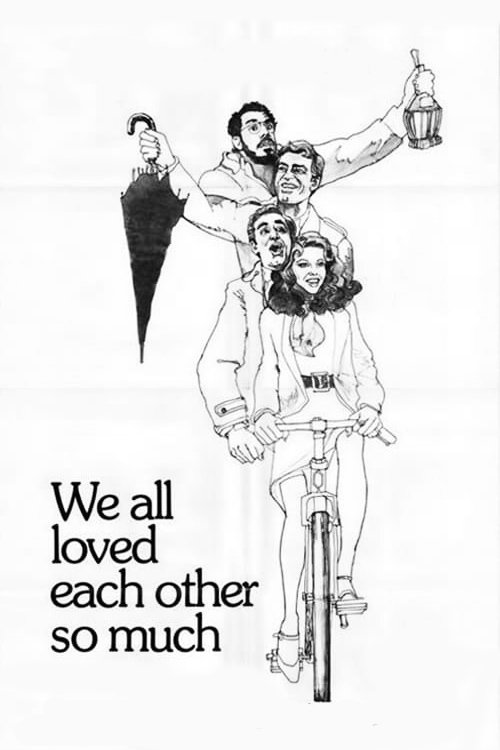
C'eravamo tanto amati
"A many splendored thing."
We All Loved Each Other So Much - Easter Eggs & Hidden Details
Easter Eggs
Homage to Vittorio De Sica's "Bicycle Thieves"
This is more than a simple reference; it's a central plot device. Nicola's life is ruined when he loses his job for passionately defending the film against detractors who saw it as presenting a poor image of Italy. Later, he loses a TV quiz show by giving a nuanced, intellectual answer about the film that the judges deem incorrect. The film's dedication to De Sica makes this recurring motif a profound tribute to the master of Neorealism.
Recreation of "La Dolce Vita" Trevi Fountain Scene
The film reconstructs the set of Fellini's iconic film, with Fellini and Mastroianni appearing as themselves. This scene serves multiple purposes: it grounds the film in a specific moment of Italian cultural history, it provides a backdrop for Antonio and Luciana's reunion, and it acts as a meta-commentary on the power and allure of cinema, contrasting the glamorous world of film with the characters' more mundane lives.
Use of Eugene O'Neill's "Strange Interlude" Theatrical Device
Early in the film, Antonio and Luciana see O'Neill's play, which is famous for its use of soliloquies where characters speak their inner thoughts directly to the audience. Scola then adopts this technique, having his own characters freeze the action and break the fourth wall to address the camera, revealing their true feelings and motivations. This stylistic choice creates a direct, intimate connection with the viewer and enhances the film's playful, self-aware tone.
Aldo Fabrizi's Casting
Aldo Fabrizi, who plays the corrupt, boorish construction magnate Romolo Catenacci, was famous for his heroic role as the Resistance priest in Roberto Rossellini's Neorealist masterpiece "Open City" (1945). His casting here as a symbol of post-war corruption and greed is a powerful, ironic commentary on how the ideals of the Resistance era were betrayed by subsequent generations.