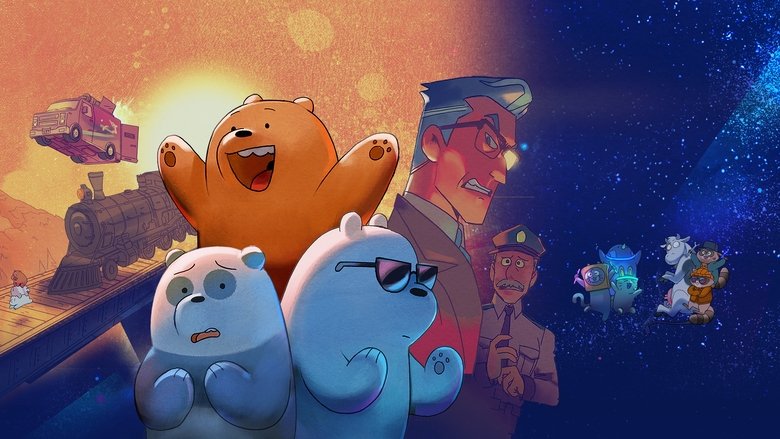
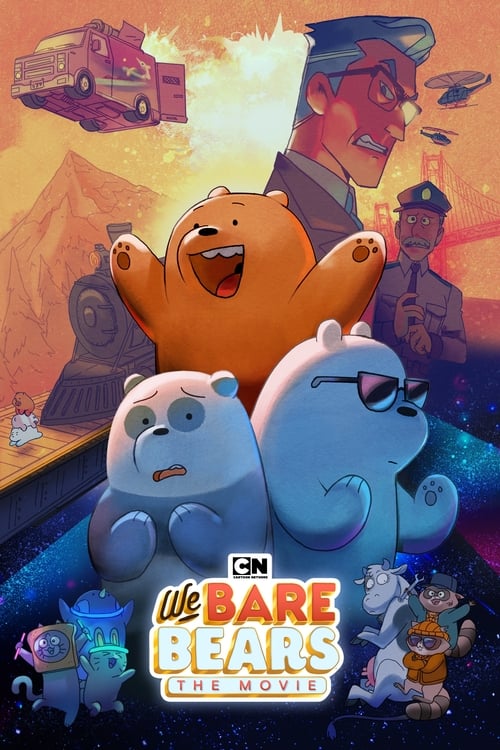
"FUGITIVES, FRIENDS AND FOREVER BROTHERS."
We Bare Bears: The Movie - Symbolism & Philosophy
Symbols & Motifs
The Bear Stack
The iconic Bear Stack represents the brothers' unity, teamwork, and unique way of navigating the world. It is their primary mode of transport and a visual metaphor for their codependent bond. When they stack, they are stronger and more capable than when they are apart. The movie shows its origin as an instinctive act of survival, solidifying it as the foundation of their brotherhood.
The stack is used throughout the film as they travel and escape from Agent Trout. The film opens with a dream sequence showing how the stack was first formed when the three cubs met and had to escape an oncoming train. In the climax, Grizz rallies all the captured bears to form a giant, multi-bear stack to escape a forest fire, symbolizing how unity can overcome oppression.
Cages
The cages are a direct and potent symbol of imprisonment, dehumanization, and forced separation. They represent Agent Trout's ideology of containing and isolating anyone who doesn't fit his narrow definition of the "natural order." The imagery deliberately evokes real-world discussions about immigrant detention centers and family separation.
Agent Trout traps the bears and intends to place them in individual cages to be shipped to different parts of the world. In the film's third act, Grizz is locked in a large enclosure filled with other non-anthropomorphic grizzly bears, emphasizing his isolation. The climax involves freeing all the bears from their cages to fight a common threat.
Canada
Canada is depicted as a symbol of hope, refuge, and acceptance. For the bears, it is a near-mythical paradise where they believe they will be welcomed and can live in peace. It represents the immigrant's dream of a better life in a more tolerant society. The film uses Canada as a goal that drives the entire narrative forward.
After being run out of San Francisco, Grizz decides their only option is to escape to Canada. The country is their sole destination for the majority of the film, a place they have an idealized, poutine-filled vision of. Though they are ultimately captured at the border, the idea of Canada sustains them through their journey.
Philosophical Questions
What defines a family?
The film deeply explores this question through the central relationship of the three bears. They are not biologically related and are from different species, yet their bond is the emotional core of the story. Panda's cry that they "aren't brothers" in a moment of despair is treated as the most painful moment in the film, suggesting that family is not defined by blood, but by shared experience, loyalty, and a conscious choice to belong to one another.
How should a society respond to those who are different?
The film presents two starkly contrasting responses. The first is fear and rejection, embodied by Agent Trout and the angry mob, who see the bears' differences as a threat to the "natural order" that must be eliminated. The second is acceptance and integration, which is what the bears seek and ultimately find. The movie argues that the health and humanity of a society are measured by its ability to embrace diversity and create a welcoming home for all.
Is the 'natural order' a valid justification for exclusion?
Agent Trout repeatedly uses the concept of a "natural order" to justify his prejudice and cruelty. The film systematically deconstructs this idea, portraying it as a hollow excuse for bigotry. The bears, by living in a house, using technology, and forming a cross-species family, defy this rigid order. The film's climax, with Grizz telling Trout that "nature adapts," posits that the true natural order is one of change, evolution, and coexistence, not static separation.
Core Meaning
The core meaning of We Bare Bears: The Movie is a powerful and direct allegory for the experience of being a minority or immigrant in America. Director Daniel Chong, who is Asian American, stated that the film explores his own feelings of being an outsider and the fear of being told you don't belong. The film critiques xenophobia and intolerance through the antagonist Agent Trout, who seeks to enforce a "natural order" by separating those who are different. Ultimately, the movie champions the idea that family is chosen, home is a place of acceptance, and that societal harmony requires embracing diversity rather than fearing it.