We Bare Bears: The Movie
A heartfelt animated road trip that wraps themes of xenophobia and belonging in a warm, comedic hug, visualizing the bittersweet struggle for a place in the world.
We Bare Bears: The Movie

We Bare Bears: The Movie

"FUGITIVES, FRIENDS AND FOREVER BROTHERS."

30 June 2020 United States of America 69 min ⭐ 7.8 (835)
Director: Daniel Chong
Cast: Eric Edelstein, Bobby Moynihan, Demetri Martin, Marc Evan Jackson, Jason Lee
Animation Family Comedy Adventure TV Movie
Acceptance and Belonging Family Separation and Unity Prejudice and Discrimination Internet Culture and Social Media

Overview

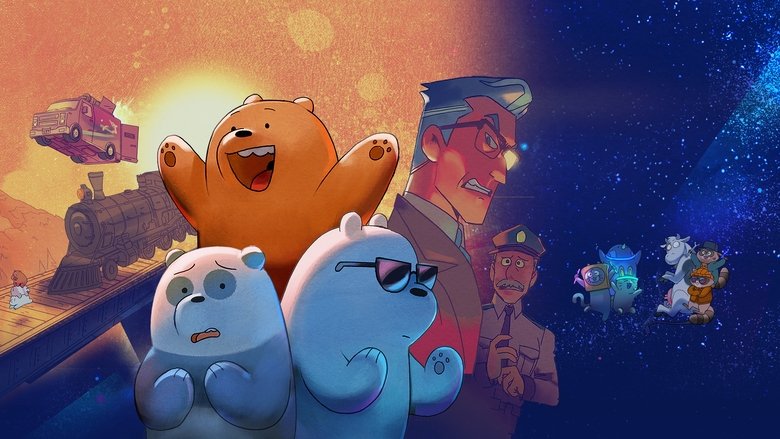
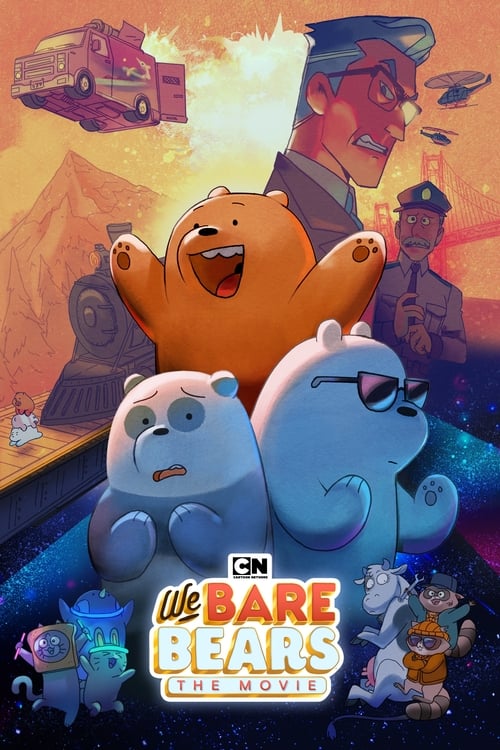
Serving as the finale to the beloved Cartoon Network series, We Bare Bears: The Movie follows Grizz, Panda, and Ice Bear after their antics escalate, causing a massive power outage and turning the entire city of San Francisco against them. Their desire to fit in has made them outcasts.

A menacing and prejudiced official from the Department of National Wildlife Control, Agent Trout, seizes the opportunity to capture them, vowing to restore the "natural order" by separating the brothers and sending them back to their 'native' habitats. To escape this fate, the bears decide to flee and seek refuge in the one place they imagine will be accepting: Canada. Their journey becomes an epic road trip, testing their brotherly bond as they evade capture, meet new friends, and confront the memory of how they first became a family.

Core Meaning

The core meaning of We Bare Bears: The Movie is a powerful and direct allegory for the experience of being a minority or immigrant in America. Director Daniel Chong, who is Asian American, stated that the film explores his own feelings of being an outsider and the fear of being told you don't belong. The film critiques xenophobia and intolerance through the antagonist Agent Trout, who seeks to enforce a "natural order" by separating those who are different. Ultimately, the movie champions the idea that family is chosen, home is a place of acceptance, and that societal harmony requires embracing diversity rather than fearing it.

Thematic DNA

Acceptance and Belonging 35%
Family Separation and Unity 30%
Prejudice and Discrimination 25%
Internet Culture and Social Media 10%

Acceptance and Belonging

The central struggle for Grizz, Panda, and Ice Bear has always been their desire to fit into human society. The movie elevates this theme to its climax, as their longing for acceptance is met with mass rejection. Their entire journey to Canada is a literal search for a place where they can belong without judgment. The film's resolution, where the community finally embraces them, posits that acceptance is a two-way street, requiring both understanding from society and the courage of outsiders to remain true to themselves.

Family Separation and Unity

The film was written during the time of the controversial US-Mexico border family separation policy, and this influence is central to the plot. Agent Trout's primary goal is to separate the brothers, believing their found family is unnatural. This external threat forces the bears to confront their own bond, which frays under the pressure of the chase. The movie's emotional core lies in their reaffirmation of their promise to be "bros for life," proving that their chosen family is as valid and strong as any biological one.

Prejudice and Discrimination

The movie is an unsubtle allegory for racial discrimination. Agent Trout embodies systemic prejudice, using fearmongering about the "natural order" to justify the bears' capture and imprisonment in cages. His rhetoric and actions mirror real-world anti-immigrant sentiment. The film directly confronts this bigotry, with Grizz ultimately telling Trout that his actions stem from being "afraid of what's different." The movie argues that such prejudice is a societal poison that must be actively fought.

Internet Culture and Social Media

Consistent with the series, the film explores the role of internet culture in the quest for validation. The initial conflict is sparked by the bears' attempt to create the ultimate viral video, which backfires catastrophically. Later, they find allies in a community of other internet-famous animals. This theme portrays social media as a double-edged sword: it can fuel a desperate, and sometimes dangerous, desire for public approval, but it can also foster community and support among fellow outsiders.

Character Analysis

Grizzly "Grizz"

Eric Edelstein

Archetype: The Leader/Guardian
Key Trait: Optimistic and Protective

Motivation

His primary motivation is to find a place where his family can be accepted and stay together. He feels the immense pressure of being the eldest brother, responsible for his younger siblings' happiness and safety, which drives his desperate and sometimes ill-advised plans.

Character Arc

Grizz begins the film as the fun-loving, and somewhat impulsive, older brother whose desire for acceptance inadvertently endangers his family. Wracked with guilt, his arc becomes about learning to be a true leader. He is forced to confront the origins of their brotherhood and the promise he made to always protect his brothers. In the climax, he overcomes his despair and rallies not just his brothers but all the captive bears, fully embracing his role as a protector and a unifier.

Panda

Bobby Moynihan

Archetype: The Everyman/The Heart
Key Trait: Sensitive and Anxious

Motivation

Panda is motivated by a need for security, love, and social validation, often through his phone. He is the most risk-averse of the three and his motivation is often simply to avoid trouble and find a stable, peaceful life with his family.

Character Arc

Panda, the sensitive and tech-savvy middle brother, acts as the voice of caution. His arc involves his anxiety and insecurity reaching a breaking point. Under the stress of being fugitives, he momentarily loses faith in their bond, declaring they aren't real brothers. His emotional journey is about rediscovering that their chosen family is real and meaningful, overcoming his despair to stand with his brothers when it matters most.

Ice Bear

Demetri Martin

Archetype: The Stoic/The Protector
Key Trait: Stoic and Capable

Motivation

Ice Bear's motivation is the protection and well-being of his brothers. He is the silent enabler of their adventures and their most reliable defender. He is driven by a fierce, quiet loyalty to his family unit.

Character Arc

Ice Bear is the stoic, hyper-competent, and mysterious youngest brother. While he has the least dialogue, his arc is shown through action and loyalty. He remains the unwavering foundation of the group, using his skills to save them repeatedly. As the family fractures, he withdraws, showing his deep reliance on their unity. His arc is one of steadfastness; he doesn't change so much as proves his unwavering commitment, and his eventual rage at their capture shows the deep well of emotion beneath his cool exterior.

Agent Trout

Marc Evan Jackson

Archetype: The Zealot/The Antagonist
Key Trait: Prejudiced and Sadistic

Motivation

He is driven by a xenophobic and sadistic desire to impose his belief in a strict "natural order," where humans and animals are separate and where anything different is a threat that must be contained or removed. He despises the bears for attempting to integrate into a society he believes they don't belong in.

Character Arc

Agent Trout is a static character who serves as the ideological antagonist. He does not have a developmental arc; instead, his resolve only hardens throughout the film. He begins as a prejudiced enforcer of the "natural order" and ends as a defeated but unchanged bigot. His role is to represent an unwavering, hateful worldview that the heroes must overcome.

Symbols & Motifs

The Bear Stack

Meaning:

The iconic Bear Stack represents the brothers' unity, teamwork, and unique way of navigating the world. It is their primary mode of transport and a visual metaphor for their codependent bond. When they stack, they are stronger and more capable than when they are apart. The movie shows its origin as an instinctive act of survival, solidifying it as the foundation of their brotherhood.

Context:

The stack is used throughout the film as they travel and escape from Agent Trout. The film opens with a dream sequence showing how the stack was first formed when the three cubs met and had to escape an oncoming train. In the climax, Grizz rallies all the captured bears to form a giant, multi-bear stack to escape a forest fire, symbolizing how unity can overcome oppression.

Cages

Meaning:

The cages are a direct and potent symbol of imprisonment, dehumanization, and forced separation. They represent Agent Trout's ideology of containing and isolating anyone who doesn't fit his narrow definition of the "natural order." The imagery deliberately evokes real-world discussions about immigrant detention centers and family separation.

Context:

Agent Trout traps the bears and intends to place them in individual cages to be shipped to different parts of the world. In the film's third act, Grizz is locked in a large enclosure filled with other non-anthropomorphic grizzly bears, emphasizing his isolation. The climax involves freeing all the bears from their cages to fight a common threat.

Canada

Meaning:

Canada is depicted as a symbol of hope, refuge, and acceptance. For the bears, it is a near-mythical paradise where they believe they will be welcomed and can live in peace. It represents the immigrant's dream of a better life in a more tolerant society. The film uses Canada as a goal that drives the entire narrative forward.

Context:

After being run out of San Francisco, Grizz decides their only option is to escape to Canada. The country is their sole destination for the majority of the film, a place they have an idealized, poutine-filled vision of. Though they are ultimately captured at the border, the idea of Canada sustains them through their journey.

Memorable Quotes

We're not brothers, Grizz. We're just a bunch of dumb bears who made up some story to make ourselves feel better.

— Panda

Context:

Spoken after they are captured by Agent Trout at the Canadian border. All their efforts have failed, and in a moment of despair and frustration with Grizz's leadership, Panda lashes out with the most hurtful thing he can say.

Meaning:

This line represents the emotional low point of the film. It's the moment where the pressure of being hunted and ostracized finally breaks Panda's spirit, causing him to question the very foundation of their family. It vocalizes the deepest fear they all share: that their chosen family isn't legitimate.

You're doing all this because you're afraid of what's different. Not because it's right. And we're not gonna stand for it.

— Grizz

Context:

During the climax, after freeing the other bears, Grizz directly confronts Agent Trout in front of the burning wildlife preserve. This is his final transformation from a bumbling older brother into a true leader.

Meaning:

This is Grizz's defining moment, where he stands up to his oppressor not with violence, but with a clear and powerful articulation of the film's central message. He identifies the root of Trout's hatred as fear, directly confronting the film's theme of prejudice.

Nature adapts. Maybe you should too.

— Grizz

Context:

Said by Grizz after Agent Trout has been defeated and locked in a cage himself, just before he is arrested by Officer Murphy.

Meaning:

This quote serves as the final rebuke to Agent Trout's twisted ideology. Trout constantly preaches about the "natural order," but Grizz throws his words back at him, arguing that change, adaptation, and coexistence are the true nature of the world. It is a powerful statement about the need for tolerance and evolution in societal thinking.

You are nothing but some filthy, mindless beasts!

— Agent Trout

Context:

Shouted by Agent Trout at the bears after he has successfully captured them at the Canadian border, revealing the sadistic pleasure he takes in their defeat.

Meaning:

This line encapsulates Agent Trout's xenophobic worldview. It reveals his utter contempt for the bears and his refusal to see them as anything more than animals who don't belong in his world. It's a clear expression of the dehumanizing rhetoric used to justify discrimination.

Philosophical Questions

What defines a family?

The film deeply explores this question through the central relationship of the three bears. They are not biologically related and are from different species, yet their bond is the emotional core of the story. Panda's cry that they "aren't brothers" in a moment of despair is treated as the most painful moment in the film, suggesting that family is not defined by blood, but by shared experience, loyalty, and a conscious choice to belong to one another.

How should a society respond to those who are different?

The film presents two starkly contrasting responses. The first is fear and rejection, embodied by Agent Trout and the angry mob, who see the bears' differences as a threat to the "natural order" that must be eliminated. The second is acceptance and integration, which is what the bears seek and ultimately find. The movie argues that the health and humanity of a society are measured by its ability to embrace diversity and create a welcoming home for all.

Is the 'natural order' a valid justification for exclusion?

Agent Trout repeatedly uses the concept of a "natural order" to justify his prejudice and cruelty. The film systematically deconstructs this idea, portraying it as a hollow excuse for bigotry. The bears, by living in a house, using technology, and forming a cross-species family, defy this rigid order. The film's climax, with Grizz telling Trout that "nature adapts," posits that the true natural order is one of change, evolution, and coexistence, not static separation.

Cultural Impact

We Bare Bears: The Movie was released in 2020 to critical acclaim, with many reviewers praising its timely and poignant social commentary. Created during a period of intense political division and debate over immigration in the United States, the film directly tackled themes of xenophobia, family separation, and the meaning of home. Director Daniel Chong confirmed the film was a deliberate allegory for the minority experience in America, drawing from his own background as an Asian American.

Critics noted how the film skillfully used its family-friendly, comedic tone to deliver a powerful message about acceptance and tolerance that was accessible to younger audiences but deeply resonant for adults. The antagonist, Agent Trout, was widely interpreted as a personification of rising nationalist and anti-immigrant sentiment. The film's depiction of bears being rounded up and put in cages was seen as a direct reference to the family separation policy at the US-Mexico border, making it one of the more politically direct animated films of its time. While serving as a finale for the series, its lasting impact is its powerful, empathetic statement on what it means to be an outsider in a world that fears difference.

Audience Reception

Audience reception for We Bare Bears: The Movie was overwhelmingly positive, echoing the sentiments of critics. Fans of the show largely saw it as a satisfying and emotionally resonant conclusion to the series. Many praised the film for retaining the show's signature humor and charm while successfully tackling darker, more mature themes. The revelation of how the bears first met was a frequently cited highlight, providing a long-awaited and touching backstory.

Points of praise often centered on the film's powerful emotional core and its relevant social message. Viewers on forums and social media expressed being moved by the story's themes of acceptance and the critique of xenophobia. The main point of minor criticism from some viewers was the reduced role of the beloved supporting cast, such as Chloe, Charlie, and Ranger Tabes, who have limited screen time. A few also found the use of older internet memes to be slightly dated. Overall, the consensus among viewers was that the film was a heartfelt, funny, and meaningful finale.

Interesting Facts

  • The film serves as the series finale for the original We Bare Bears television show.
  • The story was heavily influenced by real-world events happening during its development, including the 2018 California wildfires and the US government's family separation policy at the border.
  • Series creator Daniel Chong has stated that the show and movie are an allegory for his experiences as an Asian American and feeling like an outsider.
  • The animation was produced by Rough Draft Studios, the same studio that animated the television series.
  • Initially, the film's story was centered more on all three bears, but was later rewritten to focus more on Grizz, as the writers felt he carried the heaviest emotional burdens as the eldest brother.
  • A spin-off series titled 'We Baby Bears' premiered in 2022, focusing on the bears' adventures as cubs.

Easter Eggs

At the party with the internet-famous animals, several real-life viral video stars make cameo appearances.

These include characters representing Keyboard Cat, Dramatic Chipmunk (as Dramatic Cow), and Pizza Rat. This serves as a fun nod to the internet culture that is central to the show's identity and humor.

During their live stream attempt that causes the blackout, the bears perform several dances.

Some of the dances are direct references to popular emotes from the video game Fortnite, such as the 'Default Dance'. This grounds the film in contemporary pop culture, much like the series often did.

The van belonging to the internet-famous animals has a paint job that is very similar to the Mystery Machine.

This is a likely homage to the iconic van from the animated series Scooby-Doo, Where Are You!, another famous show about a group of friends on adventures.

During the live stream, the backgrounds Panda is placed in front of include several famous memes.

These include visual references to Nyan Cat, the "Success Kid" meme, and the "Roll Safe" meme, further embedding the film in the language of internet culture.

⚠️ Spoiler Analysis

Click to reveal detailed analysis with spoilers

Frequently Asked Questions

Explore More About This Movie

Dive deeper into specific aspects of the movie with our detailed analysis pages

Comments (0)

Leave a comment

No comments yet. Be the first to share your thoughts!