
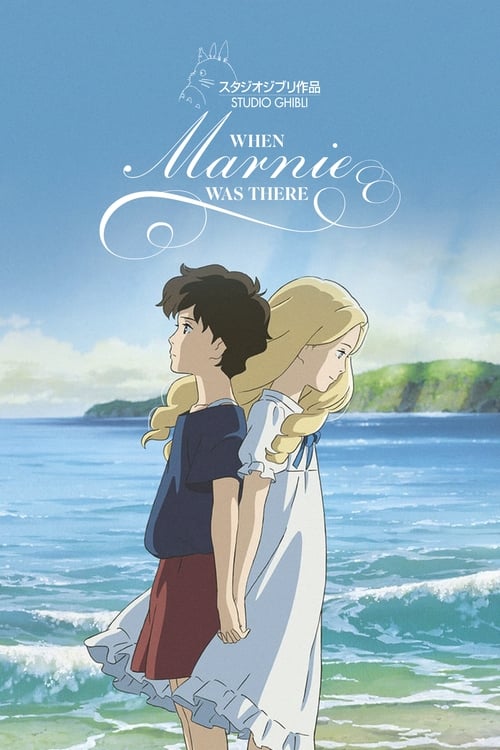
思い出のマーニー
"Promise we'll remain a secret, forever."
When Marnie Was There - Symbolism & Philosophy
Symbols & Motifs
The Marsh House
The Marsh House symbolizes the past, memory, and Anna's own subconscious. It is a container of forgotten histories and repressed emotions. Its state reflects Anna's connection to her past; it appears vibrant and full of life when she connects with Marnie's memories, but dilapidated and empty in the present day. The house acts as a bridge between generations, physically linking Anna to her grandmother's story.
The house is the central location of the film. Anna is drawn to it immediately upon her arrival. The changing tides that grant or deny access to the house mirror Anna's fluctuating ability to access her own memories and connect with Marnie. The house was specifically designed to be like 'another character who watches over Anna'.
The Silo
The abandoned silo represents trauma, fear, and abandonment. For Marnie, it was a place of terror where she was locked by her abusive maids. For Anna, it becomes the place where she experiences the peak of her fear of being left behind when Marnie disappears during a thunderstorm. Conquering the silo is a necessary step for both characters to face and overcome their deepest fears.
Anna takes Marnie to the silo to help her confront her fear. Later, Anna gets trapped there during a storm while looking for Marnie, reliving a sense of profound abandonment. This traumatic event directly precedes the climax where Anna finally offers forgiveness, turning a place of fear into a site of catharsis and resolution.
Marnie's Diary
Marnie's diary serves as a tangible link between the past and the present. It provides the first concrete evidence that Marnie was a real person, validating Anna's experiences. The diary represents the objective truth of history, contrasting with the subjective, dreamlike nature of Anna's encounters. It is a key that helps unlock the mystery.
Sayaka, the new resident of the Marsh House, finds the diary hidden in a drawer. She shares its contents with Anna, and the events described in the diary align perfectly with what Anna has been experiencing with Marnie, helping them piece together the truth.
Sketching
Anna's passion for sketching is her primary mode of expression and connection to the world when she cannot verbalize her feelings. It is how she processes her emotions and observes the world from a safe distance. Her art is a reflection of her inner state; initially, she keeps it private, but as she opens up, she is able to share it.
Anna is constantly seen with her sketchbook. It's a source of solace for her. Her sketch of Marnie is a pivotal object in the story, a physical manifestation of her connection to her mysterious friend. Her growth is shown at the end when she is happily sketching alongside Hisako, a local painter, and is able to share her work openly.
Philosophical Questions
How does our ancestral past shape our present identity?
The film delves into the idea that we are products of our family history, whether we are conscious of it or not. Anna's feelings of loneliness and abandonment are not just products of her immediate circumstances but are echoes of the trauma and loss experienced by her mother and grandmother. The story suggests that true self-understanding is incomplete without acknowledging and reconciling with the lives of those who came before us. Anna only finds peace when she understands she is part of a longer, albeit tragic, story.
What is the nature of reality when filtered through memory and emotion?
"When Marnie Was There" constantly blurs the line between reality, dreams, and memories. Anna's encounters with Marnie are intensely real to her, yet they defy logical explanation. The film explores how strong emotions and buried memories can manifest in ways that feel tangible. It questions whether the 'reality' of an experience is more about its emotional impact and its power to transform us than its objective, physical truth. For Anna, whether Marnie is a ghost or a memory is less important than the fact that their relationship saved her.
Can we truly heal from trauma without forgiveness?
Forgiveness is presented as the final, crucial step in Anna's healing process. Her anger and resentment towards the family that 'abandoned' her is the source of her self-hatred. The film posits that holding onto this pain only perpetuates the trauma. It is only when Anna is able to genuinely forgive Marnie—for dying, for leaving, for the entire sad history—that the cycle is broken, and she is able to accept love and move forward into a healthier emotional state.
Core Meaning
The core meaning of "When Marnie Was There" revolves around the journey of self-discovery and healing through understanding one's roots. The director, Hiromasa Yonebayashi, wanted to convey a message of hope for young people who feel lonely and isolated, suggesting that connecting with the past is essential for self-acceptance and moving forward. The film posits that family is not just about blood ties but about love, forgiveness, and the memories that connect generations. By solving the mystery of her own life, Anna learns to love herself and accept the love offered by others, breaking free from her self-imposed isolation.