
Where Hands Touch - Symbolism & Philosophy
Symbols & Motifs
Leyna's Hair
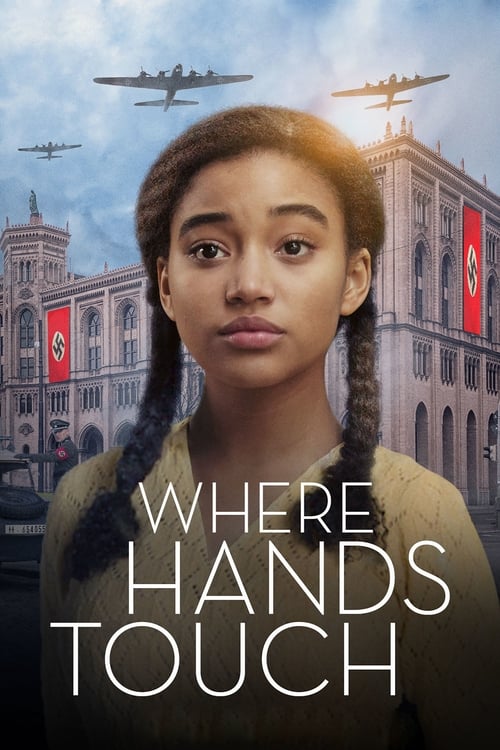
Leyna's natural, curly hair is a visible marker of her African heritage and, therefore, her 'otherness' in Nazi Germany. It symbolizes her identity that she cannot hide and the constant target it makes her. Her mother's attempts to straighten it or cover it represent the pressure to assimilate and the danger of being different.
Throughout the film, Leyna's hair is a focal point of both racist taunts and moments of intimacy. In the labor camp, the shaving of her head is a brutal act of dehumanization, stripping her of a key part of her identity.
The Hidden Jazz Record
Lutz's father owns a forbidden American jazz record by Billie Holiday. Jazz music, created by African Americans, was deemed 'degenerate' by the Nazis. The record symbolizes a hidden world of humanity, art, and emotion that exists in defiance of the regime's sterile and hateful ideology. It represents a connection to a culture that the Nazis sought to eradicate.
Lutz shares the music with Leyna in secret, and it becomes a part of the soundtrack to their clandestine romance. It is a small but significant act of rebellion and a symbol of their shared humanity that transcends the racial divides imposed by their society.
Leyna's Pregnancy
Leyna's pregnancy is a powerful symbol of hope, resilience, and the future in the face of death and destruction. It represents the continuation of life and the ultimate failure of the Nazi's genocidal project to erase those they deemed 'undesirable'. The child is a product of love that crossed forbidden racial lines, embodying a future where such divisions might not exist.
Discovered while she is in the labor camp, Leyna's pregnancy becomes her primary motivation for survival. It is a secret she must protect at all costs, and her determination to bring her child into the world is a testament to her strength and will to live.
Philosophical Questions
Can love truly exist and be pure in a context of extreme oppression and power imbalance?
The film explores this question through the relationship between Leyna and Lutz. Their love blossoms in a society that has systematically stripped Leyna of her rights and humanity. The film presents their connection as a genuine and powerful force, but it also raises questions about whether their love can ever be truly equal given their vastly different social positions. The controversy surrounding the film stems from this very question, with some viewers finding the romance to be a powerful symbol of defiance, while others see it as a naive and even dangerous portrayal of love that ignores the oppressive context in which it exists.
To what extent is an individual responsible for their actions when they are part of an oppressive regime?
"Where Hands Touch" delves into this question through the character of Lutz. As a member of the Hitler Youth, he is a cog in the Nazi machine. The film charts his journey from a seemingly committed follower to someone who questions and ultimately rejects the regime's ideology. This raises questions about his culpability. Is he a victim of indoctrination, or is he responsible for his participation in an evil system? The film does not offer easy answers, instead presenting a nuanced portrait of a young man caught in the moral quagmire of his time. The audience is left to grapple with the complexities of guilt, complicity, and the possibility of redemption.
What does it mean to belong to a nation that rejects you?
This is the central philosophical question of Leyna's existence. She identifies as German, yet the state and many of her fellow citizens see her as an 'other' to be persecuted. The film explores the psychological turmoil of this experience, as Leyna struggles to reconcile her love for her homeland with its hatred for her. Her journey raises profound questions about the nature of national identity. Is it defined by blood and race, as the Nazis claimed, or by culture, birth, and personal affiliation? Leyna's story challenges the very notion of a homogenous national identity and highlights the painful experience of being an outsider in one's own home.
Core Meaning
The core meaning of "Where Hands Touch" revolves around the exploration of identity and humanity in the face of dehumanizing ideology. Director Amma Asante sought to shed light on the little-known history of Afro-Germans during the Holocaust, demonstrating that their experiences were complex and multifaceted. The film posits that love and human connection can emerge even in the most oppressive of environments, challenging simplistic narratives of good and evil.
Asante also explores the insidious nature of propaganda and how it can shape the beliefs of a nation's youth, as seen through the character of Lutz. The film serves as a cautionary tale about the dangers of nationalism and the importance of questioning the narratives of those in power. Ultimately, "Where Hands Touch" is a testament to the resilience of the human spirit and the enduring power of love to transcend societal boundaries, even in the darkest of times.