"Suffering is the soul of greatness."
Whiplash - Symbolism & Philosophy
Symbols & Motifs
The Flying Chair
Symbolizes the sudden, violent escalation of Fletcher's teaching methods and the ever-present threat of physical harm.
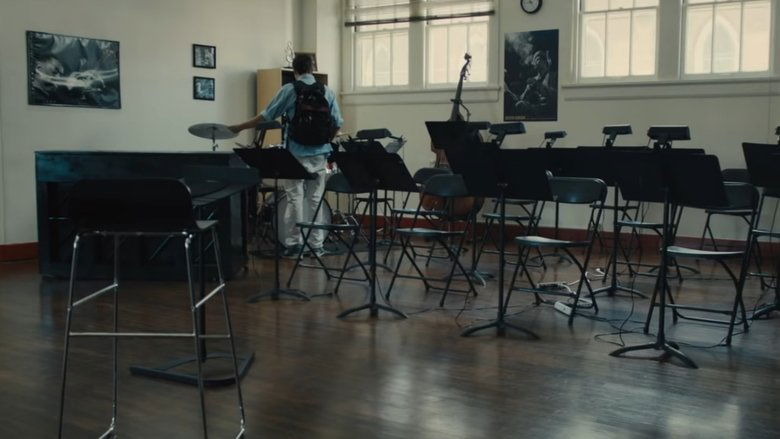
Fletcher hurls a chair at Andrew's head when he fails to keep the correct tempo, marking the moment the professional facade of the conservatory shatters.
The Metronome
Represents the rigid, unyielding standards of perfection that Andrew can never fully satisfy.
Used as both a tool for practice and a source of anxiety, emphasizing the mathematical coldness Fletcher demands from a soulful art form.
Blood
Symbolizes the literal sacrifice of the body for the sake of the craft.
Though more prominent in the feature, the short establishes the physical toll of drumming, with sweat and hinted physical strain showcasing art as a grueling labor.
The Hand Slap
A symbol of rhythmic dominance and personal violation.
Fletcher slaps Andrew in time with his count to humiliate him and physically force him to internalize the tempo.
Philosophical Questions
Does the end justify the means in the creation of art?
The film poses whether a legendary performance justifies the psychological destruction of the performer.
Is true genius innate or forged through trauma?
Fletcher argues that a true 'great' cannot be discouraged, implying that abuse is simply a filter to find those with the will to survive it.
Core Meaning
The core of Whiplash is an exploration of the destructive cost of greatness. Damien Chazelle aimed to deconstruct the romanticized 'mentor-student' trope, replacing it with a parasitic relationship where art is born from trauma. The film suggests that while extreme pressure can produce 'the next Charlie Parker,' it often does so at the expense of the artist's humanity, sanity, and physical well-being. It asks whether a masterpiece is worth the literal and metaphorical blood shed to create it.