Whiplash
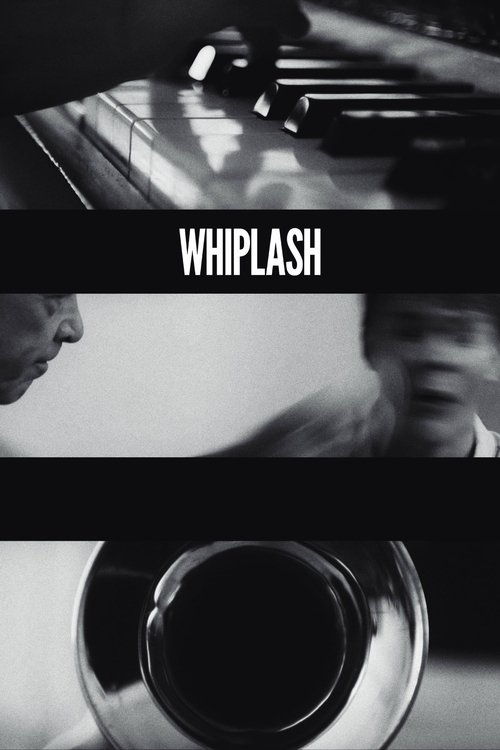
A visceral musical thriller where a young drummer's desperate ambition collides with a conductor's sadistic perfectionism, transforming a rehearsal room into a blood-soaked arena of rhythmic violence and psychological warfare.
Whiplash

Whiplash

"Suffering is the soul of greatness."

18 January 2013 United States of America 18 min ⭐ 7.8 (388)
Director: Damien Chazelle
Cast: Johnny Simmons, J.K. Simmons, Nate Lang, C.J. Vana, Honora Javier
Drama Music
The Price of Perfection Abusive Mentorship Time and Control Toxic Masculinity

Overview

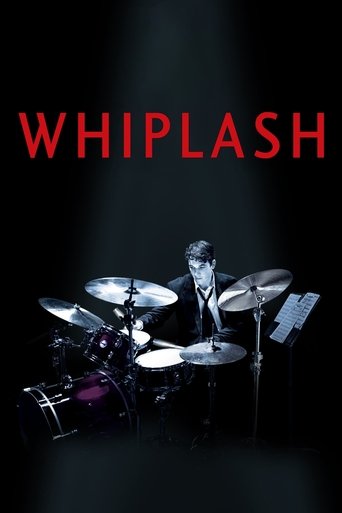
Whiplash (2013) is a high-intensity drama short film that serves as the visceral proof-of-concept for the Academy Award-winning 2014 feature of the same name. Directed by Damien Chazelle, the story focuses on Andrew Neiman (played by Johnny Simmons), a freshman jazz drummer at the prestigious Shaffer Conservatory. Andrew is an aspiring great who catches the attention of the school's most formidable figure: Terence Fletcher (J.K. Simmons), the conductor of the elite studio band.

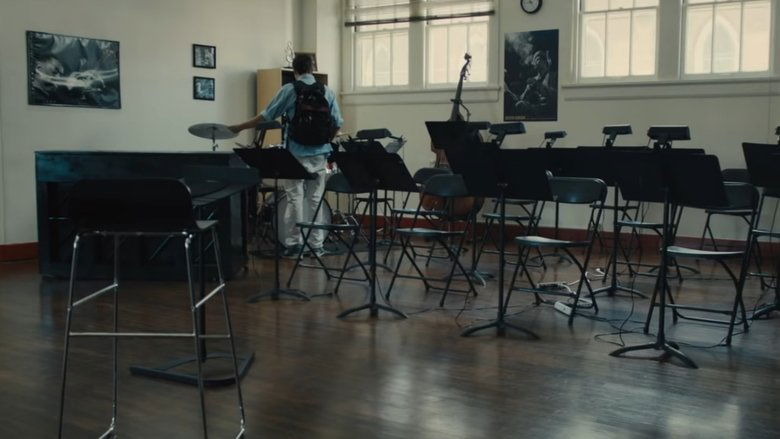
The film captures the harrowing experience of Andrew's first rehearsal with Fletcher. What begins as an intimidating yet professional invitation quickly descends into a psychological nightmare. As the band attempts to master the complex time signatures of the Hank Levy piece 'Whiplash,' Andrew finds himself the primary target of Fletcher’s relentless and abusive demands for perfection, testing the limits of his technical skill and emotional endurance.
Core Meaning

The core of Whiplash is an exploration of the destructive cost of greatness. Damien Chazelle aimed to deconstruct the romanticized 'mentor-student' trope, replacing it with a parasitic relationship where art is born from trauma. The film suggests that while extreme pressure can produce 'the next Charlie Parker,' it often does so at the expense of the artist's humanity, sanity, and physical well-being. It asks whether a masterpiece is worth the literal and metaphorical blood shed to create it.

Thematic DNA

The Price of Perfection 35%
Abusive Mentorship 30%
Time and Control 20%
Toxic Masculinity 15%

The Price of Perfection

The film reveals how the pursuit of excellence can become a monomaniacal obsession. Andrew is willing to endure physical pain and public humiliation to avoid the 'mediocrity' Fletcher despises. This theme highlights the thin line between dedication and self-destruction.

Abusive Mentorship

Terence Fletcher represents a 'sink or swim' philosophy taken to a sadistic extreme. He justifies his abuse by claiming he is preventing 'the next Charlie Parker' from being discouraged, framing his cruelty as a necessary catalyst for genius.

Time and Control

Tempo is used as a weapon of psychological dominance. Fletcher’s obsession with 'rushing or dragging' serves as a tool to destabilize his students, asserting his absolute control over their bodies and the rhythm of their lives.

Toxic Masculinity

The rehearsal room is a hyper-masculine environment where vulnerability is treated as a fatal flaw. Fletcher uses homophobic slurs and attacks on the students' parents to 'break' them, reinforcing a culture of aggression and dominance.

Character Analysis

Andrew Neiman

Johnny Simmons

Archetype: The Aspiring Hero/Victim
Key Trait: Vulnerable Ambition

Motivation

Driven by a desperate need to be 'one of the greats' and to avoid the ordinary life he fears.

Character Arc

Andrew begins as an eager, somewhat timid student and ends the short traumatized, weeping, and shattered by Fletcher's first 'lesson.'

Terence Fletcher

J.K. Simmons

Archetype: The Sadistic Mentor/Antagonist
Key Trait: Precision Brutality

Motivation

Believes that there are no two words in the English language more harmful than 'good job.'

Character Arc

Remains a static, looming force of nature. He shifts from a deceptively calm mentor to a raging tyrant in seconds.

Carl

Nate Lang

Archetype: The Rival
Key Trait: Stoic Professionalism

Motivation

Maintaining his status and surviving Fletcher's wrath.

Character Arc

The core drummer who is being replaced; he serves as a reminder to Andrew that no position in the band is secure.

Symbols & Motifs

The Flying Chair

Meaning:

Symbolizes the sudden, violent escalation of Fletcher's teaching methods and the ever-present threat of physical harm.

Context:

Fletcher hurls a chair at Andrew's head when he fails to keep the correct tempo, marking the moment the professional facade of the conservatory shatters.

The Metronome

Meaning:

Represents the rigid, unyielding standards of perfection that Andrew can never fully satisfy.

Context:

Used as both a tool for practice and a source of anxiety, emphasizing the mathematical coldness Fletcher demands from a soulful art form.

Blood

Meaning:

Symbolizes the literal sacrifice of the body for the sake of the craft.

Context:

Though more prominent in the feature, the short establishes the physical toll of drumming, with sweat and hinted physical strain showcasing art as a grueling labor.

The Hand Slap

Meaning:

A symbol of rhythmic dominance and personal violation.

Context:

Fletcher slaps Andrew in time with his count to humiliate him and physically force him to internalize the tempo.

Memorable Quotes

Not quite my tempo.

— Terence Fletcher

Context:

Repeated by Fletcher as he interrupts Andrew's drumming, building the tension before his explosive outburst.

Meaning:

The defining mantra of Fletcher's character, used to keep students in a state of perpetual inadequacy.

Were you rushing or were you dragging?

— Terence Fletcher

Context:

Spoken while Fletcher is inches from Andrew's face after physically assaulting him.

Meaning:

A psychological trap designed to force the student into admitting a mistake, regardless of whether one was actually made.

I'm here for a reason.

— Andrew Neiman

Context:

Andrew says this during a brief moment of forced encouragement from Fletcher, just before the rehearsal turns violent.

Meaning:

A fragile affirmation of self-worth that Fletcher immediately weaponizes against him.

Philosophical Questions

Does the end justify the means in the creation of art?

The film poses whether a legendary performance justifies the psychological destruction of the performer.

Is true genius innate or forged through trauma?

Fletcher argues that a true 'great' cannot be discouraged, implying that abuse is simply a filter to find those with the will to survive it.

Alternative Interpretations

Critics and audiences have debated two primary readings of the film. The 'Necessary Evil' interpretation suggests that Fletcher is actually a 'good' teacher who successfully identifies potential and applies the exact amount of pressure needed to unlock it. Conversely, the 'Parasite' interpretation views Fletcher as a failed artist who derives pleasure from destroying the youth and joy of his students, suggesting that Andrew’s eventual 'greatness' is actually a hollow victory because he has lost his soul in the process. Another reading suggests the film is a modern sports movie disguised as a music drama, focusing on physical limits and the competitive drive rather than the art itself.

Cultural Impact

The 2013 Whiplash short film is a landmark in independent cinema as it effectively revived the 'proof-of-concept' model for young directors. Its success at Sundance transformed Damien Chazelle from a struggling filmmaker into a major Hollywood talent almost overnight. Culturally, it established a new archetype for the 'villainous teacher' in J.K. Simmons’ Terence Fletcher, a character who has since become a pop-culture shorthand for abusive authority. It also sparked widespread debate in the music and education communities about the ethics of high-pressure coaching and whether suffering is an essential ingredient of artistic excellence.

Audience Reception

Audiences at Sundance 2013 were reportedly electrified and horrified by the short film. It received praise for its claustrophobic cinematography and J.K. Simmons' powerhouse performance, which many noted felt fully formed even in this condensed version. Some viewers found the level of abuse difficult to watch, but the overwhelming consensus was that the film possessed a rhythmic energy and tension rarely seen in drama, leading to its Jury Prize win.

Interesting Facts

  • The 2013 short film was shot in just 3 days to be used as a 'proof-of-concept' to secure funding for the feature-length version.
  • J.K. Simmons and Johnny Simmons are not related in real life, despite sharing a surname.
  • The short film won the Short Film Jury Prize at the 2013 Sundance Film Festival, which directly led to the $3.3 million budget for the feature.
  • Nate Lang, who plays the core drummer Carl, is a real-life professional drummer who also helped train Miles Teller for the 2014 feature.
  • Director Damien Chazelle based the story on his own experiences with an intensely competitive and intimidating high school jazz band conductor.
  • The 18-minute short is almost a shot-for-shot blueprint for the iconic rehearsal scene in the feature film.

Easter Eggs

The Charlie Parker 'Bird' Legend

Fletcher references the story of Jo Jones throwing a cymbal at a young Charlie Parker. This is the central allegory of the film, justifying Fletcher's abuse as a necessary historical tool for creating geniuses.

The Music Notation Focus

The camera frequently lingers on 'Whiplash' by Hank Levy. Levy was known for odd time signatures (like 7/4 or 14/8), which emphasizes the technical difficulty and the 'trap' Fletcher sets for the drummer.

⚠️ Spoiler Analysis

Click to reveal detailed analysis with spoilers

Frequently Asked Questions

Explore More About This Movie

Dive deeper into specific aspects of the movie with our detailed analysis pages

Comments (0)

Leave a comment

No comments yet. Be the first to share your thoughts!