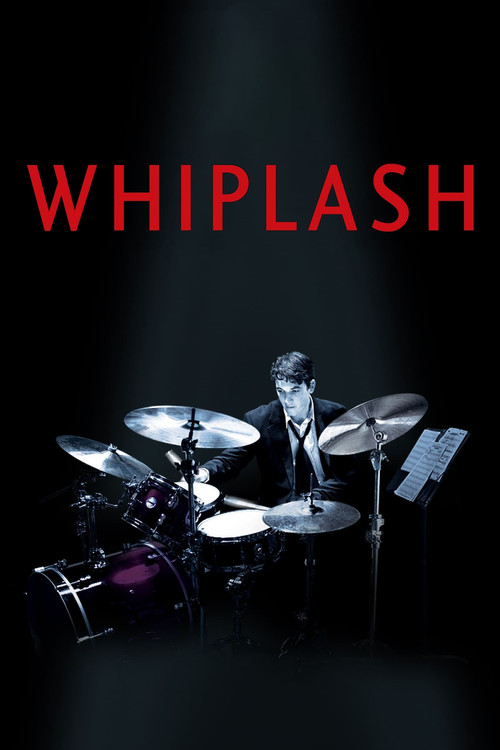
"The road to greatness can take you to the edge."
Whiplash - Ending Explained
⚠️ Spoiler Analysis
"Whiplash" follows the escalating psychological war between Andrew Neiman, a driven jazz drummer, and his abusive instructor, Terence Fletcher. After being accepted into Fletcher's elite studio band, Andrew endures relentless humiliation. Fletcher manipulates him by creating intense competition, promoting him to core drummer after a successful performance of "Whiplash" from memory, only to then force him into a grueling three-way drum battle that leaves him physically and emotionally shattered.
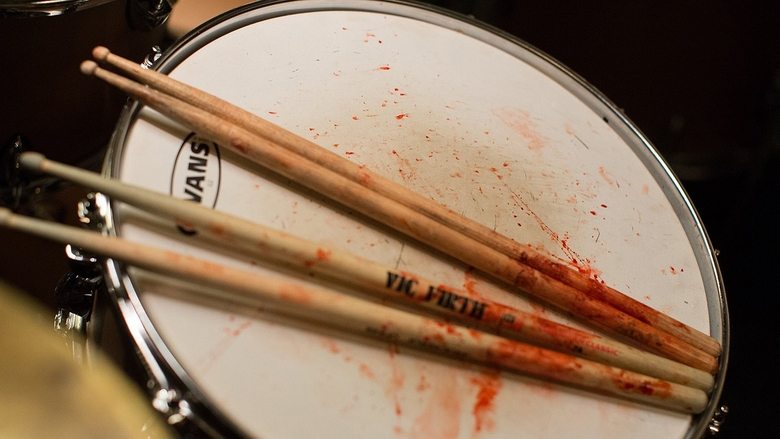
Andrew's obsession leads him to break up with his girlfriend, Nicole, and alienate his family. The turning point comes when, en route to a competition, he survives a violent car crash but still attempts to perform. Bloody and unable to play, he is dismissed by Fletcher on stage. In a fit of rage, Andrew attacks Fletcher and is expelled from the conservatory. Subsequently, Andrew agrees to testify anonymously against Fletcher for a lawyer representing the family of a former student who committed suicide due to Fletcher's abuse, leading to Fletcher being fired.
Months later, Andrew, having given up drumming, encounters Fletcher performing at a jazz club. Fletcher, seemingly contrite, explains his philosophy: he pushes students to achieve greatness they wouldn't otherwise reach. He then invites Andrew to play with his new band at a prestigious festival, claiming to want to perform with a truly great drummer. The key twist is revealed on stage: Fletcher knew Andrew was the one who testified against him. As an act of revenge, he calls a song Andrew doesn't know, humiliating him in front of a massive audience. Devastated, Andrew walks off stage into the arms of his father, but then has a change of heart. He returns to the stage, cuts Fletcher off, and begins playing the song "Caravan" on his own terms, cueing the band himself. He launches into an extraordinary, defiant, and technically brilliant drum solo. Fletcher, initially furious, slowly begins to see the genius he has unleashed. The film ends with a silent, intense connection between them—a shared look of mutual understanding as Andrew completes his masterpiece, having finally become the transcendent artist Fletcher always claimed he wanted to create, albeit through an act of rebellion rather than obedience.
Alternative Interpretations
The ending of "Whiplash" is famously ambiguous and has sparked considerable debate, leading to several alternative interpretations.
1. A Tragic Victory: The most common interpretation is that Andrew achieves artistic greatness but at the cost of his humanity. He wins the battle against Fletcher, but in doing so, he becomes a version of him—isolated, obsessed, and emotionally stunted. The final, shared glance between them is one of mutual, monstrous understanding. In this reading, the ending is not a triumph but a tragedy, as Andrew has sacrificed a balanced life and his own well-being for a single moment of perfection.
2. A Triumphant Success Story: Conversely, some view the ending as an unabashed victory. From a purely artistic or even a Nietzschean perspective, Andrew transcends his limitations and becomes the 'ubermensch' or 'next Charlie Parker' that Fletcher was trying to create. He endures the trial by fire and emerges as a true artist, proving Fletcher's brutal philosophy correct. The final drum solo is his declaration of genius, a moment of pure, exhilarating success that justifies all the pain and sacrifice that came before it.
3. The Beginning of a Destructive Cycle: Another interpretation sees the ending not as a conclusion but as the start of a continuing, toxic relationship. Fletcher has found his perfect prodigy, and Andrew has found the only person who can push him to the greatness he craves. The final smile is not just about the one performance, but the realization that they are now locked in a symbiotic, mutually destructive artistic dance that will likely define both their futures.
4. Fletcher's Ultimate Manipulation: A more cynical reading suggests that Fletcher is in control the entire time. By sabotaging Andrew with the wrong song and then 'allowing' him to take over, Fletcher masterfully creates the exact high-pressure, adversarial conditions needed to force Andrew's breakthrough. The final performance is not Andrew's victory over Fletcher, but Fletcher's ultimate success in manipulating his subject into becoming the masterpiece he always wanted to create. He gets his prodigy, and Andrew is merely the instrument through which he proved his theory.