耳をすませば
"I found someone I like."
Whisper of the Heart - Symbolism & Philosophy
Symbols & Motifs
The Baron
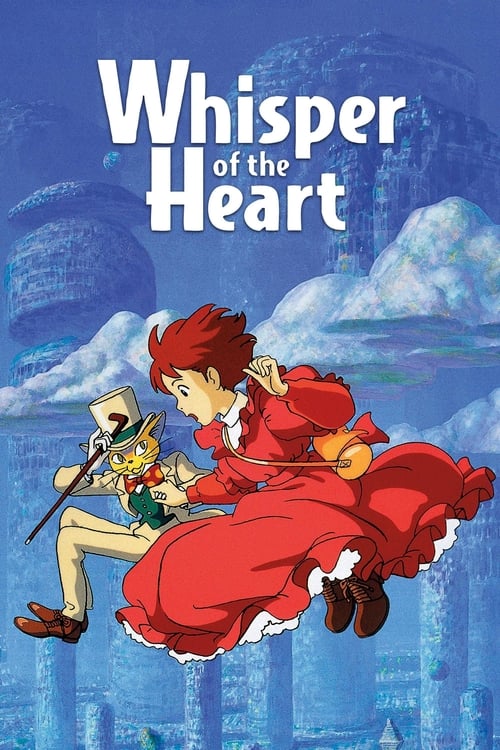
The Baron, a dapper cat statuette, symbolizes inspiration, craftsmanship, and the world of imagination. He represents the ideal of a storybook hero and becomes the central figure in Shizuku's novel. For Shiro Nishi, he is a poignant reminder of a lost love and a past promise, adding a layer of melancholy and romanticism. For Shizuku, he is the catalyst for her creative journey.
Shizuku first discovers The Baron in Mr. Nishi's antique shop. His elegant appearance and the story behind him fascinate her, sparking the idea for her novel. He appears in her fantastical dream sequences, guiding her through the imaginative landscapes of her own creation.
The Antique Shop ('Chikyuya')
The antique shop, named 'Chikyuya' (Earth Shop), represents a magical space of discovery, history, and hidden treasures. It is a place where old objects have stories to tell, mirroring Shizuku's own journey of uncovering her hidden talents. It's a threshold between the mundane, everyday world and a world of wonder and possibility.
Shizuku stumbles upon the shop after following a mysterious cat. It is here that she meets Mr. Nishi and sees The Baron for the first time. The shop and its contents serve as a constant source of inspiration for her writing.
The Unpolished Emerald
The unpolished emerald that Mr. Nishi shows Shizuku is a powerful metaphor for untapped potential and raw talent. He explains that within a seemingly rough stone can lie a beautiful gem that needs to be found and polished. This symbolizes Shizuku's own nascent writing ability, which requires hard work and dedication to refine.
When Shizuku expresses her self-doubt, Mr. Nishi uses a geode containing beryl and emeralds to teach her this lesson. It becomes a pivotal moment of encouragement for her, giving her the perspective she needs to continue with her writing challenge.
'Take Me Home, Country Roads'
The John Denver song symbolizes longing, the search for one's place, and creative interpretation. The original song evokes a sense of nostalgia for a place one belongs. Shizuku's process of translating it, and then creating her own parody, "Concrete Roads," reflects her journey of finding her own voice and making an external influence her own.
The song appears throughout the film. The original English version opens the movie. Shizuku works on a Japanese translation for her school's chorus. A pivotal scene involves her singing her version accompanied by Seiji on the violin, which solidifies their bond.
Philosophical Questions
What is the true nature of talent and creativity?
The film explores whether talent is an innate gift or something that must be cultivated through hard work and dedication. Through the metaphor of the unpolished emerald, it suggests that everyone has hidden potential ('gems'), but discovering and refining them requires significant effort and perseverance. Shizuku's journey shows that the creative process is not just about flashes of inspiration, but also about discipline, self-doubt, and the courage to see a project through to the end, even if it's imperfect.
How do our relationships and connections with others shape our personal growth?
"Whisper of the Heart" posits that we do not grow in a vacuum. Shizuku's personal journey is ignited by her connection with Seiji. His dedication to his craft serves as a mirror, prompting her to look inward. The mentorship from Mr. Nishi and the support of her family, though initially questioning, are also crucial. The film suggests that our aspirations and our ability to achieve them are deeply intertwined with the people who inspire, challenge, and support us along the way.
What does it mean to find your 'place to belong'?
This question is central to the film, symbolized by the song "Take Me Home, Country Roads." For Shizuku, her 'country road' is not a physical place but the path to discovering her purpose. Initially, she feels out of place and without a clear direction. By the end, she realizes that 'home' is not a destination but the journey of pursuing her passion for writing and building a future with someone who understands and supports her. It's about creating your own sense of belonging through your actions and commitments.
Core Meaning
The core meaning of "Whisper of the Heart" revolves around the journey of self-discovery and the pursuit of one's passions. Director Yoshifumi Kondō, through Hayao Miyazaki's screenplay, emphasizes that the process of discovering and honing one's talents is as important, if not more so, than the final outcome. The film conveys the message that it's okay to be uncertain about the future and that taking the time to understand oneself is a crucial part of growing up.
It also beautifully illustrates the idea that inspiration can be found in the people around us. Shizuku's journey is catalyzed by her admiration for Seiji's dedication to his craft. This mutual encouragement and the support of family and mentors are presented as essential elements in having the courage to pursue one's own path, even when it's difficult and deviates from the conventional. The film suggests that true growth comes from challenging oneself and having the bravery to create something of one's own.