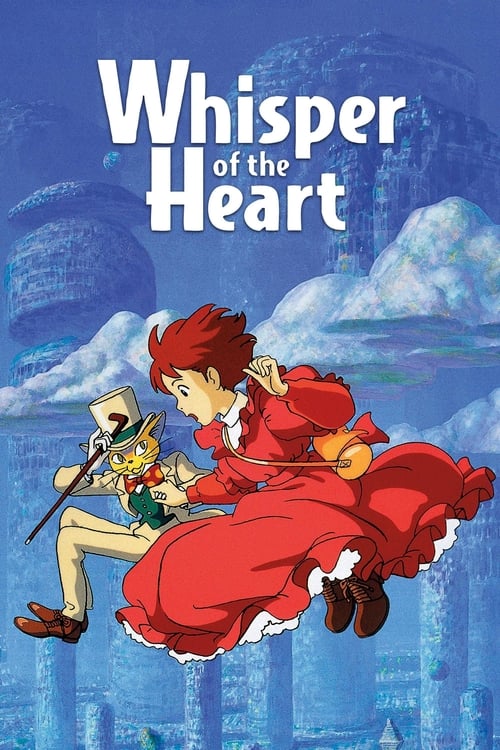
Whisper of the Heart
耳をすませば
"I found someone I like."
Overview
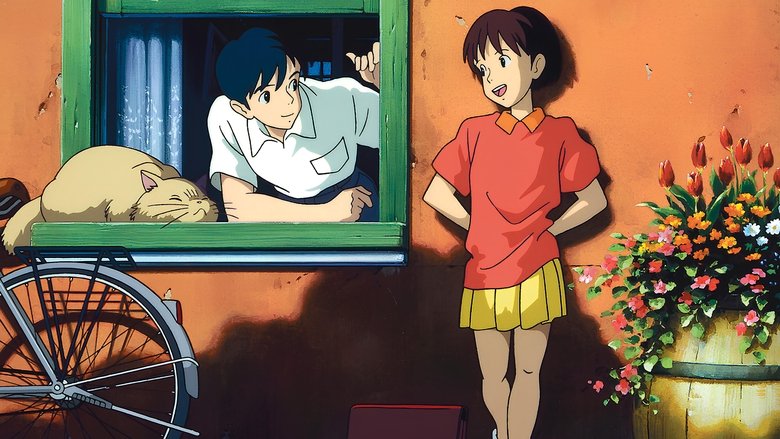
"Whisper of the Heart" follows Shizuku Tsukishima, a 14-year-old junior high school student with a passion for reading and writing. As she spends her summer vacation devouring books from the library, she notices a curious pattern: every book she borrows has been previously checked out by a boy named Seiji Amasawa. This discovery sparks her imagination and sets her on a path to find out who this mysterious boy is.
Her quest leads her to a charming antique shop owned by an elderly man named Shiro Nishi, Seiji's grandfather. There, she is captivated by a beautiful cat figurine called "The Baron." Inspired by her encounters with Seiji, who dreams of becoming a master violin maker, and the enchanting atmosphere of the antique shop, Shizuku decides to challenge herself by writing her own story, a fantasy novel featuring The Baron.
As Shizuku pours her heart and soul into her writing, she neglects her schoolwork and faces the pressures of upcoming high school entrance exams. The film beautifully portrays her internal struggles with self-doubt, the anxieties of pursuing a creative path, and the blossoming of a sweet and innocent romance. It's a gentle, realistic coming-of-age story that celebrates the courage it takes to listen to the whispers of one's own heart and follow one's dreams.

Core Meaning
The core meaning of "Whisper of the Heart" revolves around the journey of self-discovery and the pursuit of one's passions. Director Yoshifumi Kondō, through Hayao Miyazaki's screenplay, emphasizes that the process of discovering and honing one's talents is as important, if not more so, than the final outcome. The film conveys the message that it's okay to be uncertain about the future and that taking the time to understand oneself is a crucial part of growing up.
It also beautifully illustrates the idea that inspiration can be found in the people around us. Shizuku's journey is catalyzed by her admiration for Seiji's dedication to his craft. This mutual encouragement and the support of family and mentors are presented as essential elements in having the courage to pursue one's own path, even when it's difficult and deviates from the conventional. The film suggests that true growth comes from challenging oneself and having the bravery to create something of one's own.
Thematic DNA
The Journey of Self-Discovery
Shizuku's story is a profound exploration of a young person's search for identity and purpose. Initially, she is an avid reader but lacks a clear direction for her own talents. Meeting Seiji, who has a defined dream, makes her feel inadequate and sparks a desire to discover her own 'gem'. Her decision to write a novel is a self-imposed test to understand her capabilities and passions. This theme is universal, resonating with anyone who has felt lost or uncertain about their future.
The Creative Process and Artistic Aspiration
The film delves deeply into the realities of the creative process. It portrays not just the joy and inspiration but also the hard work, self-doubt, and vulnerability involved in creating something new. Shizuku's struggle to write her story—the late nights, the declining grades, the fear of not being good enough—is a realistic depiction of artistic endeavor. The film champions the idea that talent needs to be 'polished' through dedication and perseverance.
Innocent First Love and Mutual Inspiration
The romance between Shizuku and Seiji is gentle, awkward, and deeply supportive. It's not just a story of 'puppy love'; it's about how two people can inspire each other to be better. Seiji's focused ambition motivates Shizuku, while her creative spirit clearly captivates him. Their relationship is built on mutual respect for each other's dreams, culminating in a promise to support one another as they pursue their individual paths.
The Transition from Adolescence to Adulthood
"Whisper of the Heart" captures the bittersweet transition from the carefree days of childhood to the responsibilities and uncertainties of adulthood. Shizuku grapples with high school entrance exams, her future career, and the changing dynamics with her family and friends. The film poignantly portrays the pressures and confusion that accompany this stage of life, making it a classic coming-of-age story.
Character Analysis
Shizuku Tsukishima
Yoko Honna
Motivation
Her primary motivation is to discover her own talent and prove to herself that she is not just a consumer of stories but a creator in her own right. She feels a deep need to be 'good enough' and to have a dream she can work towards, just like Seiji.
Character Arc
Shizuku begins as a bookish and somewhat aimless girl who escapes into the worlds created by others. Inspired by Seiji's ambition, she embarks on a challenging creative journey. Through the process of writing her novel, she discovers her own strength, confronts her insecurities, and takes the first concrete steps toward defining her own future. She learns that passion requires discipline and that she has the resilience to pursue her dreams.
Seiji Amasawa
Issey Takahashi
Motivation
Seiji is driven by his passion for violin-making and his desire to test his skills by studying under a master in Cremona, Italy. He is also motivated to get Shizuku's attention, which is why he checked out all the library books before her.
Character Arc
Seiji is initially perceived by Shizuku as arrogant. However, he is revealed to be a dedicated and passionate young man with a clear goal: to become a master luthier. His arc involves revealing his softer, more sincere side to Shizuku and learning to share his dreams with her. He is already on his path, but his interactions with Shizuku solidify his determination and lead him to make a promise for their future together.
Shiro Nishi
Keiju Kobayashi
Motivation
His motivation is to nurture the younger generation's passions and to share the wisdom he has gained throughout his life. He sees potential in Shizuku and wants to help her find her way, offering his support without being overbearing.
Character Arc
Shiro Nishi is a kind and wise antique shop owner who becomes a mentor figure for Shizuku. He shares his life experiences and the stories behind his antiques, particularly The Baron. He provides gentle guidance and encouragement to Shizuku, helping her understand the value of her own 'unpolished' talents and giving her the confidence to pursue her writing. His own story of lost love adds depth and a touch of bittersweet romance to the film.
Symbols & Motifs
The Baron
The Baron, a dapper cat statuette, symbolizes inspiration, craftsmanship, and the world of imagination. He represents the ideal of a storybook hero and becomes the central figure in Shizuku's novel. For Shiro Nishi, he is a poignant reminder of a lost love and a past promise, adding a layer of melancholy and romanticism. For Shizuku, he is the catalyst for her creative journey.
Shizuku first discovers The Baron in Mr. Nishi's antique shop. His elegant appearance and the story behind him fascinate her, sparking the idea for her novel. He appears in her fantastical dream sequences, guiding her through the imaginative landscapes of her own creation.
The Antique Shop ('Chikyuya')
The antique shop, named 'Chikyuya' (Earth Shop), represents a magical space of discovery, history, and hidden treasures. It is a place where old objects have stories to tell, mirroring Shizuku's own journey of uncovering her hidden talents. It's a threshold between the mundane, everyday world and a world of wonder and possibility.
Shizuku stumbles upon the shop after following a mysterious cat. It is here that she meets Mr. Nishi and sees The Baron for the first time. The shop and its contents serve as a constant source of inspiration for her writing.
The Unpolished Emerald
The unpolished emerald that Mr. Nishi shows Shizuku is a powerful metaphor for untapped potential and raw talent. He explains that within a seemingly rough stone can lie a beautiful gem that needs to be found and polished. This symbolizes Shizuku's own nascent writing ability, which requires hard work and dedication to refine.
When Shizuku expresses her self-doubt, Mr. Nishi uses a geode containing beryl and emeralds to teach her this lesson. It becomes a pivotal moment of encouragement for her, giving her the perspective she needs to continue with her writing challenge.
'Take Me Home, Country Roads'
The John Denver song symbolizes longing, the search for one's place, and creative interpretation. The original song evokes a sense of nostalgia for a place one belongs. Shizuku's process of translating it, and then creating her own parody, "Concrete Roads," reflects her journey of finding her own voice and making an external influence her own.
The song appears throughout the film. The original English version opens the movie. Shizuku works on a Japanese translation for her school's chorus. A pivotal scene involves her singing her version accompanied by Seiji on the violin, which solidifies their bond.
Memorable Quotes
You see that rough surrounding stone? You can polish it all you want, but it'll still be worthless. But there might be something much more valuable inside that you can't yet see.
— Shiro Nishi
Context:
Mr. Nishi says this to Shizuku in his antique shop while showing her a geode with emeralds inside. Shizuku is feeling insecure about her own abilities compared to Seiji, and this piece of wisdom serves as a gentle and profound encouragement for her to look within herself for her own 'gems'.
Meaning:
This quote encapsulates the film's central metaphor for talent and potential. It emphasizes that true value lies within and requires effort and time to be discovered and refined. It's a lesson in patience and self-worth, teaching that the journey of 'polishing' one's abilities is a crucial part of the creative process.
I don't want to be a burden! I want to be useful.
— Shizuku Tsukishima
Context:
Shizuku says this after Seiji tells her about his plans to go to Italy. His clear path forward highlights her own lack of direction, leading to this emotional outburst where she resolves to test her own abilities by writing a story.
Meaning:
This quote reveals Shizuku's deep-seated insecurity and her desire to have a defined purpose. It reflects the pressure she feels to keep up with Seiji and her fear of being left behind. It's a poignant expression of adolescent anxiety about finding one's place in the world.
You're wonderful. There's no need to rush. Please take your time to polish your talent.
— Shiro Nishi
Context:
After Shizuku finishes her story and is crying because she feels it isn't good enough, Mr. Nishi offers these kind words. He validates her hard work and the heartfelt quality of her writing, while gently reminding her that mastery is a long-term process.
Meaning:
This is a reassuring and validating statement that underscores the film's theme of patience in personal growth. It counters the anxiety and pressure to succeed quickly, advocating for a more organic and thoughtful development of one's skills.
Philosophical Questions
What is the true nature of talent and creativity?
The film explores whether talent is an innate gift or something that must be cultivated through hard work and dedication. Through the metaphor of the unpolished emerald, it suggests that everyone has hidden potential ('gems'), but discovering and refining them requires significant effort and perseverance. Shizuku's journey shows that the creative process is not just about flashes of inspiration, but also about discipline, self-doubt, and the courage to see a project through to the end, even if it's imperfect.
How do our relationships and connections with others shape our personal growth?
"Whisper of the Heart" posits that we do not grow in a vacuum. Shizuku's personal journey is ignited by her connection with Seiji. His dedication to his craft serves as a mirror, prompting her to look inward. The mentorship from Mr. Nishi and the support of her family, though initially questioning, are also crucial. The film suggests that our aspirations and our ability to achieve them are deeply intertwined with the people who inspire, challenge, and support us along the way.
What does it mean to find your 'place to belong'?
This question is central to the film, symbolized by the song "Take Me Home, Country Roads." For Shizuku, her 'country road' is not a physical place but the path to discovering her purpose. Initially, she feels out of place and without a clear direction. By the end, she realizes that 'home' is not a destination but the journey of pursuing her passion for writing and building a future with someone who understands and supports her. It's about creating your own sense of belonging through your actions and commitments.
Alternative Interpretations
While the film is largely seen as a straightforward coming-of-age story, some viewers have offered alternative readings, particularly concerning the ending. The sudden marriage proposal between two 14-year-olds has been interpreted in various ways. Some see it as a naive, yet charming, representation of the intensity of first love and youthful promises, not to be taken literally as an immediate plan but as a symbol of their commitment to each other's dreams.
Another interpretation focuses on the film as a commentary on the pressure placed on young people to choose a life path. Shizuku's intense focus on writing to the detriment of her health and studies can be seen as a critique of the idea that one must prove their worth through a single, all-consuming passion. Her family's eventual support, on the condition that she returns to her studies, can be read as an argument for a more balanced approach to pursuing one's dreams.
Some critics have also noted that the film's promotional materials, which often feature the fantastical elements of Shizuku's story, can be misleading. This has led to discussions about whether the film intentionally plays with audience expectations, grounding its narrative in reality while acknowledging the allure and importance of the fantasy worlds we create for ourselves.
Cultural Impact
"Whisper of the Heart" holds a special place in the Studio Ghibli canon and in the hearts of animation fans. While it was a commercial success in Japan upon its release, its most significant cultural impact is tied to the tragic legacy of its director, Yoshifumi Kondō. Kondō was poised to become a leading director at Ghibli, and his death at age 47 was a major loss for the studio and the animation world. His death is said to have deeply affected Hayao Miyazaki and was a factor in his first announcement of retirement.
The film is often praised for its realistic and heartfelt depiction of teenage life, creativity, and ambition, standing out from Ghibli's more fantasy-oriented films. It has become a beloved 'comfort film' for many, particularly artists and writers who relate to Shizuku's journey of self-doubt and perseverance. Its gentle, slice-of-life pacing and detailed, realistic portrayal of suburban Tokyo have been influential. Furthermore, the film's main character, Shizuku, gained unexpected modern fame as the visual inspiration for the popular "Lofi Girl" (formerly "ChilledCow") YouTube channel's continuous music stream, introducing the film's aesthetic to a new generation.
The spin-off film "The Cat Returns" is another testament to the enduring appeal of the characters and world introduced in "Whisper of the Heart". Despite being less known internationally than Ghibli's fantasy epics, it is highly regarded by critics and fans for its emotional depth and quiet beauty.
Audience Reception
Audiences have generally received "Whisper of the Heart" with great affection, often citing it as one of Studio Ghibli's most relatable and emotionally resonant films. Many viewers praise its realistic portrayal of adolescence, the anxieties of the future, and the sweetness of first love. Shizuku's journey as a budding creative is particularly lauded by those in artistic fields, who find her struggles with self-doubt and the creative process incredibly authentic. The film's gentle pacing, beautiful animation of ordinary suburban life, and heartwarming tone are frequently highlighted as major strengths.
Points of criticism are relatively few but often center on the film's slow pace, which some viewers find uneventful compared to Ghibli's more action-oriented fantasy films. The ending, specifically Seiji's abrupt marriage proposal, is a common point of discussion, with some finding it charmingly naive and others viewing it as rushed and unrealistic for 14-year-olds. A few viewers have also felt that some of the romantic subplots, like the one involving Shizuku's friend Yuko, are not fully resolved. Despite these minor criticisms, the overall verdict from audiences is overwhelmingly positive, with many considering it a quiet masterpiece and a hidden gem in Ghibli's filmography.
Interesting Facts
- This was the only feature film directed by Yoshifumi Kondō before his untimely death in 1998. He was widely considered to be the successor to Hayao Miyazaki and Isao Takahata at Studio Ghibli.
- The song "Take Me Home, Country Roads" was translated into Japanese by Mamiko Suzuki, the daughter of producer Toshio Suzuki. Hayao Miyazaki then made some adjustments to the lyrics.
- The fantasy backgrounds in Shizuku's story were created by Naohisa Inoue, a surrealist artist. The woodcut of the imprisoned violin maker was made by Hayao Miyazaki's son, Keisuke Miyazaki.
- The character of The Baron was so popular that he became the main character in a spin-off film, "The Cat Returns" (2002).
- The actor who voiced Shizuku's father, Takashi Tachibana, is a famous journalist and non-fiction writer in Japan, not a professional voice actor.
- "Whisper of the Heart" was the first Japanese film to be released with a Dolby Digital soundtrack.
Easter Eggs
On the face of the grandfather clock in the antique shop, the brand name "Porco Rosso" is engraved.
This is a direct reference to the 1992 Studio Ghibli film "Porco Rosso," which was directed by Hayao Miyazaki. It's a fun in-joke for fans of the studio.
In Shizuku's room, a small witch figurine that resembles Kiki from "Kiki's Delivery Service" can be seen.
This is another nod to a beloved Studio Ghibli film, "Kiki's Delivery Service" (1989), also directed by Hayao Miyazaki.
A book with "Totoro" on the spine can be spotted in the school library.
This is a reference to one of Studio Ghibli's most iconic characters from the film "My Neighbor Totoro" (1988).
During the fantasy sequence in Shizuku's story, small figurines of Totoro and Jiji (from Kiki's Delivery Service) can be seen in a doll workshop.
This serves as another loving tribute to Studio Ghibli's rich filmography, embedding familiar characters into the world of Shizuku's imagination.
⚠️ Spoiler Analysis
Click to reveal detailed analysis with spoilers
Frequently Asked Questions
Explore More About This Movie
Dive deeper into specific aspects of the movie with our detailed analysis pages
Comments (0)
No comments yet. Be the first to share your thoughts!