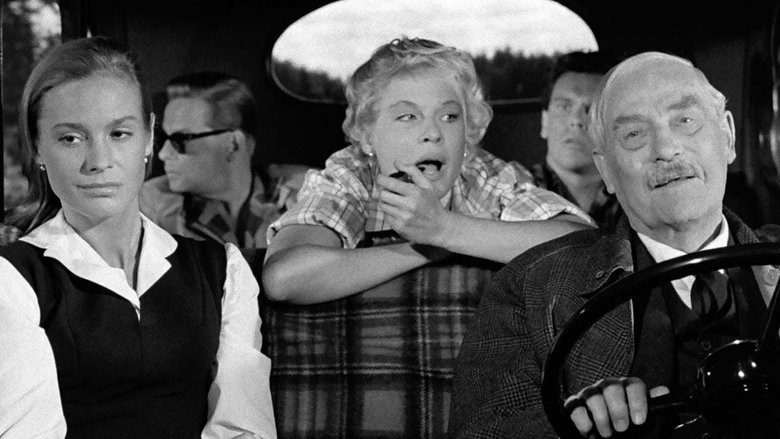
The plot of "Wild Strawberries" is less about twists and more about a gradual unfolding of character and memory. The key revelations come through Isak's dreams and flashbacks. A significant early revelation is his memory of his first love, Sara, choosing his brother Sigfrid over him, which establishes a core wound of rejection. Later, a more brutal dream forces him to witness a dramatization of his late wife Karin's adultery, where she cruelly mocks his emotional coldness, revealing the profound unhappiness of their marriage. This dream culminates in a surreal examination where Isak is pronounced "incompetent" not as a doctor, but as a human being, charged with "callousness, selfishness, and ruthlessness." A crucial turning point is the story Marianne tells of her husband Evald's nihilistic refusal to have a child, mirroring Isak's own fear of life and emotional connection. The ending of the film is not a dramatic twist but a quiet resolution. After receiving his honorary degree, an event that now feels secondary, Isak finds a sense of peace. He has a warm exchange with the young hitchhikers and makes amends with Marianne. His son Evald also shows a sign of softening his stance. The final scene is a dream in which Isak is led by Sara to a serene lakeside where he sees his parents in their youth. This peaceful and idyllic image signifies that Isak has finally reconciled with his past and is able to die in peace, having found a sense of connection and forgiveness.
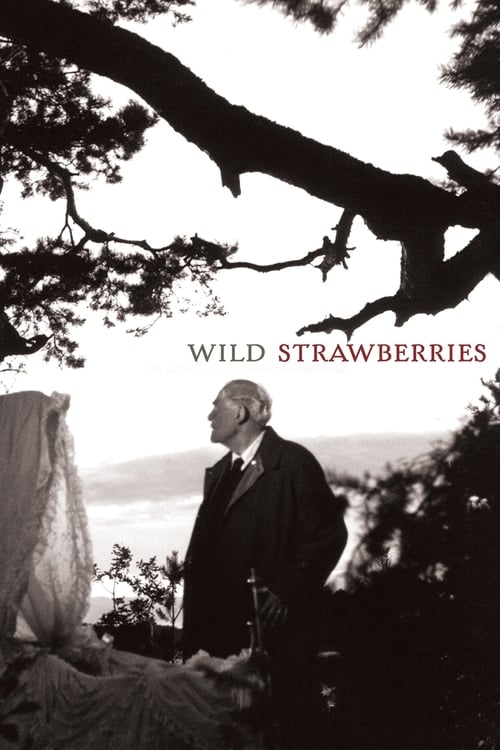
Smultronstället
"All along the line, there's nothing but cold and death and loneliness"
Director: Ingmar Bergman
Cast: Victor Sjöström, Bibi Andersson, Ingrid Thulin, Gunnar Björnstrand, Jullan Kindahl
Wild Strawberries — Ending Explained
⚠️ Spoiler Analysis
Alternative Interpretations
While the dominant interpretation of "Wild Strawberries" is a story of late-life redemption, some critics and viewers have offered alternative readings. One perspective is that the entire journey is a dream or a deathbed hallucination. This is supported by the surreal quality of many of the encounters and the seamless transitions between past and present. The fact that the film begins and ends with Isak in bed lends some credence to this interpretation. Another reading focuses on the film as a critique of modern, secular society. Isak's emotional sterility can be seen as a product of a world that values scientific rationalism over faith and emotional connection. The debates about the existence of God between the young hitchhikers can be seen as a central, unresolved question of the film. Finally, some interpretations view the ending not as a complete redemption, but as a more modest and realistic finding of momentary peace. Isak's transformation may not be a total reversal of his character, but rather a final, quiet acceptance of his life's joys and sorrows.
Explore More About This Movie
Dive deeper into specific aspects of the movie with our detailed analysis pages