
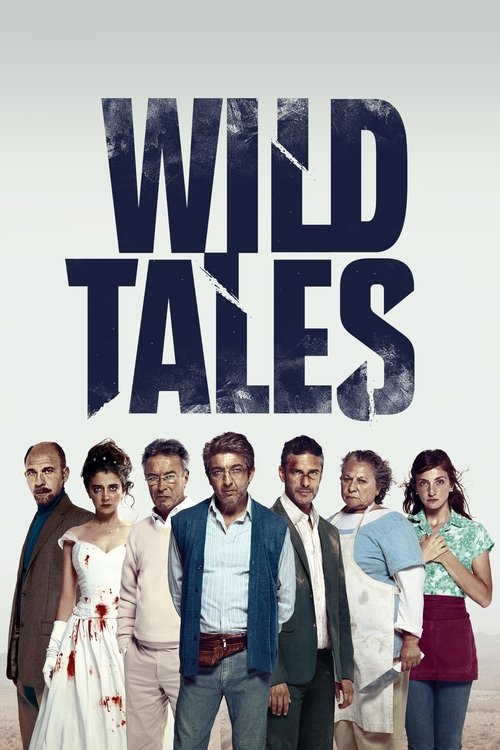
"Wild Tales" is an anthology where the twist and climax of each self-contained story is crucial. The hidden meaning connecting them is the universally shared, yet suppressed, desire for violent catharsis.
1. "Pasternak": The slow realization that every passenger on the plane has a negative connection to the unseen Gabriel Pasternak builds suspense. The final twist is that Pasternak is the pilot who has locked himself in the cockpit. The punchline is the plane crashing directly into the home of his parents, the ultimate source of his pain, making his revenge a suicidal, all-encompassing act of destruction against everyone who ever wronged him, from a music critic to an ex-girlfriend.
2. "The Rats": The waitress recognizes a customer as the loan shark who drove her father to suicide. The cook poisons his food without her consent. The tension escalates when the man's innocent son arrives and begins eating the poisoned meal. The climax is not the poison, but the cook brutally stabbing the loan shark to death to stop him from attacking the waitress, revealing that direct, primitive violence is more efficient than subtle revenge.
3. "The Strongest": The road-rage duel between the wealthy Diego and the working-class Mario escalates from insults to a brutal fight to the death inside one of their cars. The ultimate irony comes after Mario, having seemingly killed Diego, prepares to leave. Diego, still alive, pulls Mario back into the car just as it explodes. The police later find their charred bodies locked in what looks like a final, hateful embrace, misinterpreting the scene as a tragic accident between lovers—a darkly comic misreading of their masculine rage.
4. "Bombita": After being pushed too far by a towing company, demolition expert Simón Fischer places explosives in his car's trunk and gets it towed again. He detonates it, destroying the impound lot but ensuring there are no casualties. The twist is that his act of "terrorism" transforms him into a celebrated folk hero, "Bombita." His family, who had abandoned him, returns to celebrate his birthday in prison, proud of his stand. The system that broke him ends up lionizing him.
5. "The Proposal": A wealthy family tries to pay their groundskeeper, José, to take the blame for their son's fatal hit-and-run. The plan unravels as the lawyer and prosecutor demand cuts, turning the cover-up into a feeding frenzy of greed. The final, shocking twist occurs as José is being led away by police; the victim's husband appears and brutally murders him with a hammer, enacting vengeance on the wrong man. The family's corrupt plan succeeds in shielding their son but results in the death of an innocent (albeit complicit) man.
6. "Until Death Do Us Part": At her wedding, bride Romina discovers groom Ariel cheated with a guest. Her rage leads her to have sex with a cook on the rooftop, publicly humiliate Ariel, and cause chaos. The ultimate twist is not divorce, but a bizarre and violent reconciliation. After hitting rock bottom, Ariel and Romina have aggressive, passionate sex on the wedding cake-smeared table in front of their horrified guests. Their marriage is not over; it is reborn, forged in the fire of their mutual savagery, suggesting their love can only survive at this level of extreme, wild intensity.