Wild Tales
Relatos salvajes
"We can all lose control"
Overview
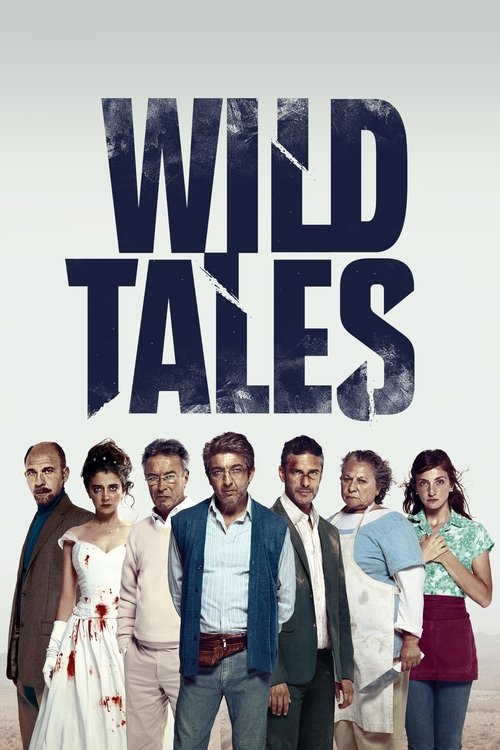
"Wild Tales" (original title: "Relatos salvajes") is a 2014 Argentine-Spanish black comedy anthology film written and directed by Damián Szifron. The movie is composed of six intense, stand-alone short stories, each exploring themes of vengeance, violence, and the loss of control when individuals are pushed to their breaking point by everyday frustrations. The segments—"Pasternak," "The Rats," "The Strongest," "Little Bomb," "The Proposal," and "Till Death Do Us Part"—are linked not by characters or plot, but by a shared thematic core: the explosive and often darkly hilarious results of people succumbing to the undeniable pleasure of losing control.
From a man meticulously planning revenge on everyone who has ever wronged him, to a road-rage incident that escalates to absurdly fatal heights, to a bride's chaotic meltdown at her own wedding reception, each tale serves as a satirical commentary on the frustrations of modern life. The film critiques bureaucracy, corruption, betrayal, and social inequality, presenting characters who, when faced with injustice or indignity, snap in the most extreme and violent ways. It is a high-energy, suspenseful, and shockingly funny exploration of the savage impulses lurking beneath the veneer of civilized society.
Core Meaning
The core meaning of "Wild Tales" is an exploration of the fragility of civilization and the cathartic, albeit destructive, pleasure of losing control. Director Damián Szifron suggests that modern society, with its injustices, inequalities, and bureaucratic absurdities, acts as a "transparent cage" that suppresses our primal instincts. The film's six stories depict characters who reach a breaking point and, instead of repressing their frustration, unleash their inner "animal."
The film serves as a powerful social critique, particularly of Argentine society, highlighting endemic issues like corruption and systemic injustice. However, Szifron has stated the themes are universal, applicable to any society where people feel powerless against a dehumanizing system. Ultimately, the film's message is that the line between civility and barbarism is perilously thin, and that the act of rebellion, even if it leads to chaos and destruction, can provide a profound, almost spiritual, release from the pressures of a maddening world. It examines revenge not just as a malicious act, but as a desperate, darkly humorous, and deeply human response to being wronged.
Thematic DNA
Revenge and Retribution
Revenge is the central, unifying theme that courses through all six segments of the film. Each story presents a character or group pushed to an extreme by perceived injustices, who then retaliates with disproportionate and often meticulously planned savagery. This theme is explored in various forms: from the grand, suicidal revenge plot in "Pasternak" to the personal and explosive retribution of a jilted bride in "Until Death Do Us Part." The film examines the immense satisfaction and "undeniable pleasure" derived from exacting vengeance, framing it as a primal, cathartic release.
Loss of Control vs. Civilization
"Wild Tales" constantly plays with the tension between civilized behavior and primal, savage instincts. The characters are ordinary people—a waitress, a demolition expert, a bride—who abide by social contracts until a final straw breaks their restraint. The film posits that societal pressures, bureaucracy, and daily indignities build up until they explode. This loss of control is depicted as both terrifying and liberating, a moment where the characters cross the "thin line that divides civilization and barbarism" to reclaim a sense of agency, often with darkly comical or tragic results.
Social and Political Corruption
The film serves as a sharp critique of systemic corruption and bureaucratic indifference, particularly resonant within its Argentine context but universally understood. In "Little Bomb," a man's fight against a predatory towing company becomes a rebellion against an entire dehumanizing system, turning him into a folk hero. "The Proposal" dissects the moral decay of the wealthy elite, who believe justice can be bought, showcasing how corruption permeates every level of society, from the family to the legal system. The tales repeatedly show how frustration with a broken system can lead individuals to take justice into their own hands.
Class Conflict and Inequality
The tension between social classes is a powerful undercurrent in several of the stories. "The Strongest" pits a wealthy, arrogant driver in a luxury car against a working-class man in a jalopy, with their road-rage duel escalating into a fatal class war. Similarly, "The Rats" features a waitress confronting the loan shark who ruined her working-class family, while "The Proposal" revolves around a rich family attempting to pay their poor groundskeeper to take the fall for a crime. The film exposes the resentments and violence that fester from social and economic inequality.
Character Analysis
Simón Fischer ('Bombita')
Ricardo Darín
Motivation
His primary motivation is a desperate need for justice and fairness in the face of a cold, illogical, and infuriating bureaucratic system. He doesn't want special treatment; he just wants the rules to be applied fairly. When the system repeatedly fails him, his motivation shifts to righteous indignation and a desire to strike back at the source of his oppression.
Character Arc
Simón begins as a mild-mannered demolitions expert, a law-abiding citizen trying to get to his daughter's birthday party. After his car is unfairly towed and he is met with bureaucratic indifference, his frustration escalates. He loses his job, and his wife leaves him. His arc is one of radicalization; he transforms from a victim of the system into its saboteur, using his professional skills to exact a precise and symbolic revenge on the towing company, which turns him into an unlikely folk hero.
Romina (The Bride)
Érica Rivas
Motivation
Initially motivated by the pain of betrayal, her actions quickly become driven by a desire to inflict maximum emotional and social damage on her husband and his mistress. She wants to reclaim her power in the most spectacular way possible, ensuring he can never forget the consequences of his actions.
Character Arc
Romina starts her wedding day as the idealized, joyous bride. Upon discovering her new husband's infidelity, she spirals through heartbreak and despair before hardening into a force of pure, vengeful fury. She systematically dismantles the wedding and her husband's life, using emotional and physical violence to assert her dominance. Her arc culminates not in separation, but in a bizarre, violent reconciliation with her husband, suggesting their future will be defined by this raw, chaotic passion.
Diego Iturralde (The Driver)
Leonardo Sbaraglia
Motivation
His motivation stems from arrogance, impatience, and a sense of superiority. He feels entitled to the road and is insulted by the other driver's defiance. This initial annoyance quickly spirals into a desperate, testosterone-fueled need to dominate and win the confrontation at any cost.
Character Arc
Diego is introduced as a wealthy, sophisticated man driving an expensive Audi on a deserted highway. His condescending attitude and initial aggression toward a slower driver spark a road-rage incident. His arc is a rapid descent from a position of detached, civilized superiority into a primal, mud-caked brawler fighting for his life. He sheds every layer of his refined persona, revealing a savage core as the confrontation escalates to a mutually destructive end.
Mauricio Pereyra Hamilton (The Father)
Oscar Martínez
Motivation
His sole motivation is to protect his son and his family's reputation, preserving their status at all costs. He operates under the cynical belief that everything and everyone has a price, a worldview that ultimately backfires when the greed he unleashes spirals beyond his control.
Character Arc
Mauricio is a wealthy patriarch whose immediate instinct after his son commits a fatal hit-and-run is to use his money and influence to cover it up. He orchestrates a plan to have his groundskeeper take the blame. His arc shows his descent into a chaotic negotiation where he loses control of the situation as the lawyer, prosecutor, and even the groundskeeper exploit his desperation for their own financial gain. He goes from a powerful manipulator to a frantic victim of the very corruption he initiated.
Symbols & Motifs
Wild Animals
The opening title sequence, which features photographs of various wild animals (foxes, tigers, rams, etc.), serves as the film's primary visual metaphor. It directly equates the characters' impending loss of control with the untamed, savage nature of the animal kingdom. The title itself, "Wild Tales" or "Relatos salvajes" (Savage Tales), reinforces this idea. It suggests that beneath the veneer of human civilization lies a primal, animalistic urge for violence and revenge that is waiting to be unleashed when provoked.
This symbolism is established in the opening credits and sets the tone for the entire film. Each subsequent story then depicts a human character embodying the ferocity of one of these animals, shedding their civility for brutal instinct. The film argues that this type of egomaniacal savagery is uniquely human, as animals do not seek revenge.
Vehicles (Cars and Airplanes)
Vehicles in the film symbolize both social status and the uncontrollable trajectory of fate and rage. They are the catalysts for conflict and the instruments of destruction.
In "Pasternak," an airplane becomes a vessel for collective doom, a sealed environment where inescapable revenge is enacted. In "The Strongest," the Audi and the old Peugeot represent the class divide between the two men, and their cars become weapons in a primal duel. In "Little Bomb," Simón's car is the source of his bureaucratic nightmare when it's repeatedly towed, and he ultimately transforms it into a bomb—a symbol of his rebellion. The hit-and-run in "The Proposal" is also initiated by a car, highlighting the destructive power and privilege associated with it.
The Wedding
The wedding in the final segment, "Until Death Do Us Part," symbolizes the ultimate social contract and the pinnacle of civilized ritual. Its spectacular implosion represents the collapse of social order and the failure of love and trust to contain primal emotions like jealousy and rage.
The lavish Jewish wedding reception begins as a picture of joy and tradition but descends into chaos when the bride, Romina, discovers her groom's infidelity. The setting becomes a battleground for emotional and physical violence. The destruction of the cake, the smashing of mirrors, and the public confrontations turn a symbol of unity into a showcase of spectacular social disintegration, before bizarrely finding a new, violent equilibrium.
Philosophical Questions
Is there a 'pleasure' in losing control, and is it a justifiable human response to injustice?
The film directly confronts this question, with director Damián Szifron stating that a core theme is "the undeniable pleasure of losing control." Each protagonist experiences a moment of catharsis by abandoning restraint. Simón Fischer's bombing is met with public adoration, and the bride Romina's chaotic outburst leads to a passionately renewed, albeit violent, bond with her husband. The film forces the audience to identify with the characters' rage and vicariously experience the release, questioning whether such "wild" behavior is a necessary, or even healthy, outlet for the stress and depression caused by an unjust world.
What is the true line between civilization and barbarism?
"Wild Tales" repeatedly demonstrates how thin this line is. Characters who appear perfectly civilized—a wealthy businessman, a blushing bride, a quiet engineer—are pushed by seemingly mundane events (a traffic insult, infidelity, a parking ticket) into acts of extreme violence. The film suggests that civilization is not an inherent state but a fragile construct, a thin veneer over our primal, animalistic nature. It asks what it takes for anyone to cross that line and whether the "barbaric" response is sometimes more honest than the repressed, "civilized" one.
Can violence ever lead to justice?
The film presents an ambiguous answer. In "Little Bomb," Simón's act of targeted destruction is celebrated as a victory for the common person against a faceless bureaucracy, suggesting a form of restorative justice. However, in other segments like "The Strongest" and "The Proposal," violence only leads to death and further chaos, resolving nothing. The film doesn't offer a simple moral but instead explores the complex and often contradictory outcomes of violent actions, leaving the audience to ponder whether the momentary satisfaction of retribution is worth the ultimate cost.
Alternative Interpretations
While the most common interpretation of "Wild Tales" is as a social satire and a commentary on the catharsis of revenge, there are alternative readings:
A Conservative Warning: Instead of celebrating the characters' rebellions, one could interpret the film as a cautionary tale about the dangers of abandoning social order. From this perspective, the film demonstrates that giving in to our primal instincts leads not to liberation, but to chaos, self-destruction, and the perpetuation of violence. The mutually assured destruction in "The Strongest" and the bloody aftermath of "The Proposal" serve as potent examples that revenge ultimately solves nothing and only begets more tragedy.
A Psychoanalytic Reading: The film can be viewed through a Freudian lens, where each story represents the eruption of the repressed "Id"—the seat of our primal, instinctual desires—over the civilizing influence of the "Superego" (societal rules) and the "Ego" (the rational self). The characters' explosive actions are not just reactions to external stimuli but are the result of deep-seated, repressed psychological tensions finally breaking through to the surface. The pleasure they feel is the pleasure of the Id being momentarily unshackled.
An Absurdist Comedy: Some viewers and critics emphasize the film's absurdist and surreal elements, suggesting its primary goal isn't social commentary but an exploration of the inherent meaninglessness and irrationality of human conflict. The escalating scenarios, like the road-rage duel becoming an intricate death trap, are so over-the-top they resemble Looney Tunes cartoons. In this reading, the film is less a political statement and more an embrace of the chaotic, blackly comic absurdity of life itself, where logic collapses and madness reigns supreme.
Cultural Impact
"Wild Tales" was a massive cultural phenomenon in Argentina, smashing box office records to become the most-watched domestic film in the country's history. Its success resonated with a public familiar with the daily frustrations of bureaucracy, corruption, and social inequality depicted in the film. The character of "Bombita" (Little Bomb), played by Ricardo Darín, became a popular hero, symbolizing the collective fantasy of striking back against an oppressive system.
Internationally, the film was a critical darling, earning a 10-minute standing ovation at the Cannes Film Festival and securing an Oscar nomination for Best Foreign Language Film. It also won the BAFTA and Goya awards for Best Foreign Film. The film's success demonstrated the global appeal of its themes of rage and catharsis, proving that the desire to "lose control" is a universal sentiment. It reinvigorated the anthology film format, which is often considered commercially difficult, proving that a collection of shorts can be coherent and powerful when linked by a strong, resonant theme. Critics frequently compared its style and tone to the works of Quentin Tarantino and the Almodóvar brothers, who were also producers on the film.
Audience Reception
Audiences responded with overwhelming enthusiasm to "Wild Tales," particularly in its native Argentina, where it became a cultural touchstone and the highest-grossing film in the country's history. Viewers praised its wickedly dark humor, high-energy pacing, and the cathartic satisfaction of watching characters act on relatable frustrations. Many viewers found the film both hilarious and terrifying, enjoying the way it pushed everyday situations to their most absurd and violent extremes. On review aggregation sites, the reception is highly positive; for example, it holds a 94% "fresh" rating on Rotten Tomatoes, with the consensus calling it a "wickedly hilarious and delightfully deranged" satire. The final segment, the chaotic wedding, is often cited by audiences as a favorite for its sheer audacity and Érica Rivas's powerhouse performance. The main points of criticism, though rare, sometimes centered on the film's perceived cynicism or the uneven quality between the six stories, with some viewers finding certain segments stronger than others.
Interesting Facts
- The film is an anthology of six distinct stories, united only by the common theme of revenge and cathartic violence.
- Four of the six stories were partly based on director Damián Szifron's own real-life experiences and frustrations, which he then exaggerated for the screen.
- Szifron initially wrote the stories as a way to "vent his frustrations" while struggling to get other, larger film projects off the ground.
- "Wild Tales" became the most-seen Argentine film of all time in its home country.
- The film was co-produced by Pedro and Agustín Almodóvar's company, El Deseo. Critics noted Almodóvar's influence in the film's stylish visuals, dark humor, and focus on ordinary people pushed to extremes.
- It was nominated for the Academy Award for Best Foreign Language Film at the 87th Academy Awards and also competed for the Palme d'Or at the 2014 Cannes Film Festival.
- Due to the anthology format, Szifron was able to attract a star-studded cast of Argentina's most famous actors, including Ricardo Darín and Oscar Martínez, as they only needed to commit for short periods of filming.
- Szifron did not originally conceive of the stories as comedies, but rather as thrillers or dramas. He believes the humor emerges naturally from the absurdity and intensity of the dramatic situations.
⚠️ Spoiler Analysis
Click to reveal detailed analysis with spoilers
Frequently Asked Questions
Explore More About This Movie
Dive deeper into specific aspects of the movie with our detailed analysis pages
Comments (0)
No comments yet. Be the first to share your thoughts!