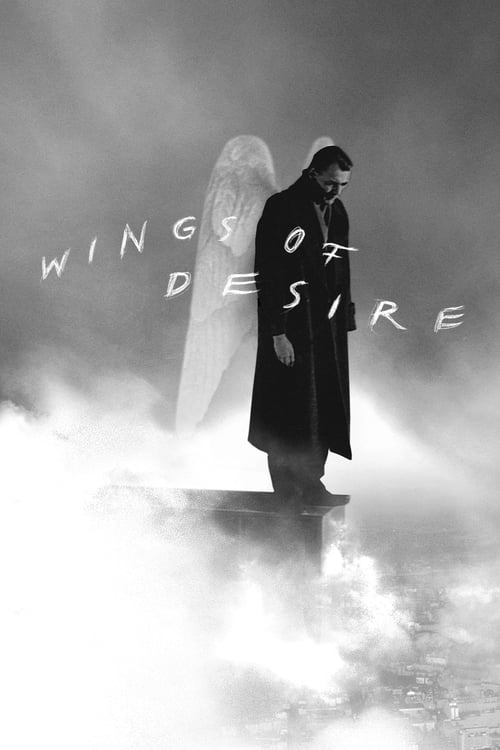
Der Himmel über Berlin
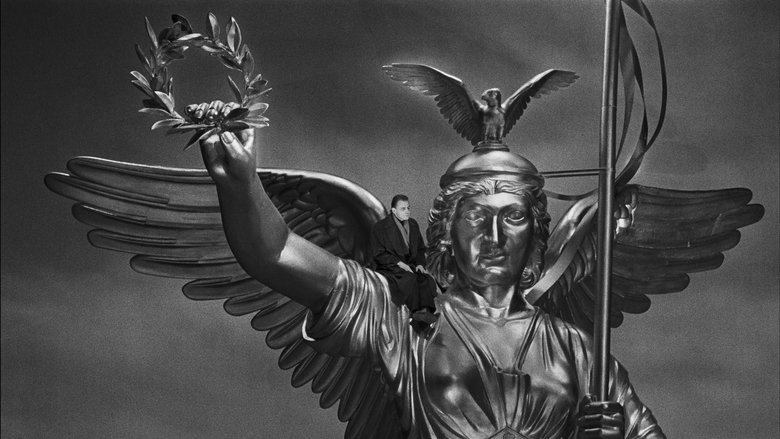
"There are angels on the streets of Berlin."
Wings of Desire - Symbolism & Philosophy
Symbols & Motifs
The Berlin Wall
Symbolizes the divisions within the human soul and the physical manifestation of historical trauma.
The angels traverse the Wall effortlessly, highlighting its artificiality compared to the eternal, yet they witness the profound isolation it imposes on the city's inhabitants.
Black-and-White vs. Color
Represents the divide between the spiritual/intellectual realm and the sensory/emotional human realm.
The film is shot in B&W when seen through the eyes of the angels and shifts to color when Damiel becomes human or when humans experience profound moments of presence.
The Trapeze
Represents the 'liminal' space between heaven and earth, as well as the risk and grace required to live.
Marion performs as an 'angel' with fake wings, mirroring Damiel's spiritual state while embodying the physical danger and beauty of the mortal world.
The Library
Symbolizes the collective memory of humanity and the sanctuary of thought.
The Berlin State Library is shown as a silent cathedral where angels gather to listen to the myriad thoughts of readers, acting as keepers of human history.
Philosophical Questions
Is eternal peace worth the loss of sensory experience?
The film explores whether a perfect, painless existence (immortality) is fundamentally inferior to a life of struggle, aging, and death that is balanced by the joy of physical sensation and love.
What is the role of the witness in a suffering world?
Through Cassiel and Damiel, the film asks if simply 'noticing' and 'recording' human history is enough, or if a moral being has a duty to participate and intervene.
Core Meaning
The core of the film is an exaltation of the human experience, suggesting that the beauty of life lies precisely in its limitations and sensory immediacy. Wenders explores the paradox that while immortality offers peace and knowledge, it lacks the 'weight' that gives human life meaning: the capacity for surprise, physical touch, and the vulnerability of being in time. The director argues that to truly live is to be a participant in history rather than a mere witness, moving from 'knowing everything' to the thrill of 'guessing' and discovering.