Wings of Desire
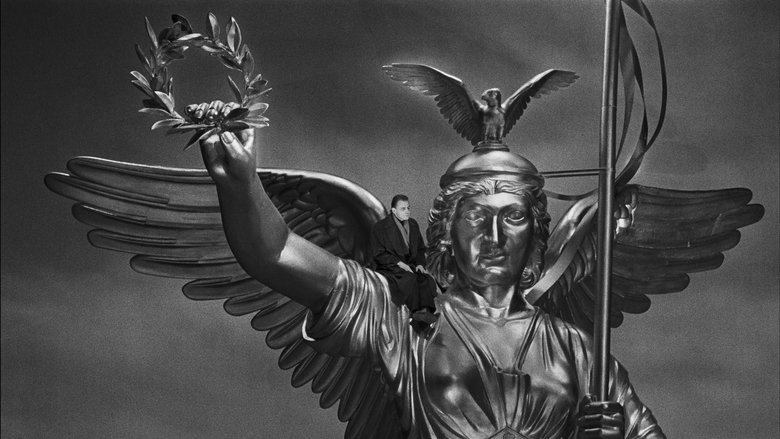
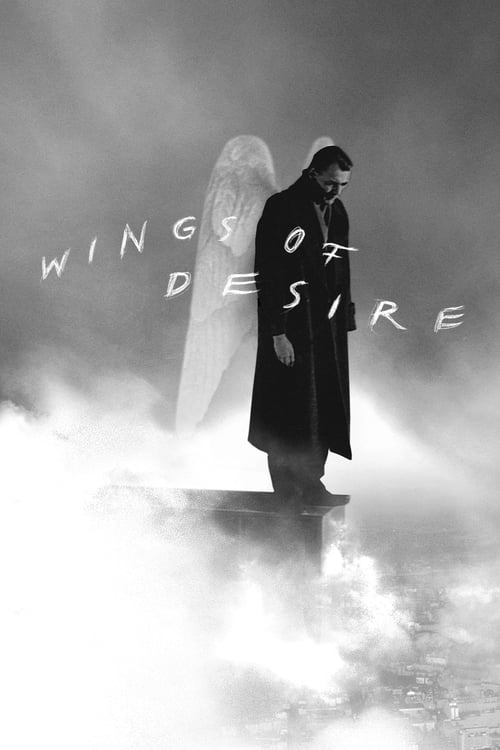
A melancholic urban fantasy where shimmering monochrome angels drift through divided Berlin, listening to the silent prayers of a fragmented humanity until a divine watcher risks eternity for the vibrant ache of mortal love.
Wings of Desire

Wings of Desire

Der Himmel über Berlin

"There are angels on the streets of Berlin."

23 September 1987 Germany 128 min ⭐ 7.8 (1,444)
Director: Wim Wenders
Cast: Bruno Ganz, Solveig Dommartin, Otto Sander, Curt Bois, Peter Falk
Drama Fantasy Romance
Mortality vs. Immortality The Burden of History Observation and Perception Innocence and Childhood
Budget: $2,500,000
Box Office: $3,210,139

Overview

Set in a cold-war Berlin bifurcated by the Wall, Wings of Desire follows Damiel and Cassiel, two trench-coated angels who have watched over the city since time immemorial. Invisible to adults but seen by children, they act as silent witnesses to human suffering and small triumphs, offering a comforting presence to the lonely and the despairing. While Cassiel remains a stoic observer, Damiel grows weary of his sterile immortality, longing for the weight of physical existence—the ability to feel cold, taste coffee, and experience the finite nature of time.

Damiel's desire to 'fall' into humanity is catalyzed by his encounter with Marion, a beautiful and lonely trapeze artist working in a struggling circus, and Peter Falk, a real-life actor (playing himself) who senses the angels' presence and reveals a shared secret. The film is a meditative journey through the psyche of a city haunted by its Nazi past and its present division, culminating in a soul's transition from the eternal sky to the sensory richness of the earth.
Core Meaning

The core of the film is an exaltation of the human experience, suggesting that the beauty of life lies precisely in its limitations and sensory immediacy. Wenders explores the paradox that while immortality offers peace and knowledge, it lacks the 'weight' that gives human life meaning: the capacity for surprise, physical touch, and the vulnerability of being in time. The director argues that to truly live is to be a participant in history rather than a mere witness, moving from 'knowing everything' to the thrill of 'guessing' and discovering.

Thematic DNA

Mortality vs. Immortality 30%
The Burden of History 25%
Observation and Perception 25%
Innocence and Childhood 20%

Mortality vs. Immortality

The film contrasts the angels' eternal, monochromatic observation with the vibrant, colored chaos of human life. It posits that the finite nature of existence—the fact that we will die—is what makes moments like drinking coffee or feeling a fever precious and significant.

The Burden of History

Berlin itself serves as a character. Through the character of Homer, an old storyteller, the film explores how the weight of the past (specifically WWII and the Holocaust) permeates the physical and psychological landscape of the divided city, making history a palpable presence.

Observation and Perception

As a 'visionary film about vision,' it explores the act of watching. The angels represent the gaze of the filmmaker or the audience—able to empathize but unable to intervene—until Damiel breaks this barrier to become an active participant in reality.

Innocence and Childhood

Recurring throughout the film is the 'Song of Childhood' poem. Children are the only ones who can see the angels, symbolizing a state of unclouded perception and presence that adults lose as they become burdened by social roles and historical trauma.

Character Analysis

Damiel

Bruno Ganz

Archetype: Seeker / Romantic Hero
Key Trait: Radical empathy and curiosity

Motivation

A deep yearning for sensory experience, weight, and the ability to participate in the history of the world.

Character Arc

He begins as a weary eternal observer who eventually trades his wings and immortality for the chance to experience the 'now' and find human love.

Cassiel

Otto Sander

Archetype: The Stoic Witness
Key Trait: Melancholic duty

Motivation

To 'assemble, testify, and preserve' the reality of human life without interference.

Character Arc

Unlike Damiel, Cassiel remains an angel, though he is deeply pained by the human suffering he witnesses, such as a young man's suicide, which he is powerless to stop.

Marion

Solveig Dommartin

Archetype: The Anima / Muse
Key Trait: Graceful vulnerability

Motivation

To find a connection that transcends her isolation and gives her a story worth living.

Character Arc

A trapeze artist facing the end of her career and intense loneliness, she eventually finds a 'new myth' through her union with Damiel.

Peter Falk

Peter Falk

Archetype: The Mentor
Key Trait: Gritty warmth and wisdom

Motivation

To encourage other angels to 'take the plunge' and enjoy the simple pleasures of being alive.

Character Arc

Playing himself as an actor in Berlin, he is revealed to be a former angel who successfully made the transition to humanity decades ago.

Symbols & Motifs

The Berlin Wall

Meaning:

Symbolizes the divisions within the human soul and the physical manifestation of historical trauma.

Context:

The angels traverse the Wall effortlessly, highlighting its artificiality compared to the eternal, yet they witness the profound isolation it imposes on the city's inhabitants.

Black-and-White vs. Color

Meaning:

Represents the divide between the spiritual/intellectual realm and the sensory/emotional human realm.

Context:

The film is shot in B&W when seen through the eyes of the angels and shifts to color when Damiel becomes human or when humans experience profound moments of presence.

The Trapeze

Meaning:

Represents the 'liminal' space between heaven and earth, as well as the risk and grace required to live.

Context:

Marion performs as an 'angel' with fake wings, mirroring Damiel's spiritual state while embodying the physical danger and beauty of the mortal world.

The Library

Meaning:

Symbolizes the collective memory of humanity and the sanctuary of thought.

Context:

The Berlin State Library is shown as a silent cathedral where angels gather to listen to the myriad thoughts of readers, acting as keepers of human history.

Memorable Quotes

Als das Kind noch Kind war, ging es mit hängenden Armen, wollte der Bach sei ein Fluß, der Fluß ein Strom, und diese Pfütze das Meer.

— Narrator / Damiel

Context:

Repeated as a motif throughout the film to represent the perspective of the 'inner child' and the angels.

Meaning:

This opening line of the 'Song of Childhood' poem captures the essence of unbridled imagination and the lost state of innocence the film mourns.

I can't see you, but I know you're here. I feel it.

— Peter Falk

Context:

Falk addresses the invisible Damiel at a coffee stand, offering him his hand as a 'companero.'

Meaning:

A pivotal moment where the barrier between the seen and unseen is bridged through human intuition rather than sight.

To guess, instead of always knowing.

— Damiel

Context:

Damiel explaining to Cassiel why he wants to descend and become mortal.

Meaning:

Expresses the angel's desire to trade his absolute, divine knowledge for the excitement and risk of human uncertainty.

Philosophical Questions

Is eternal peace worth the loss of sensory experience?

The film explores whether a perfect, painless existence (immortality) is fundamentally inferior to a life of struggle, aging, and death that is balanced by the joy of physical sensation and love.

What is the role of the witness in a suffering world?

Through Cassiel and Damiel, the film asks if simply 'noticing' and 'recording' human history is enough, or if a moral being has a duty to participate and intervene.

Alternative Interpretations

Some critics view the film as a secular theology, where the 'divine' is not a god but the human capacity for art and memory. Others interpret it as a metaphor for the cinema itself: the angels are the audience (invisible, all-knowing, but passive), and Damiel's choice to become human represents the desire of the spectator to step into the screen and live the story. A political reading sees the film as a prayer for German reunification, with the angels acting as the spirits that cross the barriers humans have built.

Cultural Impact

Wings of Desire is regarded as one of the definitive films of the 1980s and a masterpiece of European arthouse cinema. It captured the specific, haunting atmosphere of West Berlin just two years before the fall of the Wall, turning the city's scars into a landscape of poetic longing. Its influence is seen in its 1998 Hollywood remake, City of Angels, though the original is far more philosophical and less a traditional romance. It helped cement Wim Wenders' reputation as a global auteur and continues to be cited by critics for its innovative use of monochrome-to-color transitions and its 'angelic' floating camerawork.

Audience Reception

The film was a major critical success, winning Best Director at the 1987 Cannes Film Festival. Audiences were captivated by its dreamlike pacing and the 'unbearable lightness' of its visuals. While some viewers find its slow, meditative nature and lack of a traditional plot challenging, most praise it for its profound emotional resonance and the iconic performance of Bruno Ganz. It remains a staple of 'Top 100' lists and is cherished for its life-affirming message.

Interesting Facts

  • Solveig Dommartin learned her trapeze routine in just eight weeks and performed all stunts herself without a net or a double.
  • Cinematographer Henri Alekan used a very old, fragile silk stocking from his grandmother as a filter for the monochrome sequences.
  • The circus in the film is named 'Circus Alekan' in honor of the cinematographer.
  • Peter Falk's role was largely improvised; Wenders called him at the last minute because he wanted a 'famous person' who was inherently likable.
  • The film is dedicated to three 'former angels': Yasujirō Ozu, François Truffaut, and Andrei Tarkovsky.
  • Because the production was denied permission to film on the actual East Berlin side of the Wall, they built a highly realistic double of the Wall in a vacant lot.

Easter Eggs

The 'Columbo' Connection

Peter Falk is frequently addressed as 'Lieutenant' by Berliners who recognize him, merging his real-life celebrity with his fictional ex-angel status.

Nick Cave Cameo

Nick Cave and the Bad Seeds perform 'The Carny' and 'From Her to Eternity,' grounding the film's ethereal themes in the raw, post-punk energy of 1980s Berlin.

The 'Tierra del Fuego' Outburst

An angel reports that a train conductor shouted 'Tierra del Fuego!' instead of a station name; this references Wenders' love for travel and spontaneous human eccentricity.

⚠️ Spoiler Analysis

Click to reveal detailed analysis with spoilers

Frequently Asked Questions

Explore More About This Movie

Dive deeper into specific aspects of the movie with our detailed analysis pages

Comments (0)

Leave a comment

No comments yet. Be the first to share your thoughts!