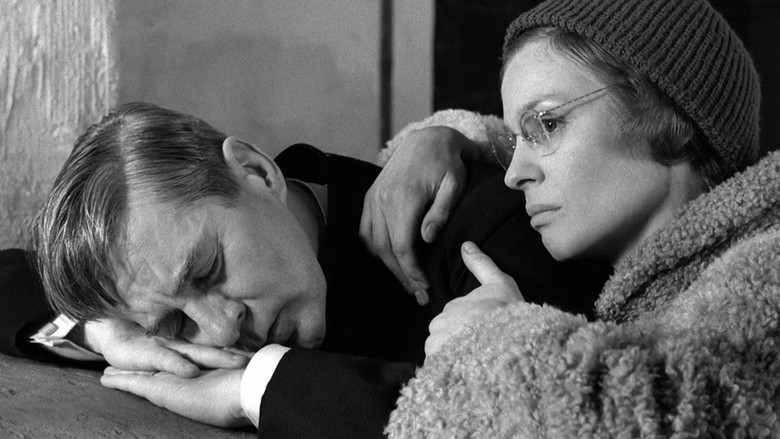
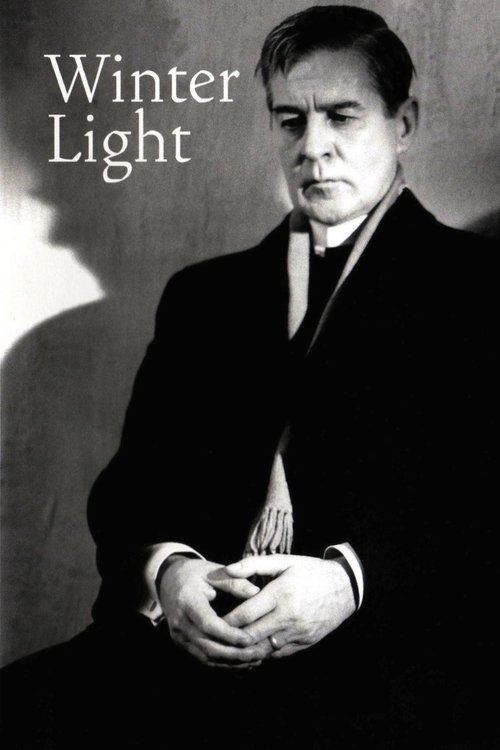
The central tragic event of "Winter Light" is the suicide of Jonas Persson. After seeking counsel from Pastor Tomas about his fear of nuclear war, Jonas is met not with comfort, but with Tomas's own confession of faithlessness and despair. Tomas tells him that life makes more sense if one denies God, as human cruelty then needs no divine explanation. Shortly after this conversation, news arrives that Jonas has shot himself with a rifle. This event is the film's fulcrum, making Tomas directly culpable in a parishioner's death and forcing him to confront the devastating real-world impact of his spiritual void. His initial reaction is a shocking declaration of freedom, but the weight of his failure hangs over the rest of the film.
Another key revelation comes through Märta's letter to Tomas, which he reads aloud. In a long, intense monologue delivered directly to the camera by Ingrid Thulin, Märta details his emotional coldness, his revulsion at her skin ailment, and the hypocrisy of his loveless Christianity. This scene lays bare the failure of his personal relationships, mirroring the failure of his relationship with God. It reveals that his crisis is not just theological but deeply personal and psychological.
The film's ending is deliberately ambiguous. Tomas, accompanied by Märta, arrives at another church to conduct the afternoon service. The church is completely empty except for the organist. Despite the organist's cynical suggestion to cancel, and despite everything that has happened, Tomas decides to proceed with the service, beginning with the words "Holy, holy, holy, Lord God Almighty." The hidden meaning here is multifaceted. It can be seen as a hollow man continuing a meaningless ritual. Alternatively, it can be interpreted as a profound act of will; a decision to serve and perform the ritual not out of belief in a responsive God, but for the sake of the one person—Märta—who is there. It suggests a potential shift from a vertical faith (man to God) to a horizontal one (person to person), finding sanctity in the act of communion itself, even in an empty room.