Nattvardsgästerna
Winter Light - Symbolism & Philosophy
Symbols & Motifs
The Winter Landscape
The cold, bleak, and sparse winter landscape serves as a powerful external reflection of Pastor Tomas's internal spiritual state: his emotional numbness, his dying faith, and the desolation of his soul. The 'winter light' itself is harsh, clear, and unforgiving, stripping away illusions and revealing a stark reality, much like the crisis Tomas undergoes.
The entire film is set against this backdrop. The shots of the snow-covered countryside, the bare trees, and the austere churches create a pervasive atmosphere of coldness and emptiness that mirrors the characters' inner lives.
The Empty Church
The nearly empty churches where Tomas holds his services symbolize the decline of faith and the waning influence of religion in the modern world. They represent a spiritual vacuum and the mechanical, ritualistic performance of belief without genuine conviction or community.
The film opens and closes with services attended by only a handful of people. In the final scene, Tomas resolves to hold the service even though only Märta is there to hear it, turning the empty space into a stage for a profound, albeit ambiguous, personal decision.
Physical Ailments
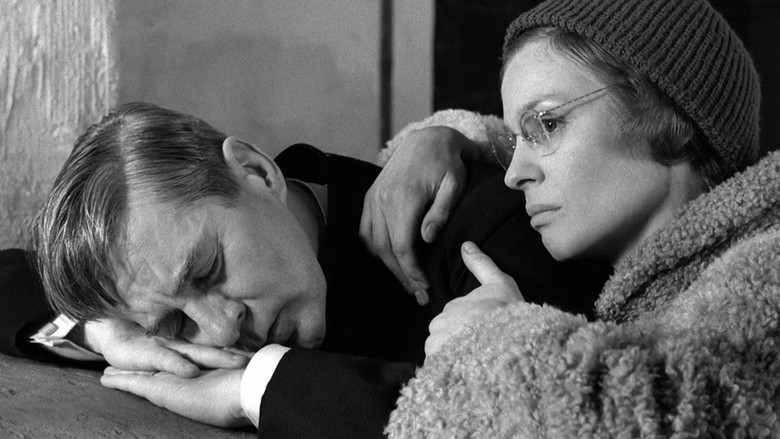
The various physical afflictions of the characters symbolize their spiritual and emotional suffering. Each ailment reflects a deeper-seated issue. Tomas's flu represents his soul-sickness and crisis of faith. Märta's eczema and poor eyesight relate to her emotional pain and her struggle to be truly 'seen' by Tomas. Algot's crippled body contrasts with his spiritual insight. Jonas's crippling anxiety manifests as a form of paralysis.
Throughout the film, characters are shown suffering from these ailments. Tomas is constantly coughing. Märta's letter details her struggle with a disfiguring rash and her glasses are a prominent feature. These physical details ground their abstract spiritual struggles in tangible, bodily suffering.
The 'Spider God'
The concept of a 'Spider God' represents a terrifying, monstrous, and silent deity that is born from suffering and doubt. It is the antithesis of the loving, comforting God Tomas once believed in. This image embodies the horror of a faith that, when confronted with the world's cruelty, transforms into a grotesque and malevolent force.
Tomas describes this vision, which directly references a similar concept in Bergman's previous film, "Through a Glass Darkly." He explains that when he tried to reconcile his faith with the atrocities he witnessed (like the Spanish Civil War), his God became this revolting spider-like monster.
Philosophical Questions
What is the role of faith in a world of profound suffering and apparent divine silence?
The film relentlessly explores this question through Pastor Tomas's crisis. He cannot reconcile the concept of a loving God with the atrocities of war, personal loss, and the looming threat of nuclear annihilation. The 'silence of God' is the film's central motif, questioning whether faith is a meaningful response to suffering or simply a self-serving illusion. The film contrasts Tomas's failing faith with Märta's secular humanism, implicitly asking if human love and connection are a more viable alternative in a godless world.
Can one live a meaningful life without belief in God?
"Winter Light" presents this question through its main characters. Tomas, having lost his faith, feels his life has become meaningless. Conversely, Märta, an atheist, lives a life defined by her love for Tomas and her connection to her community, suggesting that meaning can be found in human relationships. The film doesn't provide a definitive answer but leaves the audience to ponder whether Tomas's final decision to continue his duties is a step towards finding a new, secular meaning in his rituals or a retreat into empty habit.
Is doubt an integral part of faith, or its negation?
Initially, Tomas views his doubt as a total failure and a sign of God's non-existence. However, the sexton Algot's monologue offers a different perspective. By suggesting that Jesus's greatest trial was feeling forsaken by God, the film posits that doubt and a sense of divine abandonment are not the opposites of faith, but perhaps its most profound and difficult expression. This challenges the viewer to consider whether a faith that has not been tested by doubt is any faith at all.
Core Meaning
"Winter Light" is a profound and deeply personal exploration of faith, doubt, and the perceived silence of God in a world filled with suffering. Director Ingmar Bergman uses the spiritual crisis of a single pastor to ask larger existential questions about the relevance of religion in the modern age, a time marked by anxieties like the Cold War. The film suggests that a faith based on egotism and a demand for a personal, loving God is bound to crumble in the face of human cruelty and indifference. Ultimately, the core meaning revolves around the struggle to find meaning and purpose in a seemingly godless universe. The film doesn't offer easy answers but instead explores the idea that perhaps the act of continuing one's duties, of performing the ritual even without certainty, is a form of courage and a potential path through despair. It's a meditation on whether human love and connection can fill the void left by God's absence.