一一
"We never live the same day twice"
Yi Yi - Symbolism & Philosophy
Symbols & Motifs
The Camera / Photography
The camera symbolizes the attempt to capture and understand a fuller truth. It represents a tool for seeing beyond one's limited perspective and revealing the unseen parts of life. It is an instrument for empathy, allowing one to literally see what another sees.
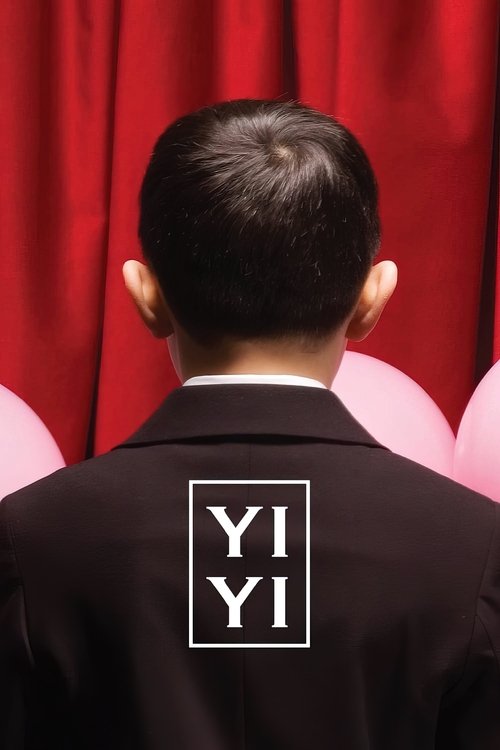
NJ gives his son Yang-Yang a camera, who then begins taking photos of the backs of people's heads. He explains he wants to show people what they can't see for themselves. This act is a physical manifestation of the film's central philosophical question about only knowing "half the truth."
Reflections and Glass
Reflections in windows, glass doors, and screens symbolize the multiple layers of reality, the inner lives of the characters juxtaposed with the external world, and their emotional isolation. They create a visual dialogue between the characters and their urban environment, often trapping them within the frame and emphasizing their solitude.
Director Edward Yang frequently frames his characters through glass. A key shot shows NJ in his office talking to his secretary through a window; in the reflection, we see the secretary return to her desk and answer a call from NJ's old flame, a call he just missed, visually separating him from his past.
Water
Water appears in various forms (swimming pools, rain, the ocean) and often symbolizes cleansing, emotional turmoil, and the unknown. For Yang-Yang, learning to swim is a way to understand a girl who torments him and represents a step into a new, unknown world.
Yang-Yang sees the girl who bullies him at school swimming and decides he must learn how to swim. He is later seen practicing holding his breath underwater, a quiet, solitary act of determination. The final shot of him before the funeral is him floating peacefully in the pool, having conquered his initial fear.
The Comatose Grandmother
The silent, comatose grandmother acts as a catalyst for the family's introspection. She becomes a blank slate onto whom the other characters project their anxieties, confessions, and regrets. Her immobility forces the family to stop and reflect on their own lives, which they realize have been lived on autopilot.
After her stroke, the doctor tells the family to talk to her every day. This leads to a series of one-sided conversations where Min-Min has an emotional breakdown about the emptiness of her daily routine, and Ting-Ting confesses her guilt and heartbreak.
Philosophical Questions
Can we ever know the full truth about ourselves or the world?
The film constantly explores this question, most directly through Yang-Yang's query about only knowing "half the truth." Each character's journey is a testament to the limitations of their own perspective. NJ cannot fully recapture his past, Ting-Ting cannot understand the complexities of her boyfriend's actions, and Min-Min cannot see the richness of the life she dismisses as empty. The film suggests that truth is not a single, objective reality but a composite of countless subjective viewpoints, and that art, like Yang-Yang's photography, is one of the few tools we have to try and glimpse the other half.
What is the nature of happiness and fulfillment?
"Yi Yi" challenges conventional notions of happiness. No character achieves a perfect, resolved state of joy. Instead, the film portrays fulfillment as something quieter and more fleeting: a moment of understanding between NJ and Ota, Yang-Yang's quiet satisfaction in his photography, or Ting-Ting holding hands on a first date. The film suggests that fulfillment is not found by escaping life (as Min-Min tries to do) but by engaging with its messy, mundane, and often paradoxical reality.
How do we reconcile the past we regret with the present we live?
NJ's storyline is a deep dive into this question. He is given a chance to literally relive a part of his past with his first love, Sherry. However, the experience teaches him that the past cannot be fixed or relived in the same way. He tells Sherry, "I never lived a day of my life since you left." But by the end of his trip, he comes to a place of acceptance, realizing that his current life has its own meaning and that a second chance isn't necessary. The film posits that we must learn to live with our past choices, as they have irrevocably shaped who we are in the present.
Core Meaning
The core meaning of "Yi Yi" revolves around the idea that life is composed of multiple perspectives and that we can only ever know "half the truth." Director Edward Yang suggests that much of life happens unseen, like the back of one's own head. The film explores the disconnect between our internal lives and our external realities, and the universal human experiences of joy, sorrow, confusion, and longing that connect us despite our individual isolation. Through the interconnected stories of the Jian family, Yang posits that there are no simple answers or grand resolutions, but rather a continuous cycle of beginnings and endings. Maturity, the film suggests, is not about finding all the answers, but about learning to live with life's inevitable regrets and appreciating the mundane, beautiful moments that constitute our existence.