Yi Yi
一一
"We never live the same day twice"
Overview
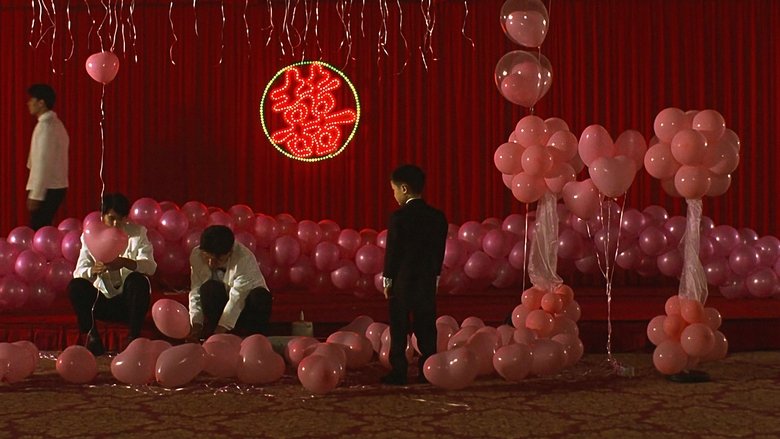
"Yi Yi" chronicles the lives of the Jian family in Taipei over the course of a year, beginning with a wedding and ending with a funeral. The film follows the father, NJ (Wu Nien-jen), a computer engineer facing a moral crisis at work and an unexpected reunion with his first love. His wife, Min-Min (Elaine Jin), experiences a spiritual breakdown after her mother falls into a coma, prompting her to seek solace at a Buddhist monastery.
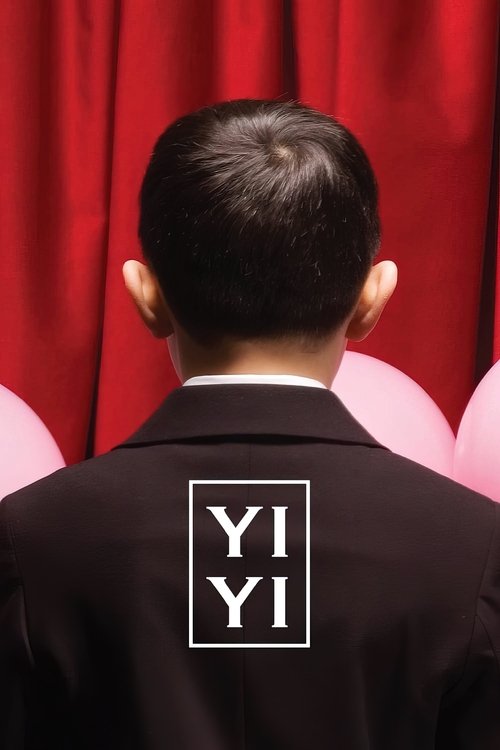
Their teenage daughter, Ting-Ting (Kelly Lee), navigates the confusing terrain of first love and betrayal, feeling a deep sense of guilt over her grandmother's condition. Meanwhile, their curious eight-year-old son, Yang-Yang (Jonathan Chang), uses a camera given to him by his father to explore the world in his own unique way, photographing the backs of people's heads to show them a reality they cannot see for themselves. The film weaves these individual stories together, creating a rich, multi-generational portrait of a family grappling with love, regret, modernity, and the simple, profound moments of everyday life.

Core Meaning
The core meaning of "Yi Yi" revolves around the idea that life is composed of multiple perspectives and that we can only ever know "half the truth." Director Edward Yang suggests that much of life happens unseen, like the back of one's own head. The film explores the disconnect between our internal lives and our external realities, and the universal human experiences of joy, sorrow, confusion, and longing that connect us despite our individual isolation. Through the interconnected stories of the Jian family, Yang posits that there are no simple answers or grand resolutions, but rather a continuous cycle of beginnings and endings. Maturity, the film suggests, is not about finding all the answers, but about learning to live with life's inevitable regrets and appreciating the mundane, beautiful moments that constitute our existence.
Thematic DNA
The Incompleteness of Perception (Seeing Half the Truth)
This is the film's central theme, articulated by the young character Yang-Yang, who muses that since we can only see what's in front of us, we can only know half the truth. He takes pictures of the backs of people's heads to show them what they cannot see. This concept extends to all the characters, who are limited by their own perspectives. NJ revisits his past but realizes he cannot change it; Ting-Ting idealizes love only to be confronted by its messy reality; Min-Min feels her life is empty because she's only seeing it from one repetitive angle. The film's visual style, often using reflections and shooting through glass, reinforces this theme, showing multiple layers of reality simultaneously.
The Cyclical Nature of Life
"Yi Yi" is framed by two major life events: it begins with a wedding and ends with a funeral. Within this structure, there is also a birth, a first love, a reunion, and a murder. This cyclical structure suggests that life is a continuous flow of similar experiences repeating across generations. NJ's reunion with his first love in Tokyo is intercut with his daughter Ting-Ting's own first date, creating a direct parallel between their experiences of love and potential heartbreak. The film argues that while circumstances may not drastically change, the characters grow and learn, moving through life's repeating spirals.
Modernity, Alienation, and Communication
Set in turn-of-the-millennium Taipei, the film explores the anxieties of modern urban life. Characters are often shown isolated within sprawling cityscapes, their personal struggles dwarfed by their environment. NJ faces a crisis of integrity in the impersonal world of global capitalism. The family members struggle to communicate their deepest feelings to one another, leading to emotional distance. Min-Min can only articulate her existential crisis to her comatose mother, while the children navigate their complex worlds largely on their own. The film critiques the idea that progress and technology necessarily lead to better communication or fulfillment.
The Intersection of Past, Present, and Future
Many characters are haunted by past decisions and regret. NJ's trip to Tokyo is a literal journey into his past, as he meets his first love, Sherry, and confronts the life he might have lived. He ultimately concludes that even with a second chance, he wouldn't take it, signifying an acceptance of his present. Ting-Ting's journey through first love is a formative experience that will shape her future. The film suggests that while the past is unchangeable, understanding it is crucial to navigating the present and moving forward.
Character Analysis
NJ Jian
Wu Nien-jen
Motivation
To find meaning and honesty in a world dominated by compromise and materialism, and to reconcile his past with his present responsibilities as a father and husband.
Character Arc
NJ begins the film feeling dissatisfied with his work and haunted by past regrets. His reunion with his first love, Sherry, offers him a chance to "live life again," but he ultimately chooses to accept his present. He finds a kindred spirit in the principled Japanese game designer, Ota, which reaffirms his own values. His arc is one of quiet acceptance, learning that maturity lies in living with one's choices rather than trying to erase them.
Ting-Ting Jian
Kelly Lee
Motivation
To navigate the complexities of friendship and first love, and to alleviate the guilt she feels about her grandmother's illness.
Character Arc
Ting-Ting starts as a quiet, reserved teenager burdened by guilt over her grandmother's stroke. She experiences the highs and lows of first love through a complex relationship with her neighbor Lili and Lili's boyfriend, Fatty. This journey forces her to confront the painful difference between her idealistic view of the world and its complicated reality. Her arc is a classic coming-of-age story, moving from youthful naivety to a more mature, albeit melancholic, understanding of life and relationships.
Yang-Yang Jian
Jonathan Chang
Motivation
To understand the world and show people the parts of reality they cannot see for themselves.
Character Arc
Yang-Yang is the film's philosophical heart. Initially bullied and misunderstood, he channels his curiosity into photography, becoming an active explorer of the world around him. His journey is one of discovery, as he tries to make sense of the adult world's contradictions. His final speech at his grandmother's funeral shows immense growth, as he articulates his desire to show people the unseen and declares, with poignant wisdom, that he feels "old, too." He represents the beginning of a new cycle, armed with the wisdom gained from observing the previous one.
Min-Min
Elaine Jin
Motivation
To escape the perceived monotony and meaninglessness of her daily life and find spiritual or personal fulfillment.
Character Arc
Min-Min's arc is triggered by her mother's collapse, which leads her to a profound existential crisis. She realizes her life feels empty and repetitive, a confession she sobs to her comatose mother. She escapes to a Buddhist monastery seeking answers but returns to find that "nothing is different." Her journey is not about finding a magical cure but about confronting the void in her life. While her resolution is ambiguous, she returns to her family, suggesting a quiet decision to re-engage with the life she had previously dismissed as meaningless.
Symbols & Motifs
The Camera / Photography
The camera symbolizes the attempt to capture and understand a fuller truth. It represents a tool for seeing beyond one's limited perspective and revealing the unseen parts of life. It is an instrument for empathy, allowing one to literally see what another sees.
NJ gives his son Yang-Yang a camera, who then begins taking photos of the backs of people's heads. He explains he wants to show people what they can't see for themselves. This act is a physical manifestation of the film's central philosophical question about only knowing "half the truth."
Reflections and Glass
Reflections in windows, glass doors, and screens symbolize the multiple layers of reality, the inner lives of the characters juxtaposed with the external world, and their emotional isolation. They create a visual dialogue between the characters and their urban environment, often trapping them within the frame and emphasizing their solitude.
Director Edward Yang frequently frames his characters through glass. A key shot shows NJ in his office talking to his secretary through a window; in the reflection, we see the secretary return to her desk and answer a call from NJ's old flame, a call he just missed, visually separating him from his past.
Water
Water appears in various forms (swimming pools, rain, the ocean) and often symbolizes cleansing, emotional turmoil, and the unknown. For Yang-Yang, learning to swim is a way to understand a girl who torments him and represents a step into a new, unknown world.
Yang-Yang sees the girl who bullies him at school swimming and decides he must learn how to swim. He is later seen practicing holding his breath underwater, a quiet, solitary act of determination. The final shot of him before the funeral is him floating peacefully in the pool, having conquered his initial fear.
The Comatose Grandmother
The silent, comatose grandmother acts as a catalyst for the family's introspection. She becomes a blank slate onto whom the other characters project their anxieties, confessions, and regrets. Her immobility forces the family to stop and reflect on their own lives, which they realize have been lived on autopilot.
After her stroke, the doctor tells the family to talk to her every day. This leads to a series of one-sided conversations where Min-Min has an emotional breakdown about the emptiness of her daily routine, and Ting-Ting confesses her guilt and heartbreak.
Memorable Quotes
Daddy, can we only know half of the truth? I can only see what's in front, not what's behind. So I can only know half of the truth, right?
— Yang-Yang
Context:
Yang-Yang asks his father, NJ, this question after his mother has a breakdown about the emptiness of her life. NJ, struck by the question's wisdom, responds by suggesting they get a camera, directly linking the problem of perception to the symbol of photography.
Meaning:
This quote is the philosophical thesis of the entire film. It articulates the central theme of limited perspective and the idea that there are parts of reality and ourselves that remain forever unseen. It's a profound observation from a child that encapsulates the struggles of all the adult characters.
My uncle says we live three times as long since man invented movies.
— Fatty
Context:
Fatty says this to Ting-Ting during a date. Ting-Ting counters, "Then who needs movies? Just stay home and live life!" The conversation highlights their differing, youthful philosophies on life and experience.
Meaning:
This line explores the relationship between life and art. It suggests that movies expand our human experience, allowing us to live vicariously through stories and understand situations, like murder, that we might never encounter. It raises questions about whether art is a substitute for life or an enhancement of it.
Why are we afraid of the first time? Every day in life is a first time. Every morning is new. We never live the same day twice. We're never afraid of getting up every morning. Why?
— Ota
Context:
The Japanese game designer Ota shares this wisdom with NJ during their business trip in Tokyo. This conversation solidifies their friendship, which is based on mutual respect and a shared sense of integrity and wonder.
Meaning:
Ota's philosophy offers a counterpoint to the regret and stagnation felt by other characters. He suggests that life's constant newness should be embraced rather than feared. This perspective helps NJ to re-evaluate his own life and choices, encouraging him to see the present not as a failure but as another unique "first time."
I want to tell people things they don't know. Show them stuff they haven't seen.
— Yang-Yang
Context:
Yang-Yang reads these words from a letter he has written to his deceased grandmother at her funeral. It is the film's final monologue, a deeply moving moment where the youngest character expresses the most profound and hopeful ambition, bringing the film's themes to a poignant close.
Meaning:
This is the culmination of Yang-Yang's character arc and a powerful mission statement for the artist. It directly connects his hobby of photography to a deeper purpose: to enlighten, to reveal, and to expand the perception of others. It echoes the role of the filmmaker himself.
Philosophical Questions
Can we ever know the full truth about ourselves or the world?
The film constantly explores this question, most directly through Yang-Yang's query about only knowing "half the truth." Each character's journey is a testament to the limitations of their own perspective. NJ cannot fully recapture his past, Ting-Ting cannot understand the complexities of her boyfriend's actions, and Min-Min cannot see the richness of the life she dismisses as empty. The film suggests that truth is not a single, objective reality but a composite of countless subjective viewpoints, and that art, like Yang-Yang's photography, is one of the few tools we have to try and glimpse the other half.
What is the nature of happiness and fulfillment?
"Yi Yi" challenges conventional notions of happiness. No character achieves a perfect, resolved state of joy. Instead, the film portrays fulfillment as something quieter and more fleeting: a moment of understanding between NJ and Ota, Yang-Yang's quiet satisfaction in his photography, or Ting-Ting holding hands on a first date. The film suggests that fulfillment is not found by escaping life (as Min-Min tries to do) but by engaging with its messy, mundane, and often paradoxical reality.
How do we reconcile the past we regret with the present we live?
NJ's storyline is a deep dive into this question. He is given a chance to literally relive a part of his past with his first love, Sherry. However, the experience teaches him that the past cannot be fixed or relived in the same way. He tells Sherry, "I never lived a day of my life since you left." But by the end of his trip, he comes to a place of acceptance, realizing that his current life has its own meaning and that a second chance isn't necessary. The film posits that we must learn to live with our past choices, as they have irrevocably shaped who we are in the present.
Alternative Interpretations
While the film is largely seen as a compassionate portrait of a family, some interpretations focus more on the pessimistic undercurrents. The ending, where Min-Min returns from her spiritual retreat stating that "nothing is different," can be read not as acceptance, but as a resignation to a life of quiet despair. From this perspective, the characters don't truly grow but merely learn to better accommodate their unhappiness within the unchanging structures of their lives.
Another interpretation focuses on the film as a critique of modern capitalism and its effect on the family unit. NJ's moral struggle at work, the pressure to be successful, and the resulting alienation can be seen as the primary forces fracturing the family's ability to communicate and connect. The individual crises of each family member are not just personal but are symptoms of a broader societal malaise.
The ending itself, with Ting-Ting dreaming of her grandmother waking up just before she dies, is also open to interpretation. This moment can be seen as a final, gentle moment of connection and forgiveness for Ting-Ting. Alternatively, it could be viewed as a tragic underscoring of her loneliness—the comfort she needs can only be found in a dream, and reality remains harsh and unforgiving.
Cultural Impact
Historical and Cultural Context
"Yi Yi" is considered a masterpiece of the New Taiwanese Cinema movement, which began in the 1980s. This movement saw filmmakers turn to more realistic, subtle, and personal stories that explored Taiwanese identity against a backdrop of rapid urbanization and socio-political change. Yang's film captures Taipei at the turn of the 21st century, a city grappling with global capitalism, technological advancement, and the tension between traditional family values and modern alienation.
Influence on Cinema
Edward Yang's distinct visual style, characterized by static long takes, meticulous composition, and the use of reflections, has been highly influential. He creates a "visual tableau" where characters move within a carefully constructed frame, allowing the audience to observe and contemplate rather than be guided by conventional editing. "Yi Yi" is frequently cited as one of the greatest films of the 21st century and has inspired countless filmmakers with its compassionate, nuanced, and philosophical approach to depicting ordinary life.
Critical and Audience Reception
Upon its release, "Yi Yi" received widespread critical acclaim globally. It won Edward Yang the Best Director award at the 2000 Cannes Film Festival and was named Best Picture of the year by the National Society of Film Critics. Critics praised its profound storytelling, emotional depth, and masterful direction. The film's three-hour runtime and slow, contemplative pace have been noted by audiences, but it is overwhelmingly celebrated for its realistic and deeply moving portrayal of the human condition.
Audience Reception
Audience reception for "Yi Yi" has been overwhelmingly positive, with viewers frequently describing it as a profound, beautiful, and deeply moving masterpiece. Many praise its realism, noting how the characters and their struggles feel authentic and relatable. The performance of the child actor, Jonathan Chang (Yang-Yang), is often singled out for its naturalism and for carrying the film's philosophical weight. The patient, observant pacing and three-hour runtime are sometimes mentioned as challenging for viewers accustomed to faster-paced films, but most agree that it is essential to the film's immersive and contemplative effect. The main points of criticism are rare but typically revolve around this slow pace, which some find meandering. Overall, audiences regard it as a rewarding and unforgettable cinematic experience that lingers long after viewing.
Interesting Facts
- "Yi Yi" was director Edward Yang's final film. He passed away from colon cancer in 2007, seven years after its release.
- The film's English title, "A One and a Two...", is a reference to the introductory count-off in jazz music, suggesting the start of a rhythm or a story.
- The Chinese title "Yi Yi" (一一) literally means "one one." When the two characters are written vertically, they resemble the Chinese character for "two" (二), cleverly reflecting the film's theme of duality and multiple perspectives.
- Edward Yang won the Best Director Award at the 2000 Cannes Film Festival for "Yi Yi." It was the first of his films to receive a commercial release in the United States.
- The lead actor, Wu Nien-jen, who plays NJ, is also a celebrated novelist and screenwriter and was a key figure in the Taiwanese New Wave cinema movement alongside Edward Yang.
- The film's original working title was reportedly "Y2K Project," reflecting the turn-of-the-millennium setting and the technological and societal anxieties of that specific time.
⚠️ Spoiler Analysis
Click to reveal detailed analysis with spoilers
Frequently Asked Questions
Explore More About This Movie
Dive deeper into specific aspects of the movie with our detailed analysis pages
Comments (0)
No comments yet. Be the first to share your thoughts!