
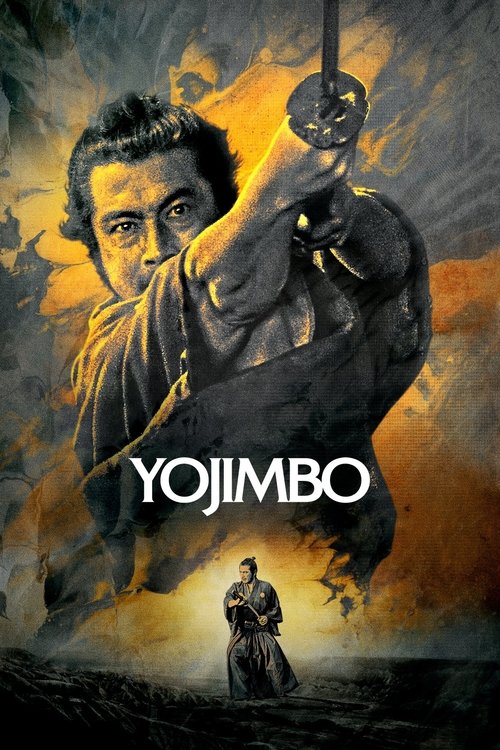
用心棒
"Kill one or a hundred... you only hang once"
Yojimbo - Symbolism & Philosophy
Symbols & Motifs
The Wind
The persistent, dust-kicking wind symbolizes the moral emptiness, chaos, and social decay that plague the town. It creates a sense of unease and desolation, reflecting the barren moral landscape.
The wind is a near-constant presence from the opening shots, blowing dust through the empty main street. It underscores the tension before confrontations and visually represents the turmoil that Sanjuro enters and ultimately stirs up further before cleansing the town.
The Dog with a Human Hand
This gruesome opening image immediately establishes the town's depravity and the complete breakdown of social order. It signifies that life has become cheap and humanity has been discarded.
As Sanjuro first approaches the town, he sees a dog trotting down the street with a severed human hand in its mouth. This shocking sight informs both Sanjuro and the audience of the extreme level of violence and inhumanity that has become commonplace.
Unosuke's Pistol
The pistol represents the encroachment of modernity and Western influence, a force that threatens the traditional martial honor of the samurai. It is a disruptive technology that changes the rules of combat, making skill and discipline potentially obsolete against a 'cocky idiot with a gun'.
Unosuke, one of the main antagonists, is the only character with a firearm. His pistol gives him a significant advantage and is the one weapon that visibly gives Sanjuro pause, forcing him to rely on strategy rather than pure swordsmanship to win their final duel.
The Watchtower
The central watchtower symbolizes a position of detachment, observation, and strategic superiority. It is a place from which one can see the bigger picture and manipulate events from above the fray.
Sanjuro frequently climbs the town's central watchtower to observe the two gangs as they prepare to fight. From this vantage point, he can watch his plans unfold with an amused, god-like perspective, highlighting his intellectual and strategic dominance over the town's foolish inhabitants.
Philosophical Questions
In a world consumed by corruption, is it necessary to become a monster to fight monsters?
The film explores this question through its protagonist, Sanjuro. He is not a righteous hero; he is a cynical, violent, and manipulative man who adopts the avarice of the gangsters to defeat them. Kurosawa seems to suggest that in a society where evil is irrational and all-encompassing, conventional morality is ineffective. Sanjuro's success comes from his ability to be more cunning and ruthless than his enemies, fighting fire with fire. The film leaves the audience to ponder whether his methods are justified by the outcome—a peaceful town, albeit one paved with corpses.
What is the nature of honor in a lawless world?
Sanjuro is a ronin, a masterless samurai, representing a break from the traditional bushido code of loyalty. He operates on his own terms, creating a personal and situational code of honor. He is willing to kill for money but also risks everything to save an innocent family, an act that brings him no material gain. The film questions whether honor is an external code to be followed or an internal moral compass that guides action even amidst chaos and moral decay. Sanjuro's honor is not about loyalty to a lord, but about a personal intolerance for cruelty and exploitation.
Does the end justify the means?
Sanjuro's entire plan is built on deception, manipulation, and inciting violence, leading to the deaths of dozens of people. The end result is the liberation of the town from tyrannical gangs. The film doesn't offer a simple answer. It presents the brutal calculus of the situation: the town was already destroying itself, and Sanjuro simply accelerated the process to bring about a conclusion. The final shot of him walking away from the 'peaceful' town forces the viewer to confront whether the complete annihilation of evil can be considered a truly positive outcome, especially given the methods employed.
Core Meaning
At its heart, "Yojimbo" is a cynical yet darkly comedic critique of corruption, greed, and the senselessness of violence. Director Akira Kurosawa uses the lone anti-hero, Sanjuro, as a force of nature to cleanse a town consumed by its own depravity. The film explores themes of individualism versus conformity and the decline of traditional samurai honor in a changing world where money and power have become the new masters. Sanjuro's actions, while morally ambiguous, ultimately bring a brutal form of justice and peace, suggesting that in a world overrun by evil, sometimes the only solution is to let the corrupt destroy each other.