
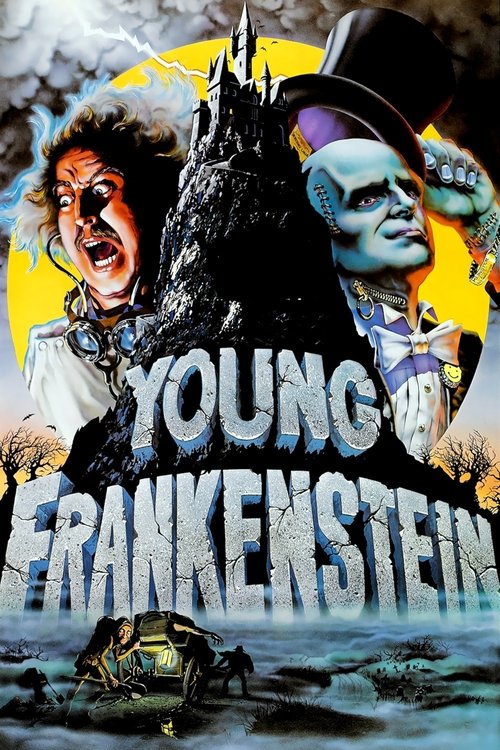
The plot of "Young Frankenstein" follows a path of discovery and redemption. After bringing the Monster to life with an "abnormal" brain, Frederick's creation escapes. The Monster has two key encounters parodying the original films: one with a little girl (where, instead of throwing her in the water, the Monster is catapulted off a seesaw) and another with a lonely blind hermit (Gene Hackman), who comically injures the creature while trying to be hospitable.
Frederick recaptures the Monster and, in a moment of epiphany, fully embraces his heritage, realizing he must love his creation to save it. He presents the now-docile Monster to the world in the iconic "Puttin' on the Ritz" musical number. However, a stage light explodes, and the Monster, who fears fire, is panicked by the crowd's reaction and is subsequently captured and chained by the police. Later, Frederick's fiancée Elizabeth arrives unexpectedly. The Monster escapes again, kidnapping Elizabeth. In a cave, she discovers the Monster is not only gentle but also possesses an enormous "schwanstucker," and she falls deeply in love.
To save the Monster from an angry mob led by Inspector Kemp, Frederick lures him back to the lab and performs a daring "intelligence transfer." This process stabilizes the Monster's brain and endows him with Frederick's intellect. The mob storms the castle and is about to hang Frederick when the now articulate and intelligent Monster intervenes, calming the villagers with a logical and moving speech. In the film's final twist, it's revealed that as a result of the transfer, Frederick has acquired some of the Monster's massive endowment, much to the delight of his assistant Inga. The film ends with two happy couples: Frederick with Inga, and the newly sophisticated Monster with a transformed Elizabeth, who now sports the iconic Bride of Frankenstein hairdo.