"He is alive!"
Z - Symbolism & Philosophy
Symbols & Motifs
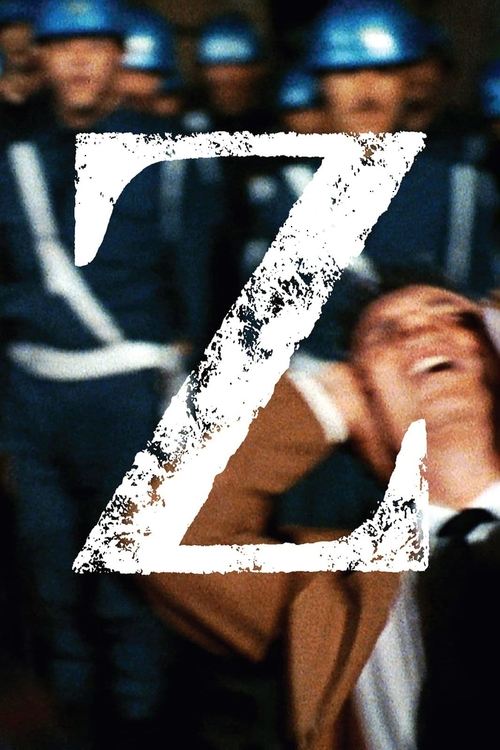
The Letter "Z"
It stands for the Greek word Zei, meaning "He Lives." It symbolizes the enduring spirit of resistance and the idea that the martyr's cause cannot be killed.
It appears scrawled on sidewalks and walls in the final scenes, and is explicitly listed as a banned item in the film's closing credits.
The Three-Wheeled Truck (Kamikaze)
A symbol of the clumsy, brutal, and blue-collar nature of the violence employed by the state. It represents the "accident" narrative the state tries to sell.
Used by the thugs Vago and Yago to strike The Deputy in the town square; it becomes the central piece of physical evidence in the investigation.
Mildew and Disease
The General's metaphor for communism and dissent. It symbolizes the fascist mindset that views society as a biological body that must be "cleansed" of impurities.
Used in the General's opening and closing speeches, where he rants about "mildew of the mind" and "sunspots" affecting the people.
The Magistrate's Tinted Glasses
They represent his initial opacity and neutrality. He observes without revealing his thoughts. As he sees the truth, his vision becomes clear, but he remains an enigmatic force of justice.
Worn by Jean-Louis Trintignant throughout the investigation, shielding his eyes from the emotional pleas of both the victims and the accused.
Philosophical Questions
Is truth enough to stop tyranny?
The film presents a situation where the truth is fully exposed, yet the regime wins (temporarily) through brute force. It asks whether 'knowing the truth' is a victory in itself, or if it is meaningless without the power to enforce consequences.
What is the responsibility of the neutral individual?
Through the Magistrate, the film explores the impossibility of neutrality. He tries to be just a 'judicial machine,' but his adherence to facts forces him into a revolutionary position. The film suggests that in a corrupt system, simply doing one's job honestly is a radical political act.
Core Meaning
Z is a blistering indictment of fascism and the fragility of democracy. Costa-Gavras strips away the romanticism of political struggle to reveal the brutal mechanics of power. The film's core message is that justice is a temporary state that must be constantly fought for.
By showing how an authoritarian regime uses "law and order" to suppress dissent and orchestrate violence, the film serves as a universal warning. The famous opening disclaimer—"Any resemblance to real events, to persons living or dead, is not accidental. It is INTENTIONAL"—declares that this is not just a story, but a witness to history. Ultimately, it argues that while you can kill a man, you cannot kill an idea; the harder a regime tries to erase a symbol (Z), the more powerful it becomes.