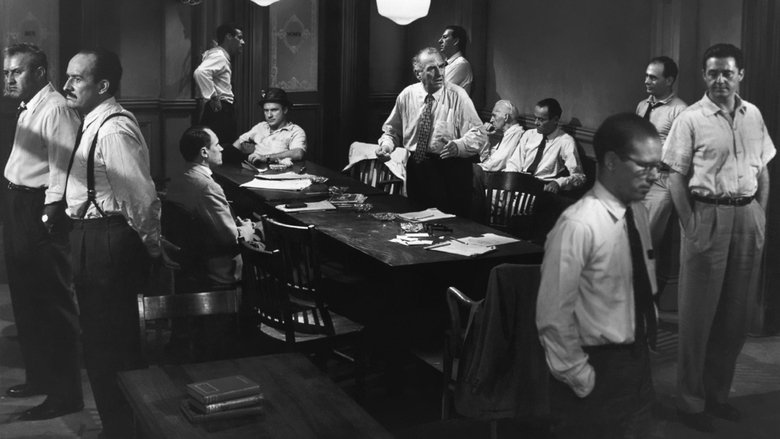
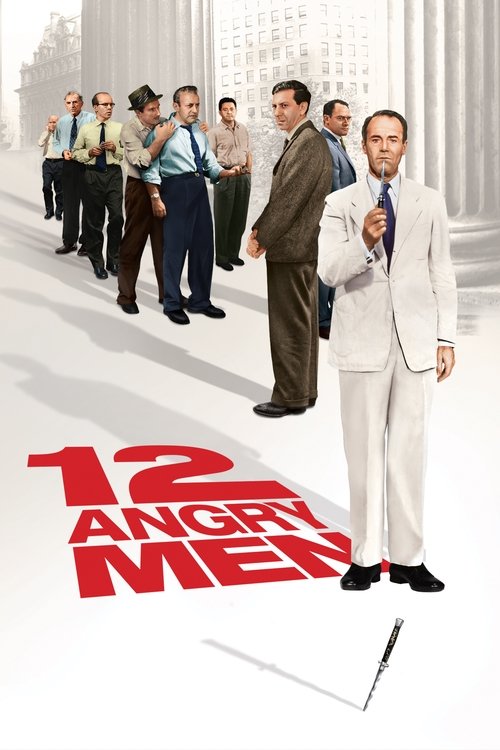
The central twist of "12 Angry Men" is not a revelation about the crime itself, but the gradual and complete reversal of the jury's verdict from 11-1 for guilty to a unanimous 12-0 for not guilty. The film masterfully deconstructs the prosecution's case piece by piece. Juror 8, initially alone in his dissent, begins by questioning the uniqueness of the murder weapon, a switchblade, by producing an identical one. This plants the first seed of doubt.
He then challenges the testimony of the two key witnesses. The old man living downstairs who claimed he heard the boy yell "I'm going to kill you" and then saw him running down the stairs is discredited. Through a dramatic re-enactment, the jurors determine it would have been physically impossible for the elderly, disabled witness to get to his door in the time he claimed. The phrase "I'm going to kill you" is also re-contextualized as a common figure of speech when Juror 3 screams the same thing at Juror 8 in a fit of rage.
The final, critical piece of evidence to fall is the testimony of the woman who claimed to have witnessed the murder from across the elevated train tracks. The hidden meaning that becomes clear is the significance of the marks on her nose. Juror 9, an observant old man, notices that Juror 4 has similar marks from his eyeglasses. They deduce that the witness, who was trying to see the murder at night and through the windows of a moving train, was likely not wearing her glasses in bed, making her testimony unreliable. This revelation convinces the last remaining holdouts. The final juror to change his vote is the antagonistic Juror 3. His resistance is revealed to be rooted not in evidence but in his painful relationship with his estranged son. In a moment of emotional collapse, he tears up a photo of his son and finally concedes, voting "not guilty." The film ends without ever revealing who actually killed the father; the verdict is not a declaration of innocence but a confirmation that the prosecution failed to prove guilt beyond a reasonable doubt.