Skip to content
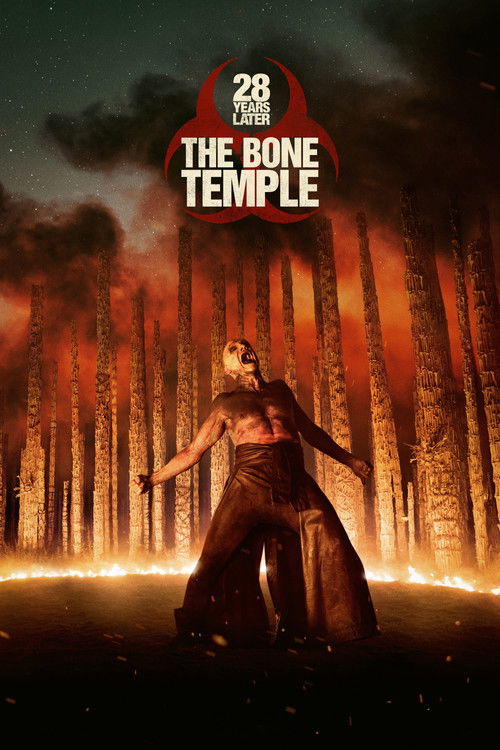
28 Years Later: The Bone Temple
A suffocating gothic post-apocalypse of bone and blood, where human cruelty outshines the violence of beasts, painting a haunting canvas of grotesque horror and quiet, tragic redemption.
28 Years Later: The Bone Temple

28 Years Later: The Bone Temple

"Fear is the new faith."

14 January 2026 United Kingdom 109 min 7.1 (1,520)

Director: Nia DaCosta

Cast: Ralph Fiennes, Jack O'Connell, Alfie Williams, Erin Kellyman, Chi Lewis-Parry

Thriller Science Fiction Horror Human Inhumanity vs. Infected Humanity False Idols, Institutional Corruption, and Cult Dynamics Science, Healing, and Compassion Memento Mori and the Acceptance of Mortality Historical Cycles and The Inheritance of Violence
Budget: $63,000,000
Box Office: $58,522,222

Overview

Set immediately after the harrowing events of 28 Years Later (2025), 28 Years Later: The Bone Temple shifts focus to the desolate, lawless landscape of mainland Britain. Young Spike, having fled his isolated sanctuary on Lindisfarne, finds himself absorbed into "The Jimmies," a menacing, cult-like gang of acrobatic raiders who roam the wasteland. Governed by the terrifyingly charismatic Sir Lord Jimmy Crystal, the group enforces bizarre initiation rituals and brutal doctrines upon its members, forcing Spike to navigate an increasingly terrifying moral landscape to stay alive.

Concurrently, deep within his ossuary sanctuary known as the Bone Temple, the eccentric physician Dr. Ian Kelson continues his lone, obsessive research into the Rage Virus. Rather than treating the infected as mere mindless monsters, Kelson attempts an unconventional therapeutic approach on Samson, a massive "Alpha" infected whose immense physical presence conceals lingering sparks of human cognition. As Kelson's medical breakthroughs push the boundaries of science and faith, the erratic path of Jimmy Crystal’s murderous cult threatens to crash into Kelson’s fragile haven, bringing about a violent convergence of madness, science, and survival.
Core Meaning

Directed by Nia DaCosta from a script by Alex Garland, 28 Years Later: The Bone Temple radically redefines the zombie genre by positing that after nearly three decades of collapse, the Rage Virus is no longer humanity’s greatest threat—humanity itself is. DaCosta explores the dark, predatory cults of personality and corrupt systems that arise when society collapses into anarchy.

The film contrasts the grotesque depravity of supposedly "sane" survivors against the quiet, suppressed humanity still buried within the infected. Through this dichotomy, DaCosta and Garland argue that true monsterhood stems not from biological infection, but from the deliberate choice to embrace cruelty, delusion, and false idols.

Thematic DNA

Human Inhumanity vs. Infected Humanity 35%
False Idols, Institutional Corruption, and Cult Dynamics 25%
Science, Healing, and Compassion 20%
Memento Mori and the Acceptance of Mortality 10%
Historical Cycles and The Inheritance of Violence 10%

Human Inhumanity vs. Infected Humanity

The film continually demonstrates that the "Jimmies" commit far more calculated atrocities than the infected ever could. While the infected act on pure biological drive, human survivors choose sadism, cult rituals, and psychological warfare. Conversely, Samson's suppressed memory flashes prove that empathy can exist beneath the virus.

False Idols, Institutional Corruption, and Cult Dynamics

Sir Lord Jimmy Crystal's reign exposes how traumatized populations fall prey to theatrical, authoritarian narcissists. By forcing his followers to adopt the name "Jimmy" and wear bright tracksuits, Crystal strips away individual identity, weaponizing warped British pop-cultural nostalgia as an instrument of totalitarian control.

Science, Healing, and Compassion

Dr. Ian Kelson represents the enduring light of human curiosity and empathy. Rather than responding to violence with rage, Kelson approaches the Alpha zombie Samson with medical patience and dignity, proving that compassion is a prerequisite for healing a broken world.

Memento Mori and the Acceptance of Mortality

Embodied visually by Dr. Kelson’s ossuary, the concept of memento mori ("remember you must die") runs throughout the narrative. Confronting mortality with reverence brings clarity and peace, whereas clinging to power through violence leads to self-destruction.

Historical Cycles and The Inheritance of Violence

Through the eyes of young Spike, the movie questions whether the next generation can break free from the violence passed down by their elders, or if humanity is doomed to repeat its historical atrocities endlessly.

Character Analysis

Dr. Ian Kelson

Ralph Fiennes

Archetype: Mentor / Philosophical Physician Key Trait: Unshakable composure and stoic intellect

Motivation

To treat and cure the Rage Virus through scientific understanding and human empathy rather than destruction.

Character Arc

Transitions from an isolated, eccentric survivor tending to his bone monument into a sacrificial savior whose scientific breakthrough alters the fate of humanity.

Sir Lord Jimmy Crystal

Jack O'Connell

Archetype: Sadistic Cult Leader / False Messiah Key Trait: Flamboyant charisma masking explosive, psychotic violence

Motivation

Total psychological dominance and immortalizing himself as a god-like sovereign over the wasteland.

Character Arc

Escalates from a flamboyant, tyrannical leader into a paranoid despot whose megalomania directly causes his violent downfall.

All 5 characters and cast

Symbols & Motifs

The Bone Temple (Ossuary)

Meaning:

Symbolizes respect for the dead, historical memory, and the inevitability of mortality, contrasting sharply with the chaotic destruction of the outside wasteland.

Context:

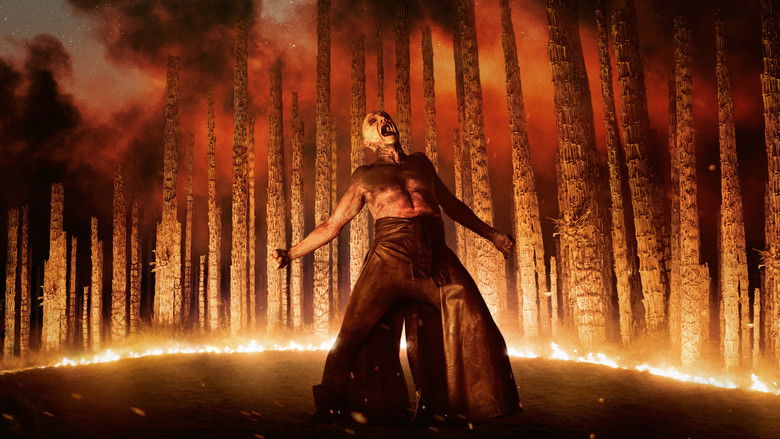
Dr. Kelson’s sanctuary constructed from human skulls and bones.

The Inverted Cross

Meaning:

Represents distorted faith, mock martyrdom, anti-Christian hubris, and the corrupt inversion of moral order.

Context:

Worn by Sir Lord Jimmy Crystal and prominently featured across cult sites.

The "No Ticket" Train Memory

Meaning:

Symbolizes the lingering imprint of human trauma and mundane civility buried beneath the viral rage.

Context:

A neurological flashback experienced by Samson while on a train.

Tracksuits and Teletubbies Nostalgia

Meaning:

Symbolizes arrested development, twisted British pop culture, and the perversion of innocence into brutal tribal conformity.

Context:

The colorful, uniform attire worn by the Jimmies while listening to corrupted versions of children's TV themes.

The Sedative Dart

Meaning:

Symbolizes science weaponized not for destruction, but for restoration, patience, and mental clarity.

Context:

Dr. Kelson's medical tool used to calm Samson's hyper-adrenaline levels.

Memorable Quotes

Memento mori... Remember that you must die, but more importantly, remember how to live.
— Dr. Ian Kelson

Context

Spoken to Spike at the Bone Temple, explaining his philosophy behind preserving human skulls as a quiet homage to lost lives.

Meaning

Encapsulates the film's core theme that remembering mortality keeps humanity grounded and sane.

I don't have a ticket...
— Samson

Context

Said in a raspy, hesitant voice during a quiet breakthrough scene in a train car when Dr. Kelson's sedatives briefly suppress the Rage Virus.

Meaning

The first explicit proof that an infected person's pre-outbreak human memories and civility are still intact beneath the rage.

All 5 quotes

Philosophical Questions

Is humanity defined by biology or by moral choice?

The film explores this by contrasting Samson, who retains human decency despite carrying a monster's virus, against Jimmy Crystal, who possesses an uninfected human mind yet acts with pure monstrous tyranny.

Can a society built on trauma survive without false idols?

It examines how easily traumatized survivors surrender their agency to sociopathic cult leaders in exchange for structure and belonging.

Does scientific progress require compassionate empathy?

Dr. Kelson succeeds in calming the virus where military forces failed because he treated the subject as a human patient rather than a target.

Alternative Interpretations

Religious Allegory (The Antichrist & False Prophet): Many critics interpret Jimmy Crystal as an Antichrist figure who twists religious iconography (the inverted cross) and enforces false worship, whereas Dr. Kelson represents a genuine christlike figure who achieves a true miracle (curing the infected) through sacrifice.

Full ending explanation

Cultural Impact

The film serves as a biting critique of British institutional corruption and toxic charisma. Jimmy Crystal’s cult draws intentional parallels to notorious real-world figures (such as Jimmy Savile) and the institutional systems that enable narcissistic predators to inflict harm unchecked.

The film was released in mid-January 2026 to overwhelming critical acclaim, achieving a 91% approval rating on Rotten Tomatoes. Critics praised Ralph Fiennes' career-best performance, Jack O'Connell's electrifying villainy, and Nia DaCosta’s bold directorial vision, with several outlets declaring it the finest entry in the entire 28 Days Later franchise.

Audiences responded enthusiastically to its "heavy metal" energy, rich philosophical themes, and the surprise return of Cillian Murphy, solidifying the film as an instant horror highlight of 2026.

Audience Reception

Praised Aspects:

  • Ralph Fiennes’ deeply moving performance as Dr. Kelson.
  • Jack O'Connell’s unhinged, hypnotic portrayal of Jimmy Crystal.
  • Nia DaCosta's stylish visual direction and kinetic action staging.
  • The surprising emotional depth of Samson's cured arc.

Main Points of Criticism:

  • Jarring tonal shifts between grotesque cult dark comedy and melancholic, slow-burn medical drama.
  • Certain subplots involving minor cult members felt rushed.

Controversial Moments:

  • The graphic, prolonged inverted crucifixion of Jimmy Crystal.
  • The abrupt epilogue transition introducing Cillian Murphy, which some viewers felt acted more as a teaser for Part 3 than a natural resolution.

Overall Verdict: A thrilling, deeply intelligent fourquel that elevates horror cinema through exceptional character work and dark thematic richness.

Interesting Facts

  • Director Nia DaCosta began shooting The Bone Temple just three weeks after Danny Boyle wrapped principal photography on 28 Years Later (2025). Both films were greenlit and produced back-to-back by Sony Pictures.
  • When receiving Alex Garland’s screenplay, DaCosta loved the story but requested one primary modification: she personally asked Garland to write in "more infected" action sequences to elevate the horror tension.
  • To differentiate the movie from Danny Boyle's iPhone-shot predecessor, DaCosta and cinematographer Sean Bobbitt opted for traditional digital cinema lenses, creating distinct visual language for Kelson's calm ossuary versus the chaotic cult camps.
  • Key sequences were filmed at the former Richard Dunn Sports Centre in Odsal, Bradford, transformed into a sprawling post-apocalyptic cult arena.
  • Former professional MMA fighter Chi Lewis-Parry (Samson) and veteran actor Ralph Fiennes (Dr. Kelson) formed a close friendship on set, often lifting weights and training together between takes.
  • The film features an original score by Oscar-winner Hildur Guðnadóttir mixed with heavy metal and hard-rock contributions by the experimental Scottish band Young Fathers.

Easter Eggs

Frank’s Black Cab

Outside Jim’s remote cottage in the epilogue, viewers can briefly spot the rusted frame of the London black taxi cab used by Frank, Jim, Selena, and Hannah in 28 Days Later (2002).

Selena's Outfit

Inside Jim’s cottage, Selena's distinctive denim and leather jacket combination from the 2002 original is seen hanging near the doorway as a quiet homage.

Opening Audio Callback

The movie’s opening title sequence omits visual footage, replacing it with an audio soundscape culminating in Cillian Murphy’s famous line, "Hello?", echoing Jim waking up in the hospital in 28 Days Later.

Heavy Metal Teletubbies Theme

During a violent battle between the Jimmies and an infected horde, the soundtrack plays a hard-rock cover of the Teletubbies theme song, referencing the show watched by young Jimmy in the opening of 28 Years Later.

Foreshadowed Upside-Down Crucifixion

In 28 Years Later, Spike discovers an infected man hanging upside down with "JIMMY" carved into him; this directly foreshadows Jimmy Crystal's ultimate execution on an inverted cross.

Frequently Asked Questions

Explore More About This Movie

Dive deeper into specific aspects of the movie with our detailed analysis pages

Comments (0)

Leave a comment

No comments yet. Be the first to share your thoughts!

Similar Movies