Skip to content
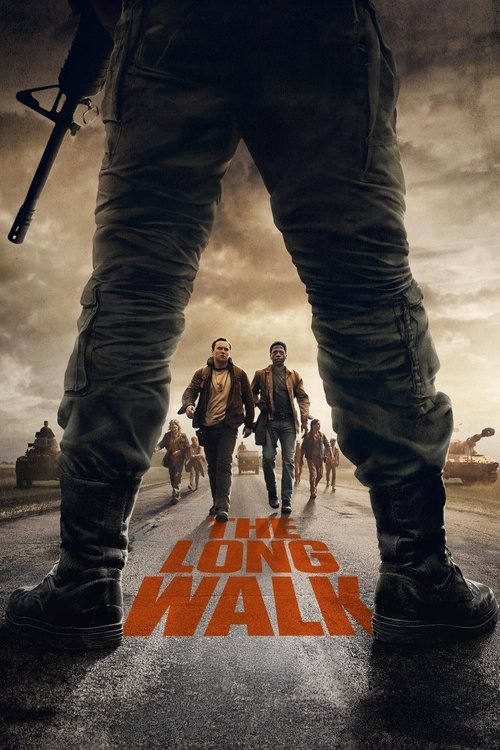
The Long Walk
A harrowing dystopian thriller drenched in existential dread, where tender brotherhood blooms along an endless asphalt vein, leaving bruised feet and broken souls bleeding into an indifferent horizon.
The Long Walk

The Long Walk

"The task is simple: walk or die."

10 September 2025 United States of America 108 min 6.9 (1,787)

Director: Francis Lawrence

Cast: Cooper Hoffman, David Jonsson, Ben Wang, Tut Nyuot, Charlie Plummer

Thriller Science Fiction Horror Humanity and Solidarity vs. Hyper-Individualistic Survival The Futility of Vengeance and Trauma Totalitarian Exploitation and "Bread & Circuses" Masculinity, Vulnerability, and Intimacy
Budget: $20,000,000
Box Office: $63,103,084

Overview

Set in a bleak, dystopian alternate history of 1970s America, The Long Walk portrays a society recovering from a catastrophic war under the grip of a totalitarian military regime. To suppress public unrest and promote national productivity, the state hosts an annual, heavily televised endurance competition known as "The Long Walk". Fifty teenage boys, each representing a US state, are selected via lottery to march continuously down long, dilapidated rural highways without stopping.

The contest is governed by strict, unyielding rules: every walker must maintain a constant pace of at least three miles per hour (4.8 km/h). Dropping below this speed for any reason results in a verbal warning. If a contestant receives three warnings within an hour without recovering their pace, armed military guards escorting the procession execute them on the spot. The competition has no finish line; it continues until only one boy remains alive. The sole survivor is awarded unimaginable wealth and the fulfillment of one wish of their choice.

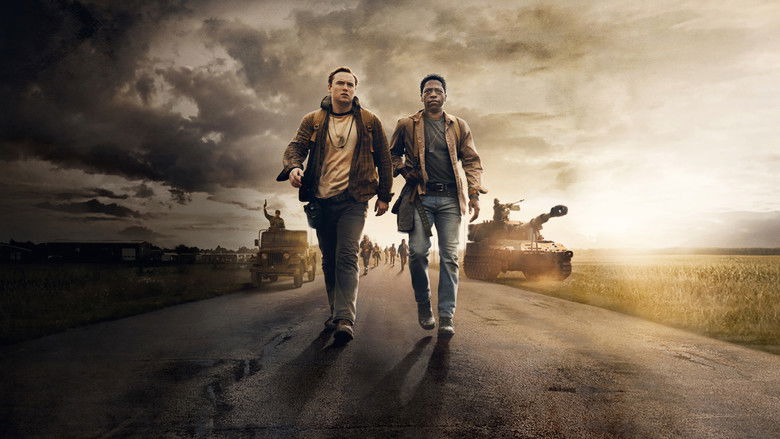
The narrative follows 18-year-old Raymond "Ray" Garraty (Cooper Hoffman) from Maine, who joins the brutal march despite his mother's desperate pleas. As the grueling trek stretches over hundreds of miles, physical exhaustion and horror take their toll. Amidst the relentless bloodshed, Garraty forms a deep emotional bond with fellow contestant Peter McVries (David Jonsson) and a small circle of allies, turning a barbaric death march into a poignant struggle for humanity.
Core Meaning

Director Francis Lawrence and screenwriter JT Mollner use Stephen King’s classic story to critique totalitarian governance, the exploitation of youth, and public desensitization to violence. The film illustrates how authoritarian regimes construct gruesome public spectacles ("bread and circuses") to pacify an impoverished, traumatized populace and foster a culture of ruthless individualism.

At its core, The Long Walk asserts that true resistance against systemic cruelty is not found merely in physical survival or violent vengeance, but in preserving love, empathy, and human connection when the world demands heartless competition.

Thematic DNA

Humanity and Solidarity vs. Hyper-Individualistic Survival 30%
The Futility of Vengeance and Trauma 25%
Totalitarian Exploitation and "Bread & Circuses" 25%
Masculinity, Vulnerability, and Intimacy 20%

Humanity and Solidarity vs. Hyper-Individualistic Survival

While the state designs the walk as a zero-sum death race where every competitor is an enemy, Garraty and McVries defy this logic by building genuine affection and mutual support. They share water, pull each other up, and choose emotional intimacy over cold self-preservation.

The Futility of Vengeance and Trauma

Garraty enters the Walk driven by a desire to avenge his father, who was executed by the state. Through his journey, the film reveals that hatred and revenge consume the victim long before they harm the oppressor, showing that healing requires letting go of retribution in favor of love.

Totalitarian Exploitation and "Bread & Circuses"

Overseen by the menacing Major, the Walk commodifies teenage suffering to inspire productivity in a ruined economy. The roadside spectators cheering for dying boys highlight how fascism turns human cruelty into normalized mass entertainment.

Masculinity, Vulnerability, and Intimacy

The film examines the rigid expectations of toughness placed on young men. As physical strength fails, the boys shed traditional masculine bravado, exposing their fears, tears, and affection for one another in a tender display of emotional vulnerability.

Character Analysis

Raymond "Ray" Garraty (#47)

Cooper Hoffman

Archetype: The Tragic Avenger / Reluctant Hero Key Trait: Deep emotional sensitivity and fierce loyalty.

Motivation

Initially seeks to win the Walk to request a military rifle as his wish and assassinate the Major to avenge his father.

Character Arc

Evolves from a grief-stricken, vengeance-obsessed youth into a selfless young man who chooses love and sacrifice over violence.

Peter "Pete" McVries (#23)

David Jonsson

Archetype: The Moral Anchor / Visionary Key Trait: Unwavering empathy and perceptive optimism.

Motivation

Seeking meaning and redemption, striving to bring comfort and connection to a tragic ordeal.

Character Arc

Starts as a charismatic protector for Garraty and matures into the heartbreaking winner who carries out Garraty's legacy with grim, decisive action.

All 5 characters and cast

Symbols & Motifs

The 3 MPH Speed Limit

Meaning:

Symbolizes the rigid, unyielding demands of an authoritarian, hyper-capitalist system that views human beings purely as machines; falling behind means immediate societal and physical execution.

Context:

Enforced continuously on every walker as they march down the highway under threat of death.

The "Ticket" / Warning Gunshot

Meaning:

Represents state-sanctioned violence—impersonal, mechanical, and sudden.

Context:

Delivered via verbal warning and point-blank rifle shot when contestants drop below speed three times in an hour.

The Open Rural Highway (Route 1)

Meaning:

A literal visual representation of purgatory and an inescapable conveyor belt of death disguised as a path to wealth and freedom.

Context:

The long, dilapidated road along which the march takes place without a geographical finish line.

The Major's Sunglasses and Uniform

Meaning:

Symbolizes the unfeeling, faceless authority of the state that strips away individual identity.

Context:

Worn by Mark Hamill's character, featuring mirrored lenses and military attire.

The Rainbow

Meaning:

Serves as a visual motif for elusive hope, fleeting beauty, and the emotional warmth shared between Garraty and McVries amidst horrific circumstances.

Context:

Appears in the distance after a grueling rainstorm along the march.

Memorable Quotes

I hope that gets easier. / That is my biggest fear.
— Peter McVries / Ray Garraty

Context

Spoken early in the Walk right after seeing the first boy executed.

Meaning

Establishes the central moral conflict: survival requires desensitization, but remaining human requires feeling the pain of loss.

I can't see it. You can.
— Ray Garraty

Context

Garraty's final words to Pete as Garraty chooses to stop walking at the end.

Meaning

Garraty acknowledges that Pete possesses the hope and capacity to see beauty in the world that Garraty lost long ago.

All 4 quotes

Philosophical Questions

Is empathy possible in a system engineered for zero-sum competition?

Explored through Garraty and McVries repeatedly sharing water, physically supporting each other, and refusing to view one another as rivals despite the single-winner rule.

Does seeking violent retribution destroy the victim before it ever reaches the oppressor?

Explored through Garraty's internal struggle with his plot to assassinate the Major, realizing that his obsession with revenge was robbing him of his own capacity to love.

What is the moral complicity of a society that consumes real-life suffering as entertainment?

Explored through roadside spectators picnicking and cheering while teenage boys are shot feet away from them.

Alternative Interpretations

1. The Fulfillment of Legacy: Pete taking the rifle and executing the Major represents Pete carrying out Garraty’s desire for justice while adhering to Garraty's memory. In this reading, Garraty’s love transformed Pete, enabling him to deliver a decisive strike against tyranny.

Full ending explanation

Cultural Impact

King wrote the novel in 1967 against the backdrop of the Vietnam War draft, where working-class American boys were sent to die by government decree. The 2025 film adaptation modernizes these themes, echoing contemporary anxieties surrounding economic inequality, political polarization, and public fascination with survival media.

Although directed by Francis Lawrence (The Hunger Games series), critics highlighted how The Long Walk eschews flashy media satire and opulent couture in favor of a gritty, grounded, and emotionally raw character study.

Released by Lionsgate on September 12, 2025, the film achieved strong critical acclaim (94% on Rotten Tomatoes) and grossed $63.1 million against a $20 million production budget.

Audience Reception

Critics and audiences widely praised the breakout chemistry and emotional depth delivered by Cooper Hoffman and David Jonsson. Mark Hamill's chilling villainous turn, Jo Willems' stark cinematography, and JT Mollner's tight screenplay were also lauded.

Some reviewers noted that the middle section pacing occasionally slows down, and the relentless, graphic violence makes for a deeply uncomfortable viewing experience.

Book purists debated the altered ending—where McVries wins and executes the Major—compared to the novel's original ambiguous ending where Garraty walks alone into a shadow.

Overall, the film is widely regarded as one of the most faithful, viscerally intense, and emotionally satisfying Stephen King screen adaptations in recent memory.

Interesting Facts

  • Stephen King wrote The Long Walk in 1967 while attending the University of Maine (his first completed novel). Filmmakers like George A. Romero and Frank Darabont held the rights for decades before Francis Lawrence finally brought it to the screen in 2025.
  • Director Francis Lawrence and cinematographer Jo Willems filmed continuous, long-take tracking shots along actual Canadian highways, requiring the young cast to walk dozens of real miles each day to portray genuine physical degradation.
  • Stephen King personally reviewed JT Mollner’s adapted screenplay and approved the casting and altered ending, noting that it captured the soul of his book while providing a strong cinematic payoff.
  • Mark Hamill underwent extensive physical transformation—prosthetics, a trimmed goatee, dark sunglasses, and vocal training—to portray the intimidating, fascist Major.
  • The atmospheric, stripped-down musical score was composed by Jeremiah Fraites, co-founder of the folk-rock band The Lumineers, using acoustic tones and percussive rhythms that echo heavy footsteps and ticking clocks.

Easter Eggs

"R. Bachman" Signature

In the opening sequence, as contestant files are stamped by military clerks, the name "R. Bachman" is briefly stamped on a document header, honoring Stephen King’s original pseudonym under which the novel was published in 1979.

Vintage Alternate-Timeline Vehicles

The military trucks and civilian cars parked along the highway date exclusively from the late 1950s through the late 1970s, visually grounding the film in an alternate-history 1970s without relying on futuristic sci-fi tropes.

Pivotal Tag Numbers (#47 and #23)

Garraty wears tag #47 while McVries wears #23. In Stephen King's literary universe, 23 is a recurring significant number, while 47 serves as an inverted nod to King's numerical motifs.

Distorted Propaganda Signs

Signs held by roadside spectators display subtle propaganda slogans referencing other dystopian Stephen King works, including subtle nods to The Running Man.

Frequently Asked Questions

Explore More About This Movie

Dive deeper into specific aspects of the movie with our detailed analysis pages

Comments (0)

Leave a comment

No comments yet. Be the first to share your thoughts!

Similar Movies