Skip to content
The Last House
A claustrophobic sci-fi thriller suffocated by relentless downpours, where suffocating dread yields to fragile hope as a home slowly submerges like a glass bottle lost in an infinite primordial ocean.
The Last House

The Last House

"How long can you survive?"

06 August 2026 United States of America 110 min 6.7 (317)

Director: Louis Leterrier

Cast: Greta Lee, Wagner Moura, Riley Chung, Noah Alexander Sosnowski, Emma Ho

Thriller Science Fiction Horror Resilience and Familial Togetherness in Isolation Ecological Retribution and Non-Violent Coexistence Psychological Toll of Enclosure / Cabin Fever Resourcefulness and Domestic Survivalism

Overview

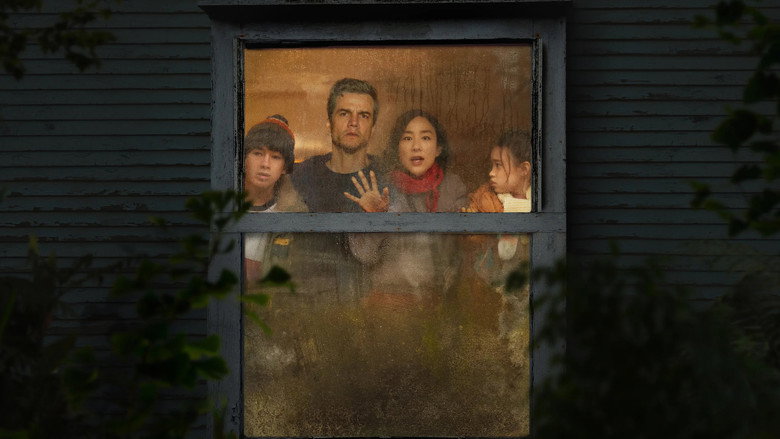
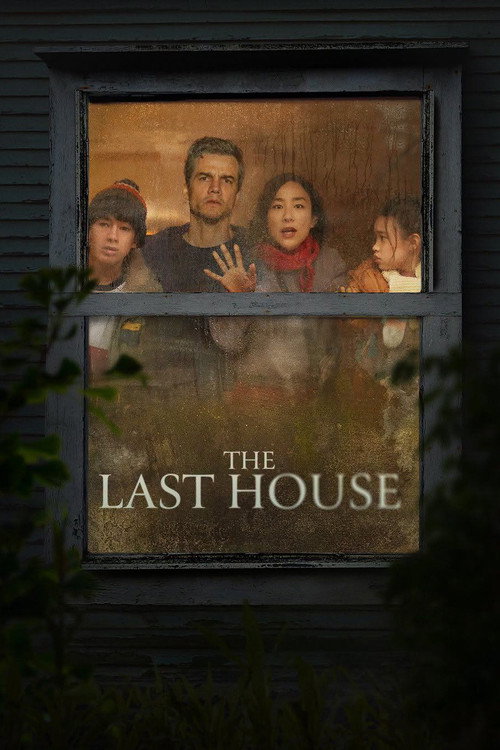
Directed by Louis Leterrier (Fast X, The Incredible Hulk) and written by Matthew Robinson (Love and Monsters, Good Luck, Have Fun, Don't Die), The Last House is a 2026 high-concept sci-fi survival thriller streaming on Netflix. The film opens in suburban Seattle, where unemployed engineer Jason Delgado (Wagner Moura) lives with his wife Ann (Greta Lee), their two children Graham and Ruth, and their Golden Retriever, Cassidy. Following an eerie coastal downpour, the family discovers that every door, window, and exit in their house has been impenetrable and tightly sealed by a mysterious, liquid-like forcefield. Communications collapse, neighbor houses are similarly imprisoned, and the family is suddenly cut off from the outside world while mysterious silhouettes move through the ceaseless rain outside.

As days stretch into weeks, months, and eventually years, the Delgado family is forced into an extreme long-term endurance challenge. With utility infrastructure crumbling and resources dwindling, they must convert their suburban home into a self-sustaining micro-ecosystem. The family relies on physical media, vinyl records, and improvised survival techniques to preserve both their bodies and their sanity in confinement.

The claustrophobic lockdown escalates as environmental tides outside rise, threatening to submerge their sanctuary. The family must confront not only the psychological toll of cabin fever and isolation, but also the ominous, aquatic beings lurking just beyond their walls.


Core Meaning

At its core, The Last House explores human resilience, family solidarity, and ecological reclamation. Utilizing a high-concept lockdown scenario heavily inspired by the collective trauma of COVID-19 quarantines, the film shifts from a story of physical survival to an allegory about empathy and humanity's place on Earth.

Director Louis Leterrier and screenwriter Matthew Robinson craft a narrative where humanity's ultimate salvation depends not on superior firepower or conqueror instincts, but on overcoming fear and demonstrating mercy toward an ancient, non-human presence reclaiming the planet.

Thematic DNA

Resilience and Familial Togetherness in Isolation 30%
Ecological Retribution and Non-Violent Coexistence 25%
Psychological Toll of Enclosure / Cabin Fever 25%
Resourcefulness and Domestic Survivalism 20%

Resilience and Familial Togetherness in Isolation

The film focuses heavily on how love and emotional cohesion keep a family intact during extreme hardship. Through shared rituals, physical media, vinyl records, and mutual support, the Delgados transform their home-turned-prison into a sanctuary of collective strength.

Ecological Retribution and Non-Violent Coexistence

Framed by an opening quote from Arthur C. Clarke regarding planet Earth being an ocean, the narrative suggests that ancient marine leviathans are reclaiming the surface world. Survival is ultimately achieved not through domination, but through an act of unconditional mercy.

Psychological Toll of Enclosure / Cabin Fever

The film examines the gradual mental degradation caused by prolonged captivity. As Leterrier noted, while the first half is about surviving physically, the second half focuses on surviving psychologically amidst fear, paranoia, and temporal distortion.

Resourcefulness and Domestic Survivalism

The narrative showcases human ingenuity under severe constraints. The characters improvise toolmaking, indoor agriculture, and hunting methods to sustain life inside a deteriorating suburban structure.

Character Analysis

Jason Delgado

Wagner Moura

Archetype: Protective Patriarch / Reluctant Survivor Key Trait: Engineering ingenuity and protective instinct

Motivation

To protect his family at any cost and find an exit from their suburban prison.

Character Arc

Begins as a frustrated, out-of-work engineer who approaches the crisis with military-like pragmatism and defensive aggression. In the climax, he undergoes a moral transformation, choosing mercy over violence when confronting a trapped creature.

Ann Delgado

Greta Lee

Archetype: Emotional Anchor / Steadfast Matriarch Key Trait: Pragmatic emotional composure and empathy

Motivation

To maintain her children's psychological health, safety, and humanity in total isolation.

Character Arc

Evolves from anxious domesticity into a resilient co-leader who grounds the family during their five-year ordeal.

All 4 characters and cast

Symbols & Motifs

"Chimney Fishing" / The Chimney

Meaning:

Symbolizes an umbilical cord to the outside world.

Context:

The family constructs makeshift traps lowered through the chimney flue to capture birds and small animals, serving as a primary lifeline for protein during their multi-year lockdown.

Vinyl Records & Physical Media

Meaning:

Symbolizes human culture, memory, and psychological stability.

Context:

Cut off from the internet and digital networks, the family preserves their humanity and sanity through physical albums and books.

The Potted Plant

Meaning:

Symbolizes nurture, innocence, and connection to nature.

Context:

Ruth's determination to save her potted plant before hiding from the creatures highlights the innocence that catches the entities' attention.

The Liquid Membrane / Water Barrier

Meaning:

Symbolizes claustrophobic isolation and inescapable environmental siege.

Context:

It coats windows and doors, allowing light and water through while physically detaining the occupants inside.

Cassidy the Dog

Meaning:

Symbolizes domestic comfort, innocence, and the harsh ethical sacrifices forced upon survivors during severe resource depletion.

Context:

Appears throughout the narrative as a family companion living through extreme resource constraints during the lockdown.

Memorable Quotes

How inappropriate to call this planet Earth when clearly it is ocean.
— Opening title card epigraph (quoting Arthur C. Clarke)

Context

Displayed as the opening title card epigraph at the beginning of the film.

Meaning

Establishes the sci-fi mythos of the film, foreshadowing that the creatures are not extraterrestrial aliens, but ancient terrestrial ocean dwellers reclaiming the land.

The first half of the movie is surviving physically. The second half is very much surviving psychologically.
— Ann / Director commentary

Context

Spoken to contextualize the narrative split and long-term isolation in the film.

Meaning

Highlights the thematic transition from practical survivalism to an internal struggle with cabin fever and psychological endurance.

All 3 quotes

Philosophical Questions

Can humanity transcend its instinct for violent domination when confronted by the unknown?

The film explores whether human survival must always be tied to combat, or if empathy can serve as an evolutionary strategy.

What constitutes a "home" when sanctuary becomes an inescapable prison?

It examines how physical spaces dictate human psychology and how familial bonds can redefine confinement into a place of meaning.

Who truly owns planet Earth?

Drawing on the Arthur C. Clarke quote, the film questions anthropocentrism, asking if humanity is merely a temporary tenant on an ocean-dominated planet.

Alternative Interpretations

The Test of Coexistence (Optimistic Reading): Supported by comments from actor Wagner Moura, the trapped environment serves as a cosmic or ecological test. The creatures quarantine humanity until humans prove they can move beyond predatory violence and demonstrate mercy, allowing evolved humans to re-enter a changed world.

Full ending explanation

Cultural Impact

The Last House directly engages with the lingering cultural trauma, claustrophobia, and family dynamics experienced during global COVID-19 quarantines. The film places itself within the lineage of high-concept isolation thrillers such as Bird Box, A Quiet Place, Leave the World Behind, and Await Further Instructions.

Released on Netflix on August 7, 2026, the film received mixed-to-negative critical reviews (holding around a 30% Rotten Tomatoes score and a 45 Metacritic score). While critics commended the lead performances by Greta Lee and Wagner Moura as well as the initial claustrophobic tension, many criticized its abrupt shift into a CGI creature feature and its sentimental resolution.

Audience Reception

Praised Aspects:

  • Strong, grounded performances by Greta Lee and Wagner Moura.
  • Tense, atmospheric locked-room setup in the first act.
  • Creative survival details, such as "chimney fishing" and utilizing vinyl records for emotional grounding.

Main Points of Criticism:

  • Jarring tonal shift from an intimate psychological drama to a CGI creature feature in the third act.
  • Weak or unconvincing visual effects for the aquatic creatures.
  • Pacing issues across the 110-minute runtime and heavy-handed voiceover narration.

Controversial Moments:

  • The fate of Cassidy, the family Golden Retriever, which sparked debate among viewers.
  • The simplified "act of kindness breaks the global forcefield" ending.

Overall Verdict: A polarizing sci-fi thriller that starts as a compelling, grounded character study but divides audiences with its creature-feature climax and idealistic resolution.

Interesting Facts

  • Director Louis Leterrier chose to shoot inside a real suburban house using practical set builds and water rigs whenever possible to make the environmental decay and flooding feel authentic.
  • Production brought in world-renowned survival expert Megan Hine to consult with the cast and crew on authentic physical survival mechanics, resourcefulness, and the psychological impact of long-term isolation.
  • To depict the 5-year chronological jump realistically, two pairs of actors were cast for the children: Riley Chung and Emma Ho for Ruth, and Noah Alexander Sosnowski and Gabriel Barbosa for Graham.
  • Screenwriter Matthew Robinson conceived the premise while picking up a pair of plastic toy binoculars in his young son's room, asking himself what it would take to rely solely on items currently inside one's house to survive an apocalypse.
  • Known for massive action blockbusters like Fast X and The Incredible Hulk, Louis Leterrier called The Last House his most challenging film to direct due to its restricted single-location framing and emotional intimacy.

Easter Eggs

Arthur C. Clarke Epigraph

The opening card directly quotes Arthur C. Clarke's famous observation about Earth's ocean nature, serving as an early hint regarding the origins of the creatures.

Physical Media Preservation

The prominent placement of vinyl records, physical books, and analog media serves as a nod to ongoing real-world debates surrounding digital media preservation.

West Hollywood Billboard Marketing Campaign

As part of a viral marketing campaign, Netflix created an installation in West Hollywood featuring an actor living inside a billboard house on Sunset Blvd to simulate the film's lockdown premise.

Frequently Asked Questions

Explore More About This Movie

Dive deeper into specific aspects of the movie with our detailed analysis pages

Comments (0)

Leave a comment

No comments yet. Be the first to share your thoughts!

Similar Movies