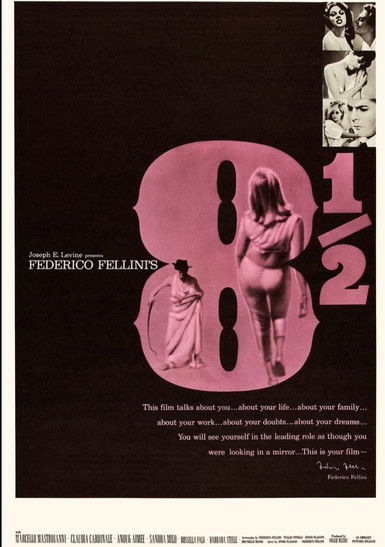
"A picture that goes beyond what men think about - because no man ever thought about it in quite this way!"
Director: Federico Fellini
Cast: Marcello Mastroianni, Anouk Aimée, Sandra Milo, Claudia Cardinale, Rossella Falk
8½ — Movie Quotes
Memorable Quotes
I wanted to make an honest film. No lies whatsoever. I thought I had something so simple to say... Instead, it's me who lacks the courage to bury anything at all.
Context
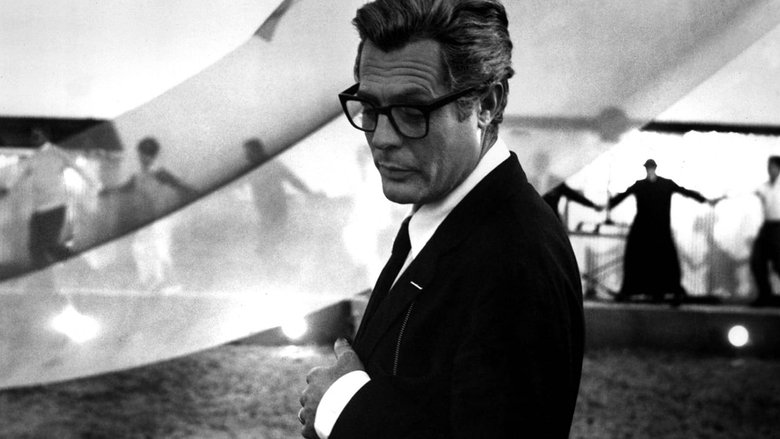
Guido confesses this to Rossella, his wife's best friend, while they are at the massive spaceship set. He is expressing his deep confusion and despair over the state of his film and his life, admitting that the project has become a monstrous testament to his own lack of courage.
Meaning
This quote encapsulates the central crisis of the film. It is Guido's confession of his artistic and moral failure. He began with a noble intention—to create something pure and true—but realizes that he himself is the source of the dishonesty, unable to confront the "dead things" within himself. It highlights the immense difficulty of achieving true authenticity in art and life.
Because he doesn't know how to love.
Context
This exchange occurs when Guido finally meets with the real Claudia to explain her role in his film. He describes a protagonist (himself) who is saved by a pure woman but ultimately pushes her away. When he tries to explain the character's motivations, Claudia repeatedly interrupts with this simple, devastating truth.
Meaning
This line, repeated three times, is the film's bluntest and most accurate diagnosis of Guido's problem. Claudia, the object of his idealized fantasies, becomes the voice of truth, cutting through all of his artistic and existential excuses. She clarifies that his creative block isn't about a lack of ideas but a fundamental emotional and moral failing. His inability to love authentically is the root of his inability to create authentically.
What is this sudden happiness that makes me tremble, giving me strength, life? ... I hadn't understood. I didn't know. It's so natural accepting you, loving you. And so simple.
Context
This is Guido's internal thought process during the final scene, just before the circus parade begins. He has just ordered the spaceship set to be dismantled and has listened to his critic Daumier praise him for abandoning the project. But a magician prompts a change of heart, and as Guido looks at his wife, he has this profound realization.
Meaning
This marks Guido's epiphany and the film's emotional climax. After hitting rock bottom and giving up on his film, he suddenly realizes that the answer is not to reject the chaos of his life but to embrace it. The happiness he feels comes from acceptance—of himself, his flaws, and all the people in his life. It is the moment he stops fighting and finds freedom in surrender, which allows him to finally create.
Life is a party. Let's live it together.
Context
This line is spoken by Guido through a megaphone near the very end of the film, as he directs the celebratory parade of all the characters from his life. He is now the confident ringmaster, orchestrating the beautiful chaos he has finally embraced.
Meaning
This is the ultimate resolution of Guido's crisis. It's a simple, joyful affirmation of life in all its complexity. The metaphor of a party or a festival suggests celebration, community, and participation rather than isolated suffering. It's his invitation to his wife, and to the audience, to join him in this new, accepting vision of life and art.
Explore More About This Movie
Dive deeper into specific aspects of the movie with our detailed analysis pages