Skip to content
9-1-1
An adrenaline-soaked emergency procedural pulsing with desperate vulnerability and fierce camaraderie, framing humanity's fragile survival like flashing red-and-blue sirens slicing through the suffocating smoke of personal and catastrophic ruin.
9-1-1

9-1-1

"In space no one can hear you call."

03 January 2018 — 07 May 2026 United States of America 10 season 143 episode Returning Series 8.2 (2,830)

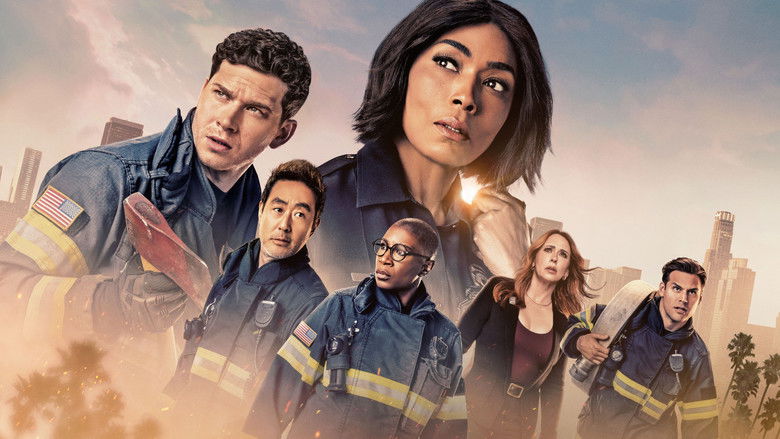
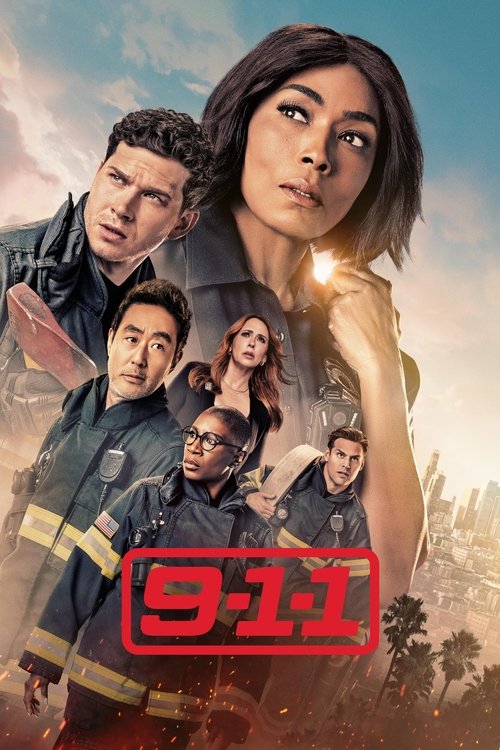
Cast: Angela Bassett, Oliver Stark, Aisha Hinds, Kenneth Choi, Ryan Guzman

Drama Crime Action & Adventure The Power of Chosen Family and Community Redemption, Guilt, and Overcoming Past Trauma The Psychological Cost of Heroism and Duty Vulnerability vs. Toxic Self-Reliance Mortality and the Fragility of Everyday Life

Overview

9-1-1 is a high-octane, emotionally resonant procedural drama created by Ryan Murphy, Brad Falchuk, and Tim Minear. Set in Los Angeles, the series immerses viewers into the relentless, high-stakes universe of emergency services, weaving together the lives of police officers, paramedics, firefighters, and 9-1-1 dispatch operators. Rather than focusing purely on procedural rescue mechanics, the overarching narrative anchors itself in the human beings answering the calls, exploring how chronic exposure to mortality, danger, and trauma reverberates through their domestic and psychological lives.

The central narrative engine revolves around Station 118 of the Los Angeles Fire Department (LAFD), working in tandem with the Los Angeles Police Department (LAPD) and the 9-1-1 Call Center. Across its seasons, the show balances episodic emergency crises—from bizarre urban mishaps to apocalyptic multi-episode citywide disasters—with serialized character journeys. As these emergency responders face natural disasters, structural collapses, and criminal threats, they must confront their past mistakes, rebuild broken families, and manage the intense emotional toll of saving lives while struggling to salvage their own.

Over the course of its run, 9-1-1 shifts from a fast-paced survival spectacle into a rich exploration of chosen families, institutional duty, resilience, and personal redemption. The workplace transitions into a sacred sanctuary where deeply wounded individuals find purpose, kinship, and healing, creating a sustained examination of modern community, sacrifice, and the enduring human spirit in the face of chaos.

Core Meaning

The fundamental message of 9-1-1 is that no human being is built to endure crisis in isolation. The series posits that the act of saving another person is reciprocal: by extending a hand to strangers in their darkest hour, first responders seek to heal the fractures within their own souls.

Through its blend of spectacle and grounded drama, the series asserts that trauma and vulnerability are universal, but resilience is cultivated through genuine connection and chosen community. The show constantly reinforces that heroism is not defined by invulnerability, but by the courage to seek help, confront personal guilt, and show up for others every single day despite the certainty of hardship.

Thematic DNA

The Power of Chosen Family and Community 30%
Redemption, Guilt, and Overcoming Past Trauma 25%
The Psychological Cost of Heroism and Duty 20%
Vulnerability vs. Toxic Self-Reliance 15%
Mortality and the Fragility of Everyday Life 10%

The Power of Chosen Family and Community

The series initially presents characters isolated by broken biological families or trauma. Over successive seasons, Station 118 evolves into an unbreakable support structure, demonstrating that shared purpose, trust, and empathy can forge bonds stronger than bloodline ties.

Redemption, Guilt, and Overcoming Past Trauma

Nearly every primary character begins with a catastrophic burden—Bobby's addiction and past loss, Chimney's self-doubt, Hen's fractured marriage, Buck's abandonment fears, and Eddie's wartime guilt. The series frames growth not as erasing history, but as actively seeking redemption through service, accountability, and forgiveness.

The Psychological Cost of Heroism and Duty

Early seasons depict the adrenaline rush of rescues, but subsequent seasons increasingly spotlight PTSD, compassion fatigue, postpartum depression, and burnout. The narrative continually underscores that first responders are mortal, flawed, and in need of systemic and personal emotional care.

Vulnerability vs. Toxic Self-Reliance

Characters frequently struggle when trying to shoulder emotional burdens alone. The narrative demonstrates that acknowledging weakness, undergoing therapy, and vocalizing fear are acts of true courage, contrasting destructive stoicism with constructive vulnerability.

Mortality and the Fragility of Everyday Life

By depicting bizarre accidents and sudden catastrophic events alongside ordinary moments, the series highlights that life can change or end in a second. This reality serves as an urgent reminder to value loved ones and live authentically in the present.

Character Analysis

Athena Grant-Nash

Angela Bassett

Archetype: The Protector / Warrior-Matriarch Key Trait: Unshakable moral resolve and fierce authority

Motivation

Protecting the defenseless and maintaining domestic and moral stability amid chaos.

Character Arc

Begins as an LAPD patrol sergeant managing marital collapse, evolving into the emotional bedrock of both the police force and her blended family. Over the series, she confronts personal traumas, violent attacks, and loss, softening her hardened exterior while remaining fiercely uncompromising in her pursuit of justice.

Evan "Buck" Buckley

Oliver Stark

Archetype: The Questing Youth / Evolving Hero Key Trait: Relentless empathy and self-sacrificing loyalty

Motivation

Finding self-worth, belonging, and unconditional love.

Character Arc

Starts as an impulsive, reckless probie seeking validation through extreme feats. Across the series, he experiences devastating injuries, betrayal, family revelations, and near-death experiences, transforming into a mature, empathetic, and self-aware firefighter comfortable with his identity and emotional depth.

All 5 characters and cast

Symbols & Motifs

The 118 Fire Engine

Meaning:

Symbolizes mobile sanctuary, unity, and shared destiny.

Context:

Riding together in the rig represents egalitarian brotherhood and mutual dependence in the face of death.

The Headset (9-1-1 Call Center)

Meaning:

Represents the invisible lifeline bridging absolute panic and structured hope, embodying connection without physical presence.

Context:

Used by dispatch operators to highlight the unseen emotional weight and vital guidance provided across the wire during emergencies.

The Firefighter Turnout Gear / LAPD Badge

Meaning:

Represents both armor and vulnerability.

Context:

While it grants authority and physical protection on the job, it also acts as a heavy psychological shroud that characters must learn to shed to remain emotionally accessible.

Disasters (Earthquakes, Tsunamis, Collapses)

Meaning:

External manifestations of internal emotional turmoil.

Context:

Major environmental catastrophes often coincide with turning points or ruptures in characters' personal trajectories, forcing rapid evolution and reevaluation of priorities.

Family Meal at the Station Table

Meaning:

A recurring ritual motif symbolizing communal grounding, shared peace, and communion.

Context:

Shared among the members of the 118 as a vital moment of connection before entering chaotic calls.

Memorable Quotes

9-1-1, what's your emergency?
— Abby Clark / Maddie Buckley / Dispatch Ensemble

Context

The introductory operational refrain anchoring nearly every rescue sequence across all seasons.

Meaning

Serves as the foundational thesis of the show: an immediate promise of help and human connection in an individual's darkest moment.

You don't have to carry the whole world on your shoulders, Buck. That's what a team is for.
— Bobby Nash

Context

Season 2, Episode 18 (This Life We Choose), addressing Buck's obsessive guilt and fear of being left behind.

Meaning

Captures the core thematic shift from isolated individualism to collective strength and chosen family.

All 4 quotes

Episode Highlights

7.1 / Under the Weather

S2E2

The two-part Los Angeles earthquake disaster established the series' signature cinematic scale and demonstrated the ensemble's ability to operate under catastrophic urban disruption.

Significance:

Set the benchmark for seasonal disaster kickoff events across network television.

Chimney Begins

S2E12

Deep dive into Chimney's backstory, chronicling the racial prejudice he faced upon joining the LAFD and the origins of his indomitable spirit.

Significance:

Established the acclaimed Begins character anthology format that enriched the series' narrative depth.

Fight or Flight

S2E13

Maddie confronts her abusive, homicidal ex-husband Doug in a snowy wilderness survival standoff.

Significance:

A pivotal turning point for Maddie's independence and agency, transforming her from a victim in hiding into a proactive survivor.

Sink or Swim / The Searchers

S3E2

A catastrophic tsunami strikes the Santa Monica Pier, leaving Buck stranded in surging waters fighting to keep Eddie's son, Christopher, alive.

Significance:

Solidified the paternal and brotherly dynamic between Buck, Eddie, and Christopher, becoming a standout emotional high point of the entire franchise.

Athena Begins

S3E7

Revisits Athena's early career and the unsolved murder of her fiancé in 1989, concluding with a poignant capture decades later.

Significance:

Showcased Angela Bassett's commanding dramatic range, earning universal critical acclaim and expanding Athena's emotional history.

In a Flash / In Another Life

S6E10

Buck is struck by lightning during a rescue, slipping into a medically induced coma where he experiences an alternate reality where he never joined the 118.

Significance:

Deconstructs Buck's core psychological trauma regarding his self-worth and utility, leading to his genuine self-acceptance.

Philosophical Questions

What is the true balance between individual self-sacrifice and personal duty?

Explored through characters who risk their lives to the detriment of their families, questioning whether self-destruction in the name of duty can truly be called heroic.

Can an individual truly outgrow and redeem the worst version of their past self?

Examined through Bobby Nash's sobriety and survivor guilt, alongside Maddie and Chimney's journeys from trauma to self-actualization.

How does witnessing continuous mortality alter the human capacity to love?

Addressed through the team's ongoing struggle to remain emotionally open and vulnerable at home while hardening their responses on the emergency front lines.

Alternative Interpretations

The Allegory of Everyday Catastrophe: Critics often interpret the show's extreme, surreal emergencies as metaphors for the unpredictable anxiety of modern urban life. The bizarre accidents externalize internal psychological terrors, rendering invisible panic into something tangible that first responders can physically extinguish or bandage.

Full ending explanation

Cultural Impact

Premiering in 2018 amid a changing television landscape, 9-1-1 breathed new life into the traditional network emergency procedural. While predecessors like ER, Chicago Fire, or Third Watch emphasized gritty realism, 9-1-1 pioneered an over-the-top, cinematic, comic-book-adjacent aesthetic that embraced camp spectacle alongside earnest, heartfelt melodrama.

Critically, the show broke barriers in network prime-time representation. It centered a Black woman police officer (played by Angela Bassett) and a diverse ensemble featuring LGBTQ+ relationships, biracial blended families, Asian-American and Latino first responders, and characters with disabilities (Gavin McHugh as Christopher Diaz) without reducing their identities to trauma tropes. The series established a successful template for modern prime-time broadcast entertainment, leading to major multi-network durability and enduring spin-offs.

Audience Reception

Early Seasons (1–3): Met with surprise and affection. Audiences and critics praised the seamless fusion of outrageous, adrenaline-fueled spectacle with heartfelt character arcs, particularly praising Bassett and Krause's lead chemistry.

Mid Seasons (4–6): Garnered acclaim for character-driven standalone episodes (Begins series) and high-stakes disasters, though facing minor criticism for occasional soap-operatic pacing and repetitive romantic stalling.

Network Move & Later Seasons (7+): The jump to ABC brought renewed promotional energy and critical reappraisal. The series was celebrated for bolder creative risks, including massive cruise-ship disaster arcs and character self-discoveries, proving the format's long-term endurance.

Overall Verdict: Regarded across television fandom as one of the most entertaining, emotionally grounded, and creatively resilient broadcast procedurals of the 21st century.

Interesting Facts

  • Many of the show's most bizarre and shocking 9-1-1 calls—such as people stuck in chimneys, bouncy houses flying away, or heads trapped in microwave ovens—are direct dramatizations of real viral news events and emergency recordings.
  • Angela Bassett was approached directly by Ryan Murphy during the show's development; she agreed to lead the cast on the condition that she also serve as an active Executive Producer, giving her key creative input into Athena's character evolution.
  • Filming the Season 3 tsunami involved the legendary water tanks at Baja Studios in Rosarito, Mexico—the exact facilities built by James Cameron for Titanic (1997).
  • The production employs full-time professional firefighters, paramedics, and LAPD technical advisers on set to ensure tactical maneuvers, medical terminology, and equipment handling maintain realistic fidelity.
  • After six seasons on FOX, high production costs led to the show being acquired and renewed by ABC for Season 7 onwards, where it experienced an unprecedented ratings surge and continued franchise expansion.

Easter Eggs

Disaster Cinema Homages

The series regularly pays structural and visual homage to classic 1970s Irwin Allen disaster blockbusters (The Poseidon Adventure, The Towering Inferno, Earthquake), particularly in its multi-episode seasonal premiere disasters.

Murphy-verse Crossover Links

Several cast members (Angela Bassett, Connie Britton, Kenneth Choi) previously starred in Ryan Murphy's anthology franchises like American Horror Story and American Crime Story.

Procedural Canon Overlaps

The spin-off 9-1-1: Lone Star featured a major crossover event involving California firefighters traveling to Austin, Texas to combat catastrophic wildfires, interconnecting the wider emergency universe.

Frequently Asked Questions

Explore More About This Movie

Dive deeper into specific aspects of the movie with our detailed analysis pages

Comments (0)

Leave a comment

No comments yet. Be the first to share your thoughts!

Similar Movies