A Bag of Marbles
A harrowing yet hopeful odyssey through Nazi-occupied France, where the innocent clatter of glass marbles echoes against the crushing weight of survival, identity, and a stolen childhood preserved in a pocket.
A Bag of Marbles

A Bag of Marbles

Un sac de billes

"Home Is Where Family Is"

18 January 2017 Belgium 113 min ⭐ 7.8 (883)
Director: Christian Duguay
Cast: Dorian Le Clech, Batyste Fleurial, Patrick Bruel, Elsa Zylberstein, Bernard Campan
Drama War
Brotherhood and Loyalty The Burden of Secret Identity Loss of Innocence The Duality of Humanity
Budget: $21,400,000
Box Office: $10,898,998

Overview

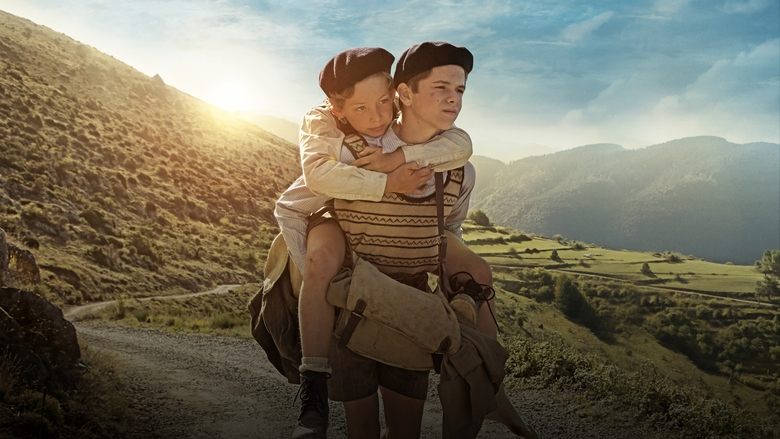
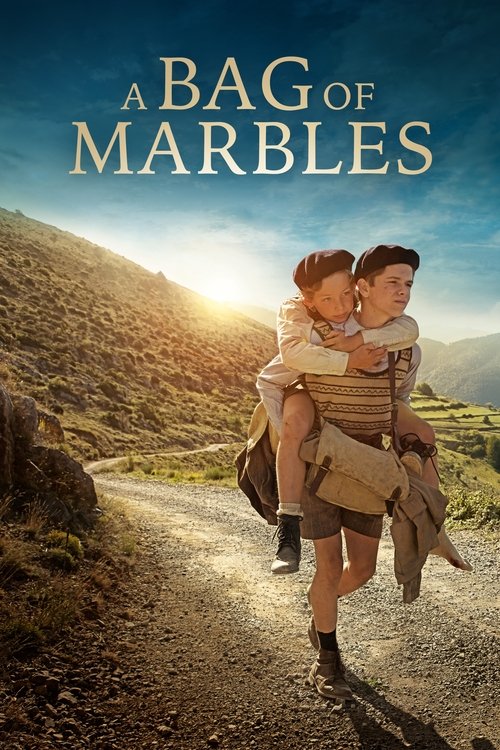
Set in 1941, A Bag of Marbles tells the gripping true story of Joseph and Maurice Joffo, two young Jewish brothers living in occupied Paris. As the Nazi threat intensifies and the wearing of the yellow star becomes mandatory, their father, a successful barber, realizes the family must split up to survive. He gives the boys a small sum of money and instructions to flee to the "Free Zone" in the south of France, where they are to reunite with their older brothers.

The film follows the siblings on a perilous journey across the country, navigating a landscape filled with both immense danger and unexpected kindness. Lacking adult protection, they must rely on their wits, courage, and a series of lies about their identity to evade the SS and French collaborators. From the crowded trains of Paris to the sunny shores of Nice, their bond is tested by the harsh realities of war and the constant need to outrun the machinery of the Holocaust.
Core Meaning

The core meaning of the film lies in the resilience of the human spirit and the preservation of identity through the lens of childhood innocence. Director Christian Duguay emphasizes that survival is not just a physical act but a psychological battle to maintain one's humanity when the world demands its erasure. The film suggests that while the horrors of war can strip away childhood, the values of family and brotherhood remain an unbreakable shield against dehumanization.

Thematic DNA

Brotherhood and Loyalty 35%
The Burden of Secret Identity 25%
Loss of Innocence 20%
The Duality of Humanity 20%

Brotherhood and Loyalty

The unbreakable bond between Joseph and Maurice is the film's emotional anchor. Their survival is contingent on their mutual support; while Maurice begins as the dominant protector, the journey transforms them into equals who share the burden of fear and the responsibility of decision-making.

The Burden of Secret Identity

The boys are forced to deny their Jewish heritage to stay alive. This theme is poignantly illustrated through the "performance" of identity, where lying becomes a moral necessity and a tool for survival, creating a tragic tension between their true selves and their public masks.

Loss of Innocence

The transition from a carefree game of marbles to the life-or-death struggle of the Occupation represents the violent end of childhood. The film explores how children are forced to process adult concepts of hatred and systemic evil far before their time.

The Duality of Humanity

The brothers encounter the full spectrum of human behavior, from the cruelty of the SS to the heroic altruism of strangers like the priest and the doctor who risk their lives to protect them without reward.

Character Analysis

Joseph Joffo

Dorian Le Clech

Archetype: The Initiate / Hero
Key Trait: Resilience

Motivation

Driven by the desire to reunite with his family and return to the safety of his father's barbershop.

Character Arc

Starts as a naive child who cries for his parents and struggles to understand the hatred directed at him; ends as a hardened, resourceful survivor who understands the value of silence and the weight of loss.

Maurice Joffo

Batyste Fleurial

Archetype: The Protector
Key Trait: Responsibility

Motivation

A deep-seated sense of duty to his younger brother and the promise made to his father to keep Jo safe.

Character Arc

Takes on the role of the surrogate father figure early on. He matures into a pragmatic leader who prioritizes Jo's safety over his own comfort.

Roman Joffo

Patrick Bruel

Archetype: The Mentor / Patriarch
Key Trait: Fortitude

Motivation

The desperate preservation of his children's lives, even at the cost of his own safety and his sons' innocence.

Character Arc

Remains a steady, authoritative presence whose lessons (including the brutal slap scene) provide the boys with the mental tools needed to survive.

Ambroise Mancelier

Bernard Campan

Archetype: The Antagonist / Complex Neighbor
Key Trait: Bigotry

Motivation

Ideological adherence to the Vichy regime and a sense of self-preservation through collaboration.

Character Arc

A vocal collaborator who takes Jo in as an assistant; his character provides a nuanced look at the "banality of evil" and the irony of Jo's survival under the roof of an anti-Semite.

Symbols & Motifs

The Bag of Marbles

Meaning:

Symbolizes lost childhood and the simple, tactile joys of a world before the war. It also represents the "world in a pocket," a small sense of control for a child who has lost everything else.

Context:

Used at the beginning when Jo trades his yellow star for a friend's bag of marbles, and later when a single pockmarked blue marble becomes his only tangible link to his past life in Paris.

The Yellow Star

Meaning:

Initially a mark of confusion and then stigma. To the young Jo, it is at first just an object to be traded, but it quickly transforms into a death sentence that he must discard.

Context:

The scene where Jo's schoolmate admires the star and trades for it highlights the tragic naiveté of children before the reality of the Holocaust sets in.

The Barber's Chair

Meaning:

Symbolizes tradition, family legacy, and normalcy. It represents the Joffo family's place in French society and the dignity of their labor.

Context:

The film opens and closes with references to the barbershop, serving as a bookend for their journey and a symbol of the home they long to return to.

Memorable Quotes

Un frère est quelqu'un à qui on rend la dernière bille qu'on vient de lui gagner.

— Joseph (Narrating)

Context:

Reflecting on his relationship with Maurice during their childhood games in Paris.

Meaning:

Defines the essence of selfless love. It suggests that in the face of absolute competition (the war), the only thing that matters is the kindness we show to those closest to us.

Vous allez me jurer que jamais vous direz à qui que ce soit que vous êtes juif. Jamais.

— Roman Joffo

Context:

Said during the emotional goodbye in Paris before the boys depart for the Free Zone.

Meaning:

The central commandment of the film. It highlights the tragic irony where the father must teach his sons to deny their identity in order to preserve their lives.

T'es juif, Joseph? — Non.

— Roman and Joseph

Context:

Roman strikes Joseph repeatedly to simulate a Nazi interrogation, forcing him to learn how to lie under pressure.

Meaning:

The "slap scene"; a test of Joseph's resolve. It shows that survival in this era required a total psychological commitment to a lie.

Philosophical Questions

Is a lie told for survival a moral act or a loss of self?

The film repeatedly forces the boys to choose between their integrity and their lives. It suggests that when a system is inherently evil, the subversion of truth becomes a form of higher moral resistance.

Does the preservation of life justify the destruction of childhood innocence?

Roman Joffo's decision to strike his son to prepare him for interrogation raises the question of whether a parent's duty is to protect a child's psyche or their physical existence at any cost.

Alternative Interpretations

One common alternative reading of the film focuses on the Performative Nature of Identity. Some critics argue the film is less about Judaism and more about the concept of the mask. In this view, Joseph doesn't just lie; he successfully transforms into a different person, suggesting that identity is a fluid construct used for protection. Another interpretation looks at the film as a Hagiography of the Father; Roman Joffo is portrayed almost as a prophetic figure, with his wisdom and "slap" being the sole reason for his sons' survival, centering the narrative on patriarchal guidance rather than pure chance.

Cultural Impact

A Bag of Marbles serves as a vital piece of the French cultural effort to reconcile with its wartime history, specifically the role of the Vichy government and collaboration. While many Holocaust films focus on concentration camps, this film highlights the domestic experience of evasion and the complexities of life in the "Free Zone." It has become a staple in French schools, used as an educational tool to teach younger generations about the Occupation through a relatable, child-centric perspective. Critics praised its ability to blend the "slickness" of a modern thriller with the gravity of historical testimony, though some noted its more sentimental approach compared to the gritty 1975 version.

Audience Reception

The film was generally well-received by audiences, particularly for the remarkable performances of the two young leads, Dorian Le Clech and Batyste Fleurial. Viewers praised the film's emotional resonance and its high production values, including the sun-drenched cinematography of southern France. However, some critics found the film's tone slightly too "polished" or "sentimental" for such a dark subject, comparing it to a "Disneyfied" version of the Occupation. Despite this, it remains a favorite at Jewish film festivals and maintains a high audience score for its accessibility and heart.

Interesting Facts

  • The film is the second cinematic adaptation of Joseph Joffo's 1973 autobiographical novel; the first was released in 1975.
  • Actor Patrick Bruel, who plays the father, was filming key scenes during the November 2015 Paris terrorist attacks, which he noted added a chilling layer of contemporary relevance to his performance.
  • The production utilized locations in Žatec, Czech Republic, to recreate the look of 1940s Paris.
  • The real Joseph Joffo makes a cameo appearance in the final scene of the film, sitting in a cafe.
  • Dorian Le Clech was selected for the role of Joseph from among hundreds of young actors after an extensive casting search across France.

Easter Eggs

Joseph Joffo Cameo

The elderly man seen in the cafe at the very end of the film is the real Joseph Joffo, upon whose life the story is based. This bridges the gap between the cinematic dramatization and the historical truth.

Nod to the 1975 film

The visual composition of the boys walking along the train tracks mirrors specific iconic shots from the first 1975 adaptation directed by Jacques Doillon.

⚠️ Spoiler Analysis

Click to reveal detailed analysis with spoilers

Frequently Asked Questions

Explore More About This Movie

Dive deeper into specific aspects of the movie with our detailed analysis pages

Comments (0)

Leave a comment

No comments yet. Be the first to share your thoughts!