Die Hard
An explosive, claustrophobic action-thriller where a vulnerable everyman battles sophisticated greed within a glass labyrinth. A high-stakes ballet of grit and fire, transforming a corporate tower into a bloody altar of redemption.
Die Hard

Die Hard

"Twelve terrorists. One cop. The odds are against John McClane... That's just the way he likes it."

15 July 1988 United States of America 132 min ⭐ 7.8 (11,837)
Director: John McTiernan
Cast: Bruce Willis, Alan Rickman, Alexander Godunov, Bonnie Bedelia, Reginald VelJohnson
Action Thriller
The Vulnerable Everyman Corporate vs. Individual Masculinity and Redemption American Mythology (The Cowboy)
Budget: $28,000,000
Box Office: $140,767,956

Overview

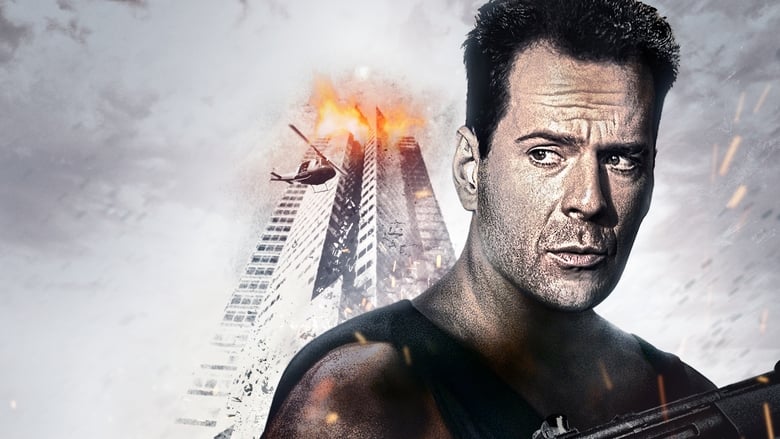
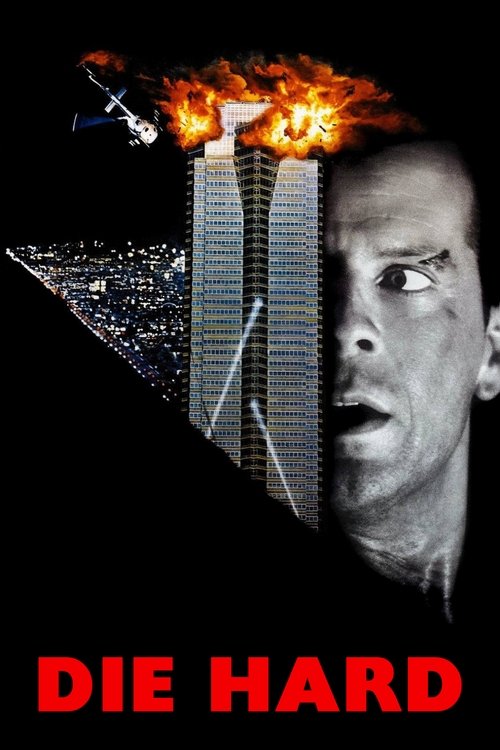
Die Hard follows John McClane, a gritty New York City police detective who travels to Los Angeles on Christmas Eve in a desperate attempt to reconcile with his estranged wife, Holly. His holiday visit is violently interrupted when a group of highly organized, well-armed criminals, led by the charismatic and calculating Hans Gruber, seizes the Nakatomi Plaza during a corporate Christmas party.

Separated from the hostages and trapped barefoot within the unfinished floors of the skyscraper, McClane must rely on his wits, police training, and raw endurance to wage a one-man guerrilla war against the invaders. As the LAPD and FBI bumble the situation from the ground, McClane's only lifeline is a tenuous radio connection with Sergeant Al Powell, a patrol officer who becomes his moral anchor in the unfolding chaos.
Core Meaning

At its core, Die Hard is a subversion of the invincible 1980s action hero, emphasizing human vulnerability and the triumph of the everyman. Director John McTiernan explores the restoration of the traditional family unit through a trial by fire, suggesting that heroism is not found in physical perfection but in the stubborn refusal to give up. The film also serves as a critique of corporate bureaucracy and the clash between rugged American individualism and the perceived threat of cold, globalized commercialism.

Thematic DNA

The Vulnerable Everyman 30%
Corporate vs. Individual 25%
Masculinity and Redemption 25%
American Mythology (The Cowboy) 20%

The Vulnerable Everyman

Unlike the era's muscle-bound icons, McClane is relatable; he bleeds, swears, and expresses genuine fear. His lack of shoes throughout the film serves as a constant reminder of his physical exposure and the painful reality of his struggle.

Corporate vs. Individual

The film pits the working-class grit of an NYPD cop against the sterile, high-tech environment of the Nakatomi Corporation and the sophisticated, suit-wearing criminals. It satirizes corporate middle-management (Ellis) and bureaucratic incompetence (the FBI).

Masculinity and Redemption

The narrative explores various facets of masculinity: McClane's struggle to adapt to his wife's success, Hans's cold intellectualism, and Al Powell's path to overcoming past trauma. Violence serves as a purgative force that allows McClane to earn back his place in his family.

American Mythology (The Cowboy)

The film consciously frames McClane as a modern cowboy (Roy Rogers) entering the 'frontier' of Los Angeles. This theme is highlighted by the verbal sparring between McClane and Gruber over Western movie tropes.

Character Analysis

John McClane

Bruce Willis

Archetype: Antihero / Everyman
Key Trait: Resilience / Sarcasm

Motivation

Primarily motivated by the need to save his wife and reconcile his family, though he eventually takes on the responsibility of saving all hostages.

Character Arc

McClane evolves from an embittered, prideful husband into a humble man willing to sacrifice his life and apologize for his mistakes. He transitions from a 'cop on vacation' to a relentless survivor.

Hans Gruber

Alan Rickman

Archetype: Shadow / Sophisticated Villain
Key Trait: Sophistication / Ruthlessness

Motivation

Acquiring $640 million in bearer bonds while using political terrorism as a smoke screen for his greed.

Character Arc

Hans remains static in his arrogance until the very end, where his carefully curated persona of a 'revolutionary' is stripped away to reveal a simple thief. He loses control as McClane disrupts his 'perfect' plan.

Sgt. Al Powell

Reginald VelJohnson

Archetype: Mentor / Ally
Key Trait: Empathy / Steady

Motivation

Guided by a sense of duty and an instinctive trust in the mysterious 'cowboy' on the radio.

Character Arc

Haunted by the accidental shooting of a child, Powell starts the film behind a desk. Through his radio bond with McClane, he finds the courage to draw his weapon again to protect his friend at the end.

Symbols & Motifs

The Rolex Watch

Meaning:

Symbolizes Holly's corporate success and her estrangement from John. Its removal at the climax represents the shedding of corporate identity to save her life and marriage.

Context:

Given to Holly as a bonus by Nakatomi; Hans clings to it as he falls from the building until John unclasps it.

Bare Feet

Meaning:

A symbol of vulnerability and a lack of preparedness. It grounds the action in physical pain and distinguishes McClane from the 'armored' villains.

Context:

John removes his shoes to 'make fists with his toes' to relax, leaving him barefoot when the attack begins.

Nakatomi Plaza

Meaning:

A phallic symbol of corporate dominance and a 'glass labyrinth' that reflects the fragility of the structures the characters inhabit.

Context:

The entire film takes place within the building, which becomes more damaged and 'deconstructed' as McClane's struggle intensifies.

Memorable Quotes

Yippee-ki-yay, motherfucker.

— John McClane

Context:

Said over the radio after Gruber asks if he's 'just another American who saw too many movies.'

Meaning:

The defining catchphrase that cements McClane's cowboy persona. It is a defiant response to Gruber's mockery of American culture.

Welcome to the party, pal!

— John McClane

Context:

McClane yells this after dropping a terrorist's body onto Al Powell's squad car to prove the emergency is real.

Meaning:

Highlights McClane's frustration with the authorities and the shift from his internal struggle to a public police matter.

Now I have a machine gun. Ho ho ho.

— Hans Gruber (reading McClane's message)

Context:

McClane writes this on the sweatshirt of a dead henchman and sends the body down in the elevator.

Meaning:

A dark, ironic use of Christmas imagery. It marks the moment the villains realize they aren't dealing with an easy target.

Philosophical Questions

Can redemption be truly achieved through violence?

The film suggests that both McClane and Powell find moral and emotional restoration only after participating in the lethal defense of others, linking physical combat to the healing of internal scars.

What defines the 'Everyman' in a world of specialized systems?

McClane's success depends on his ability to operate outside the system (the NYPD, LAPD, and FBI). The film explores whether the individual is more effective than the institution in a crisis.

Alternative Interpretations

While typically viewed as a heroic tale, some critics interpret the film as a conservative backlash against the 1980s feminist movement, where McClane's 'saving' of Holly is actually a reclamation of patriarchal control over her career success. Another reading focuses on Anti-Capitalism, viewing the terrorists and the Nakatomi executives as two sides of the same greedy coin, with McClane acting as the destructive force that purifies the tower of its materialistic corruption.

Cultural Impact

Die Hard completely redefined the action genre by moving away from 'superhuman' protagonists toward more vulnerable, flawed characters. It birthed the 'Die Hard on a [Blank]' subgenre, influencing hits like Speed (Die Hard on a bus) and Under Siege (Die Hard on a boat). Beyond the screen, it ignited one of the most enduring debates in pop culture history: whether it qualifies as a Christmas movie. Its blend of high-concept action and character-driven stakes remains the blueprint for modern blockbusters.

Audience Reception

Initially met with mixed critical reviews—many found it 'mindless' or 'overly violent'—audience word-of-mouth quickly turned it into a massive box-office hit. Modern consensus is overwhelmingly positive, with the film holding legendary status for its perfect pacing, Alan Rickman's performance, and Jan de Bont's innovative cinematography. It is now frequently cited as the greatest action film ever made.

Interesting Facts

  • Bruce Willis was the sixth choice for the role, after Frank Sinatra, Arnold Schwarzenegger, Sylvester Stallone, Burt Reynolds, and Richard Gere all turned it down.
  • Alan Rickman was dropped 21 feet onto an airbag for the final scene; the stunt coordinator dropped him on the count of 'one' instead of 'three' to get a genuine look of shock.
  • The Nakatomi Plaza is actually the Fox Plaza in Century City, which served as the headquarters for 20th Century Fox and was under construction during filming.
  • Frank Sinatra had the first right of refusal for the role of McClane because the film is based on a sequel to a book Sinatra had already starred in a film adaptation of ('The Detective').
  • The German spoken by the terrorists in the film is largely ungrammatical and nonsensical; in the German release, the villains were changed to be from 'Europe' generally.
  • Bruce Willis suffered permanent hearing loss in his left ear due to the use of extra-loud blank cartridges during the table-shooting scene.

Easter Eggs

The 'Pacific Courier' Truck

The truck used by the terrorists appears in other movies produced by Joel Silver, such as Speed, creating a shared universe nod between action films.

Beethoven's Ninth Symphony

The use of 'Ode to Joy' as the theme for the villains was inspired by Stanley Kubrick's A Clockwork Orange, suggesting a sophisticated malice and mocking the hostages' 'celebration.'

⚠️ Spoiler Analysis

Click to reveal detailed analysis with spoilers

Frequently Asked Questions

Explore More About This Movie

Dive deeper into specific aspects of the movie with our detailed analysis pages

Comments (0)

Leave a comment

No comments yet. Be the first to share your thoughts!