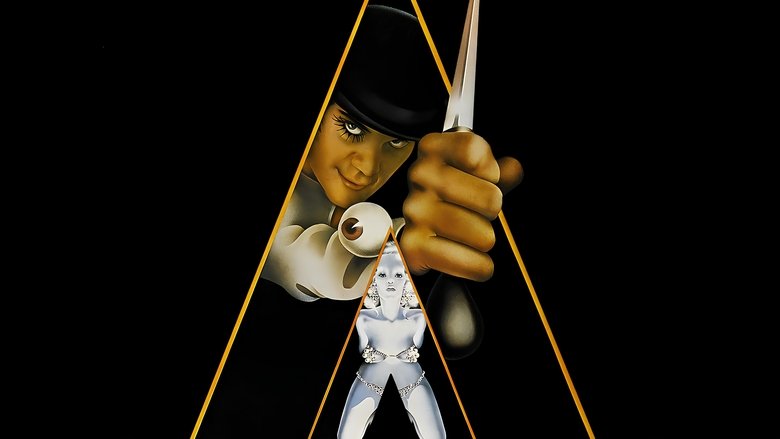

"Being the adventures of a young man whose principal interests are rape, ultra-violence and Beethoven."
Director: Stanley Kubrick
Cast: Malcolm McDowell, Patrick Magee, Carl Duering, Michael Bates, Warren Clarke
A Clockwork Orange — Movie Quotes
Memorable Quotes
What's it going to be then, eh?
Context
The line is first spoken by Alex in the Korova Milk Bar as he and his droogs contemplate their night of 'ultra-violence.' It serves as the opening line of the film's narration, immediately establishing the theme of choice.
Meaning
This recurring question, which opens each of the story's three parts in the novel, frames the central theme of choice. It is a question about what action to take next, underscoring the importance of decision-making and free will. In each context, it carries a different weight: first as a prelude to violence, then as a question posed by the state about his fate, and finally, as a reflection on his regained ability to choose.
Goodness is something to be chosen. When a man cannot choose, he ceases to be a man.
Context
The Prison Chaplain says this to Alex and later argues this point with the Minister of the Interior, protesting against the use of the Ludovico Technique. He is concerned that the treatment will destroy Alex's soul by removing his capacity for moral choice.
Meaning
This quote is the most direct articulation of the film's central philosophical argument. It posits that morality is meaningless without free will. To be 'good' because one is forced to be is not true goodness; it is merely mechanical obedience. The chaplain argues that the ability to choose, even the choice to be evil, is essential to human identity.
It's funny how the colors of the real world only seem really real when you viddy them on the screen.
Context
Alex narrates this thought while he is being subjected to the Ludovico Technique. He is strapped to a chair with his eyes clamped open, forced to watch violent films. The quote highlights the surreal and disorienting nature of his 'treatment'.
Meaning
This line reflects on the nature of media and its power to mediate reality. It suggests a desensitization to real-life violence and a strange phenomenon where hyper-reality, as presented on a screen, can feel more potent than reality itself. This is particularly ironic given that he is being subjected to on-screen violence to cure him of his real-world violent tendencies.
I was cured, all right!
Context
These are the last words Alex speaks in the film. He is in a hospital bed, surrounded by reporters and the Minister of the Interior, who has offered him a high-paying job. As photographers snap pictures, he fantasizes about violent, consensual sex, signifying his return to his former self.
Meaning
This is the film's final, deeply ironic line. The 'cure' Alex refers to is not the Ludovico Technique's aversion to violence, but the reversal of that conditioning. He is 'cured' of his forced goodness and is free to be his violent self again. The line is triumphant and deeply cynical, suggesting that society has not reformed him but has simply returned him to his original state, now as a tool of the government, thus becoming complicit in his nature.
Explore More About This Movie
Dive deeper into specific aspects of the movie with our detailed analysis pages