A Man Escaped
A minimalist thriller of methodical patience and spiritual resilience, where the rhythmic scrape of a spoon against a wooden door becomes a hymn to freedom.
A Man Escaped
A Man Escaped

Un condamné à mort s'est échappé

"Robert Bresson's Prize Winning Film"

11 November 1956 France 101 min ⭐ 7.9 (582)
Director: Robert Bresson
Cast: François Leterrier, Charles Le Clainche, Maurice Beerblock, Roland Monod, Jacques Ertaud
Drama Thriller
Faith and Divine Grace Hope and Human Resilience The Poetry of Process Trust and Interdependence

A Man Escaped - Ending Explained

⚠️ Spoiler Analysis

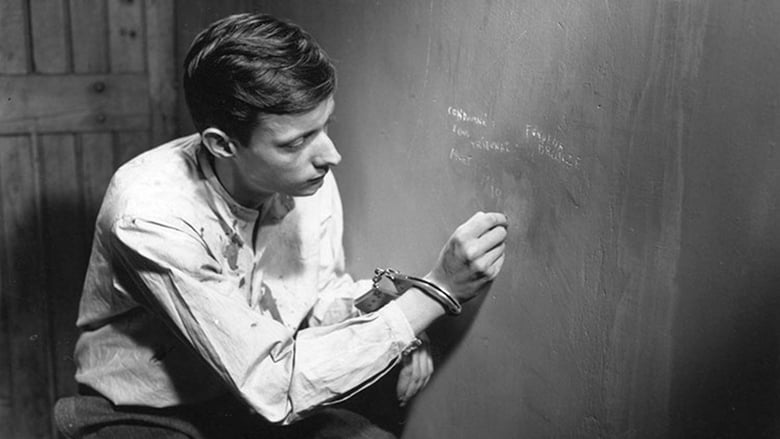
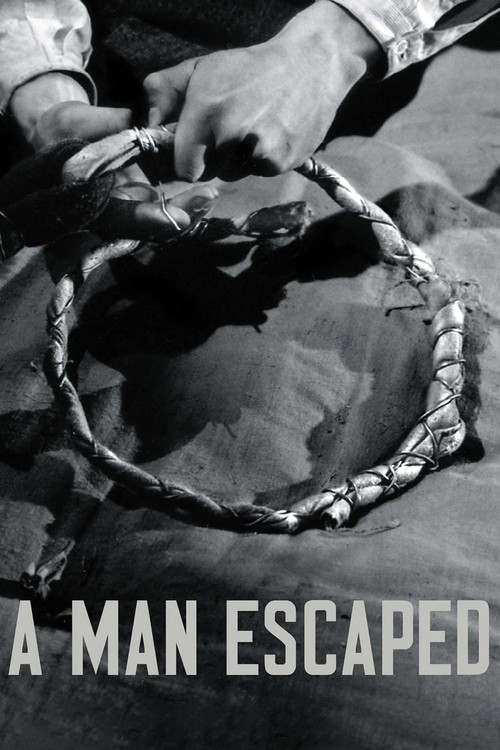
The entire narrative of "A Man Escaped" builds towards the final, successful escape, an outcome revealed by the title itself. The true suspense lies in the execution. After months of painstaking preparation—chiseling his door with a sharpened spoon, braiding ropes from his mattress and a donated blanket, and crafting hooks from a lantern—Fontaine is ready. However, his plan is complicated at the last minute by the arrival of a new cellmate, the teenage soldier François Jost. Believing Jost might be a plant, Fontaine realizes he must either kill him or trust him. He chooses trust.

That night, they exit through the dismantled door. They reach the roof, and the film's sound design becomes critical as they use the noise of a passing train to mask their movements. In a moment of high tension, they must descend into a courtyard where they encounter a guard. Fontaine kills the guard, a swift and brutal act that underscores the life-or-death stakes. After a moment of hesitation where Fontaine's nerve almost fails him, they use their homemade rope and hook to cross the final gap between the inner and outer prison walls. They drop down into the foggy streets of Lyon and walk away to freedom. Fontaine's final voiceover, "Had I been alone I might still be there," reveals the hidden meaning: the intensely solitary journey of the human spirit toward freedom ultimately required an act of faith in another person to be complete.

Alternative Interpretations

While the dominant interpretation of "A Man Escaped" centers on a synthesis of divine grace and human action, other readings are possible. One perspective could de-emphasize the religious or spiritual element and view the film as a purely existentialist text. From this viewpoint, Fontaine's escape is not aided by an 'invisible hand' but is solely the product of his own will and methodical confrontation with an absurd, meaningless situation. His freedom is self-created in the face of nothingness. The 'miracles' or coincidences could be interpreted not as divine intervention but as random chance that a determined individual is prepared to exploit.

Another interpretation could focus on the political dimension. Instead of a spiritual allegory, the film can be read as a cinematic 'blueprint' for resistance against an oppressive regime. It is a practical, instructional guide on how to dismantle the structures of power (represented by the prison) using the very materials it provides. In this light, Fontaine is not a soul seeking salvation but a political agent enacting a strategy of liberation, and his ultimate trust in Jost is a necessary act of building a revolutionary cell, however small.