Skip to content
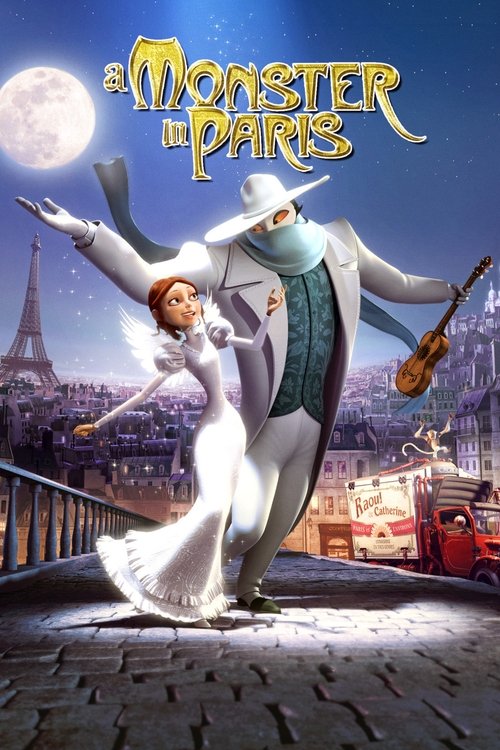
A Monster in Paris
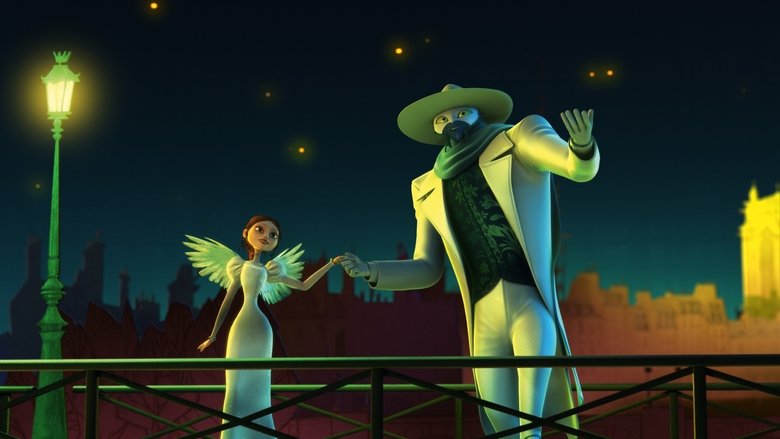
A luminous Belle Époque fantasy shimmering with melancholic warmth and bohemian grace, where flooded Parisian cobblestones mirror starlight and a monstrous outcast's gentle guitar chords transform shared urban fear into breathtaking musical poetry.
A Monster in Paris
A Monster in Paris

Un monstre à Paris

"You can find love anywhere… even in insects"

12 October 2011 France 90 min 6.9 (1,392)

Director: Bibo Bergeron

Cast: Vanessa Paradis, Matthieu Chedid, Gad Elmaleh, François Cluzet, Ludivine Sagnier

Animation Family Fantasy Adventure Inner Beauty vs. External Appearance The Unifying and Healing Power of Art & Music Political Demagoguery & Weaponization of Fear Unspoken Affection, Identity & Emotional Vulnerability Modernity, Cinema, and Scientific Curiosity
Budget: $25,000,000
Box Office: $26,611,650

A Monster in Paris — Ending Explained

⚠️ Spoiler Analysis

The film reveals that the "monster" was originally an ordinary flea on Charles, the laboratory's monkey, inadvertently enlarged by a botanical growth serum and vocal elixir. During the climactic confrontation atop the Eiffel Tower, Maynott fires at Francœur just as the potion's effects wear off, causing the creature to shrink back to microscopic size, making the public believe he was killed.

Maynott's murderous actions are captured on film by Émile and witnessed by Chief Inspector Pâté, leading to Maynott's arrest. Later at the cabaret, Lucille discovers Francœur alive and singing from within her hair. Using the recovered botanical formula, the group synthesizes a stable batch to restore Francœur to human size on demand, establishing his permanent place as a beloved cabaret star.

Alternative Interpretations

Key interpretations include:

  • Subversion of Romance (Platonic Kinship): The bond between Francœur and Lucille is framed as a deep, platonic artistic kinship rather than a traditional fairy-tale romance, allowing Lucille to resolve her romantic tension with Raoul.
  • Allegory of the Immigrant and Bohemian Artist: Francœur is frequently read as an allegory for foreign, marginalized, or bohemian communities in Paris who unsettle the conservative establishment while enriching cultural life.
  • The "Disappearing Monster" Ambiguity: Francœur's apparent demise atop the Eiffel Tower initially appears tragic, but his return as a microscopic singing flea reinforces the theme of the persistence of art beyond physical scale.

Explore More About This Movie

Dive deeper into specific aspects of the movie with our detailed analysis pages

Similar Movies