
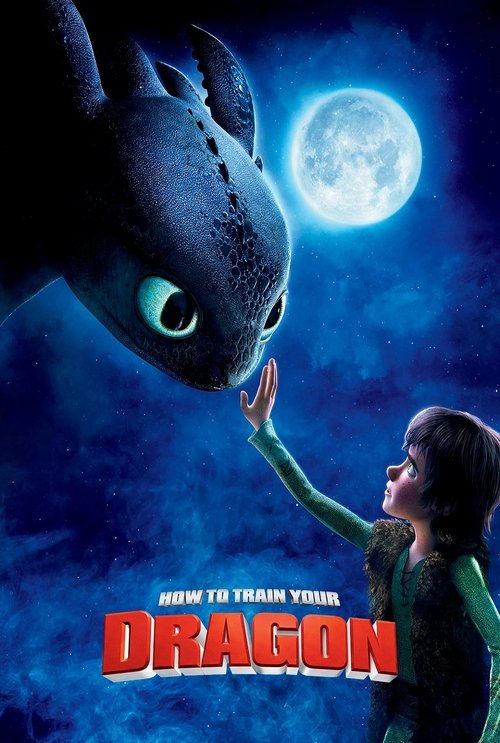
How to Train Your Dragon
A breathtaking animated fantasy where youthful empathy challenges generations of conflict, visualized through the exhilarating freedom of flight.
How to Train Your Dragon

"One adventure will change two worlds."

18 March 2010 United States of America 98 min ⭐ 7.9 (13,871)
Director: Chris Sanders Dean DeBlois
Cast: Jay Baruchel, Gerard Butler, Craig Ferguson, America Ferrera, Jonah Hill
Animation Family Fantasy Adventure
Overcoming Prejudice and Fear Father-Son Relationships and Expectations Finding Your True Self Cooperation and Mutual Dependence
Budget: $165,000,000
Box Office: $495,141,736

How to Train Your Dragon - Ending Explained

⚠️ Spoiler Analysis

The central twist of How to Train Your Dragon is the revelation that the dragons are not the villains. They raid Berk not out of inherent malice, but because they are forced to steal livestock to feed a colossal, tyrannical queen dragon known as the Red Death. Any dragon that fails to bring enough food is eaten by this parasitic alpha. This discovery, made by Hiccup and Astrid, reframes the entire conflict; the Vikings and the dragons share a common enemy. It transforms the narrative from a simple war into a story about misunderstanding and misplaced aggression.

The film's climax sees Hiccup and his friends riding dragons into battle against the Red Death, with the Vikings, led by Stoick, joining the fight after realizing their error. During the battle, Hiccup and Toothless work together to defeat the monster, but Hiccup is knocked unconscious and loses his left foot in the process. The ending carries a surprising and poignant consequence rarely seen in family films. Hiccup wakes up to a new Berk, where dragons and Vikings live in peace. He discovers he now has a prosthetic leg, a mirror to the prosthetic fin he built for Toothless. This parallel physically solidifies their bond and serves as a permanent reminder of the sacrifice required to bring about peace and change. It's a bittersweet but powerful conclusion that underscores the theme of interdependence and shared vulnerability.

Alternative Interpretations

While the film is widely seen as a coming-of-age story about empathy, some analyses offer different lenses for interpretation. One perspective reads the story through a queer lens, where Hiccup's feeling of being an outsider and his need to hide a fundamental part of himself (his friendship with Toothless) from a society that would not understand mirrors the experience of many LGBTQ+ individuals. His struggle to get his father to accept him for who he truly is, rather than trying to force him to conform, resonates with this interpretation.

Another interpretation views the film as a subtle critique of toxic masculinity. The Viking society of Berk prizes brute strength, aggression, and stoicism—traits Hiccup lacks. His ultimate victory comes not from adopting these traits but by succeeding through intelligence, empathy, and cooperation. He redefines what it means to be a strong man and a leader, suggesting that compassion is a more powerful tool than violence.