Skip to content
A Monster in Paris
A luminous Belle Époque fantasy shimmering with melancholic warmth and bohemian grace, where flooded Parisian cobblestones mirror starlight and a monstrous outcast's gentle guitar chords transform shared urban fear into breathtaking musical poetry.
A Monster in Paris

A Monster in Paris

Un monstre à Paris

"You can find love anywhere… even in insects"

12 October 2011 France 90 min 6.9 (1,392)

Director: Bibo Bergeron

Cast: Vanessa Paradis, Matthieu Chedid, Gad Elmaleh, François Cluzet, Ludivine Sagnier

Animation Family Fantasy Adventure Inner Beauty vs. External Appearance The Unifying and Healing Power of Art & Music Political Demagoguery & Weaponization of Fear Unspoken Affection, Identity & Emotional Vulnerability Modernity, Cinema, and Scientific Curiosity
Budget: $25,000,000
Box Office: $26,611,650

Overview

Set against the historical backdrop of the Great Flood of Paris in 1910, A Monster in Paris introduces Émile, a shy cinema projectionist harboring a secret love for his co-worker Maud, and his eccentric best friend Raoul, an exuberant deliveryman and amateur tinkerer who drives a customized steam vehicle named Catherine. When a delivery errand takes the pair into the botanical laboratory of an absent eccentric professor at the Jardin des Plantes, their curiosity sparks an accidental chemical reaction involving an experimental growth formula and a vocal serum.

The resulting explosion unleashes a towering, mutated insect into the streets of the French capital. As the city descends into panic, the ambitious and megalomaniacal Police Prefect Victor Maynott launches a relentless hunt for the "beast" to fuel his own political campaign for mayor.

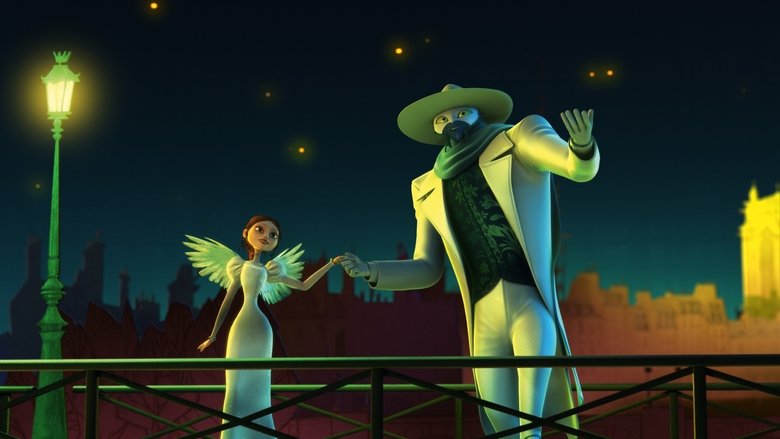
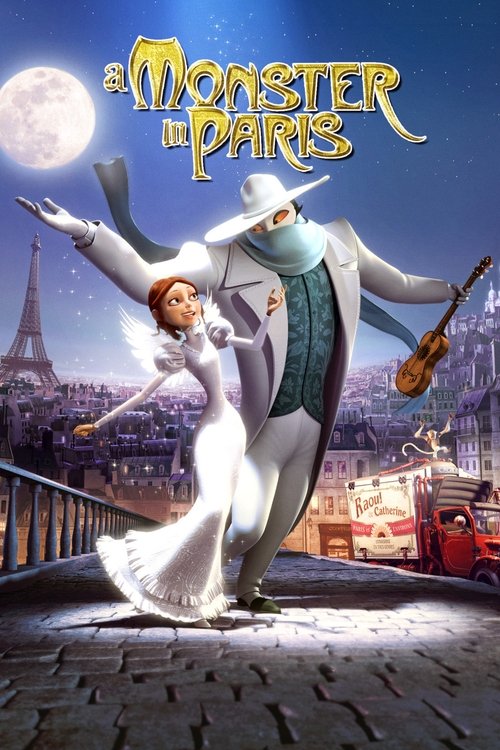
Meanwhile, Montmartre cabaret singer Lucille encounters the terrifying creature in a rain-swept alley. Rather than finding a vicious carnivore, she discovers a gentle soul cursed with frightful looks and blessed with extraordinary musical genius. Cloaking him in a fedora, trench coat, and mask under the moniker Francœur (Honest Heart), Lucille teams up with Émile and Raoul to stage a secret cabaret act and shield him from Maynott’s armed pursuit.
Core Meaning

Director Bibo Bergeron crafts a fable challenging societal definitions of monstrosity. The central message argues that true monstrosity stems from human arrogance, deceit, and the cynical exploitation of public fear, whereas true humanity is defined by empathy, creative expression, and kindness. The film underscores the transformative power of art and music to dissolve prejudice and unite disparate souls.

Thematic DNA

Inner Beauty vs. External Appearance 30%
The Unifying and Healing Power of Art & Music 25%
Political Demagoguery & Weaponization of Fear 20%
Unspoken Affection, Identity & Emotional Vulnerability 15%
Modernity, Cinema, and Scientific Curiosity 10%

Inner Beauty vs. External Appearance

Deconstructs the classic Beauty and the Beast and Phantom of the Opera tropes. Francœur is terrifying on the outside but inherently pure inside, whereas the polished, high-status Prefect Maynott is morally grotesque and destructive.

The Unifying and Healing Power of Art & Music

Music serves as a universal language transcending biological boundaries. Francœur cannot speak words, yet his singing and guitar playing communicate raw emotion and forge instantaneous bonds.

Political Demagoguery & Weaponization of Fear

Explores how authority figures manipulate crises (the 1910 flood) and create scapegoats (the monster) to consolidate power and manufacture public hysteria for personal gain.

Unspoken Affection, Identity & Emotional Vulnerability

Explores interpersonal dynamics—from Émile’s paralyzing shyness around Maud to Raoul’s feigned arrogance masking his childhood devotion to Lucille.

Modernity, Cinema, and Scientific Curiosity

Captures early 20th-century technological wonder—early motion pictures, mechanical inventions, and laboratory sciences—as forces capable of both chaos and wondrous discovery.

Character Analysis

Francœur

Matthieu Chedid (-M-) / Sean Lennon

Archetype: The Gentle Monster / Misunderstood Outcast Key Trait: Boundless empathy and virtuosic musical talent.

Motivation

To find safety, connection, and harmony through song.

Character Arc

Evolves from a terrified, persecuted creature hiding in gutters to a celebrated musical virtuoso who accepts his identity.

Lucille

Vanessa Paradis

Archetype: The Independent Heroine / Muse Key Trait: Fierce independence and radiant vocal charisma.

Motivation

Artistic integrity and protecting the innocent from injustice.

Character Arc

Sheds her emotional defenses and resistance to vulnerability as she champions Francœur and reconnects with Raoul.

All 5 characters and cast

Symbols & Motifs

The Flooded River Seine

Meaning:

Symbolizes emotional upheaval, the wash of change over Paris, and the cleansing of superficial societal pretenses.

Context:

Serves as the pervasive environmental backdrop throughout the 1910 Parisian setting.

Francœur’s Disguise (The White Suit, Fedora, and Mask)

Meaning:

Symbolizes society's demand that the unconventional conceal their true nature to be accepted, while evoking classic cinema and theater archetypes.

Context:

Given to Francœur by Lucille to hide his insect appearance during cabaret performances and in public.

The Rare Bird (L'Oiseau Rare) Cabaret

Meaning:

Represents a sanctuary for artistic nonconformists, bohemians, and misfits away from rigid bourgeois norms.

Context:

The Montmartre venue where Lucille performs and where Francœur makes his musical debut.

The Giant Sunflower

Meaning:

A visual metaphor for beauty and warmth blooming amidst unexpected chaos.

Context:

Sprouts rapidly from the same botanical laboratory accident that enlarges Francœur.

The Eiffel Tower

Meaning:

The pinnacle of Parisian modernity and romanticism, symbolizing the place where Maynott’s ego collapses and truth is laid bare.

Context:

The setting for the film's climactic pursuit and final confrontation above the city.

Memorable Quotes

Je ne sais pas, ne sais pas, ne sais pas pourquoi / On s'aime comme ça, la Seine et moi...
— Lucille and Francœur

Context

Sung during their showstopping musical duet at L'Oiseau Rare, mesmerizing the Parisian audience.

Meaning

Highlights the film’s poetic core by celebrating the Seine and unconventional, transcendent love.

Le monstre n'est pas celui qu'on croit!
— Lucille

Context

Spoken to Prefect Maynott and the assembled crowd during the climactic pursuit atop the Eiffel Tower.

Meaning

Vocalizes the moral compass of the story, stripping Maynott of his heroic facade and exposing his villainy.

All 4 quotes

Philosophical Questions

What constitutes the boundary between a "man" and a "monster"?

The film interrogates how physical difference triggers instinctual human hostility, while calculated cruelty often hides behind respectable uniforms and high social status.

Can art exist independently of human language?

Through Francœur's inability to speak conversational dialogue, the narrative investigates music as a primal, universal communicative medium that bypasses intellectual prejudice.

How does collective fear compromise democratic judgment?

By chronicling Maynott's rise on the back of sensationalized newspaper panic, the story ponders the fragility of civic decency when terror is weaponized.

Alternative Interpretations

Key interpretations include:

Full ending explanation

Cultural Impact

Grounded in the real events of January 1910 when the Seine overflowed for over a week, the film depicts a surreal, romantic waterscape across Paris. It achieved over 1.5 million admissions in France and earned César Award nominations for Best Animated Film and Best Original Music. While grossing approximately $26.6–27 million worldwide against its budget, it gained strong critical appreciation for its hit single "La Seine", visual elegance, and Belle Époque nostalgia.

Audience Reception

Audience and critical responses highlight:

  • Praise: Exceptional, catchy soundtrack by Matthieu Chedid and Vanessa Paradis; stylized, expressive CGI Paris rich in warm tones; charming bilingual vocal performances.
  • Criticisms: Conventional plot mechanics, predictable villain dynamics, and minor pacing unevenness between physical comedy chases and lyrical musical moments.
  • Verdict: A charming, visually luminous French animated gem that stands out for its soundtrack and artistic character designs.

Interesting Facts

  • Director Bibo Bergeron conceived the story drawing on his background at DreamWorks (co-director of The Road to El Dorado and Shark Tale) and work on The Iron Giant.
  • Vanessa Paradis voiced and sang the role of Lucille in both the original French release and the official English dub.
  • Luc Besson produced the film through EuropaCorp with an estimated $32–37.5 million production budget.
  • French rock luminary Matthieu Chedid (-M-) composed the score and original songs alongside Patrice Renson, and provided Francœur’s French singing voice.
  • Sean Lennon adapted the songs into English and voiced Francœur's singing voice in the English dub.
  • Lucille was animated with a small front-tooth gap, directly honoring the distinct signature appearance of Vanessa Paradis.

Easter Eggs

Matthieu Chedid's Signature Hairstyle

During Francœur’s dressing room sequence, he momentarily puts on a wig shaped into two upward horns, referencing the iconic stage silhouette of musician -M-.

Gaston Leroux’s The Phantom of the Opera

Francœur hides in the rafters and wings of a theater, dons a white mask and costume, and shares a musical communion with a soprano named Lucille (nodding to Christine Daaé).

Tribute to Early Cinema

Émile’s camera work, projector mechanics, and silent-film fantasy sequences honor early cinematic pioneers such as the Lumière brothers and Georges Méliès.

King Kong on the Eiffel Tower

The climactic standoff atop the Eiffel Tower mirrors the classic King Kong finale, subverting it by making the pursuer the true villain.

Marcel Proust Allusion

Raoul’s childhood flashbacks with Lucille revolving around madeleines and schoolyard memories subtly evoke French literature's famous Proustian memory motif.

Frequently Asked Questions

Explore More About This Movie

Dive deeper into specific aspects of the movie with our detailed analysis pages

Comments (0)

Leave a comment

No comments yet. Be the first to share your thoughts!

Similar Movies